
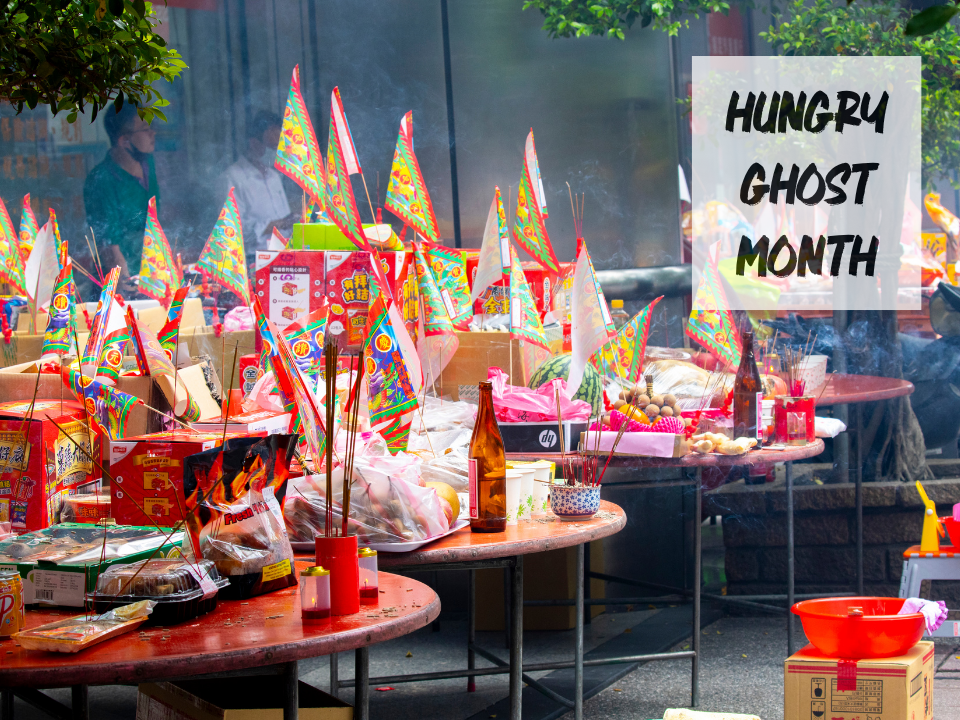
If you happen to visit Taiwan during the seventh month of the lunar calendar, you may notice something unusual outside homes, temples, apartment buildings, and businesses: tables absolutely loaded with food.
Jump to:
- When Is Hungry Ghost Festival in 2026?
- What Is Ghost Month in Taiwan?
- Why Are Ghosts Called "Good Brothers" in Taiwan?
- What Is Zhongyuan Pudu?
- What Food Is Offered During Hungry Ghost Festival?
- Ghost Month Taboos in Taiwan
- Why Are There So Many Food Offerings?
- The Keelung Ghost Festival
- Is Hungry Ghost Festival the Same as Ghost Month?
- Ghost Month in Modern Taiwan
- Experiencing Ghost Month in Taiwan
- Pin for later!
There might be whole chickens, fruit, rice, packages of cookies and crackers, instant noodles, drinks, and all kinds of snacks lined up alongside incense and other offerings.
No, it isn't a giant outdoor buffet.
It's Ghost Month (鬼月) in Taiwan!
The seventh lunar month is traditionally believed to be the time when the gates of the spirit world open and wandering spirits are allowed to visit the human world. Throughout the month, people make offerings and hold ceremonies for these spirits, who are often politely called 好兄弟 (hǎo xiōngdì), or "Good Brothers," rather than directly calling them ghosts.
The biggest observance happens on the 15th day of the lunar month during Zhongyuan Festival (中元節), commonly called the Hungry Ghost Festival in English.
And because this is Taiwan, of course food plays a huge part in it!
When Is Hungry Ghost Festival in 2026?
In 2026, Zhongyuan Festival falls on Thursday, August 27.
Ghost Month begins on the first day of the seventh lunar month, which falls on August 13 in 2026. Zhongyuan Festival takes place right in the middle of the month, on the 15th lunar day.
The exact dates change every year because they are based on the lunar calendar rather than the Gregorian calendar.
What Is Ghost Month in Taiwan?
The seventh month of the lunar calendar is traditionally known as Ghost Month, or 鬼月 (Guǐyuè).
According to Taiwanese folk belief, the gates separating the spirit world from the world of the living open at the beginning of the month. Spirits without descendants to worship them are able to wander the human world and receive food and other offerings.
Rather than ignoring these wandering spirits, people welcome and feed them.
That's where 中元普渡 (Zhōngyuán Pǔdù) comes in.
"Pudu" refers to ceremonies intended to provide offerings and salvation to wandering souls. In Taiwan, these observances developed from a mixture of folk religion, Taoist traditions, Buddhist traditions, and ancestor worship.
The Taiwanese government describes Ghost Month as beginning with the opening of the gates at the start of the seventh lunar month, with festivities reaching their peak on the 15th day during Zhongyuan Festival.
Why Are Ghosts Called "Good Brothers" in Taiwan?
One of my favorite cultural details about Ghost Month is the name 好兄弟 (hǎo xiōngdì).
It literally means "good brothers."
Instead of referring directly to wandering ghosts or spirits, Taiwanese people traditionally use this friendlier and more respectful term.
You'll sometimes hear people say they're going to 拜好兄弟 (bài hǎo xiōngdì), or worship/make offerings to the Good Brothers.
It's basically a very Taiwanese way of saying: let's be polite to our supernatural visitors. 😂
What Is Zhongyuan Pudu?
During 中元普渡, families, temples, neighborhoods, and even businesses set up tables filled with offerings for the wandering spirits.
There are traditionally two broad types of Pudu in Taiwan.
Private Pudu (私普) is held by individual families or households. One traditional version is known as 拜門口, literally "worshipping at the doorway," because offerings are placed outside the home.
Public Pudu (公普) can be organized by temples, neighborhoods, businesses, clans, markets, or other community groups. Some of these ceremonies can become enormous, with rows and rows of tables piled high with food.
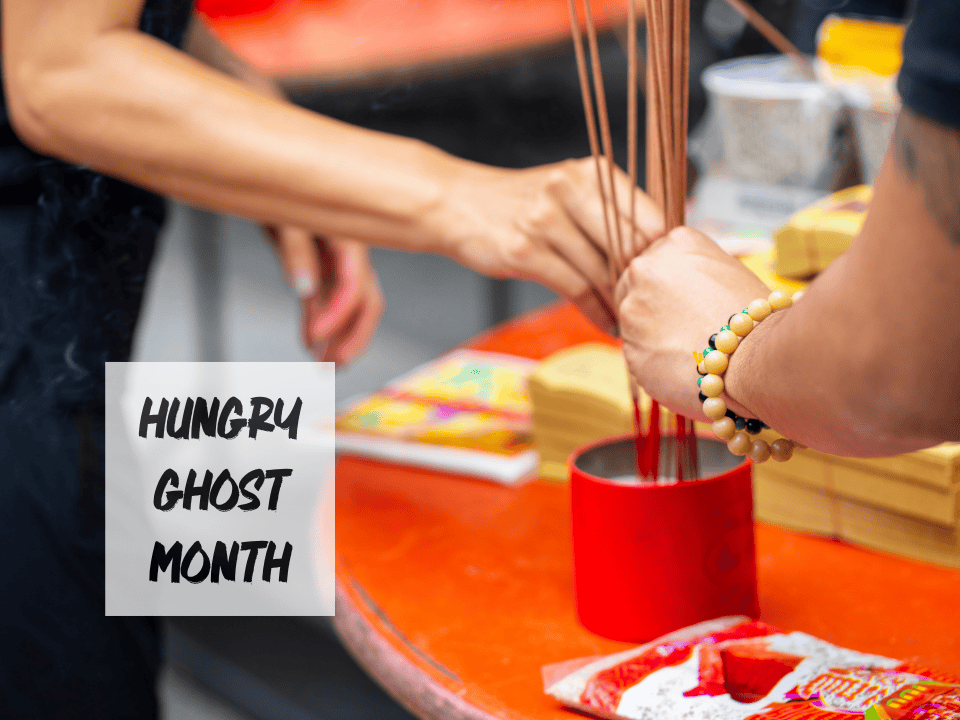
"If you've ever been in Taiwan and wondered why an office building or store suddenly has an elaborate table of food sitting outside surrounded by burning incense during the summer, there's a good chance this is what you're seeing. The incense is part of the worship ritual, used to show respect and communicate with the spirits while inviting the Good Brothers to receive the offerings.
What Food Is Offered During Hungry Ghost Festival?
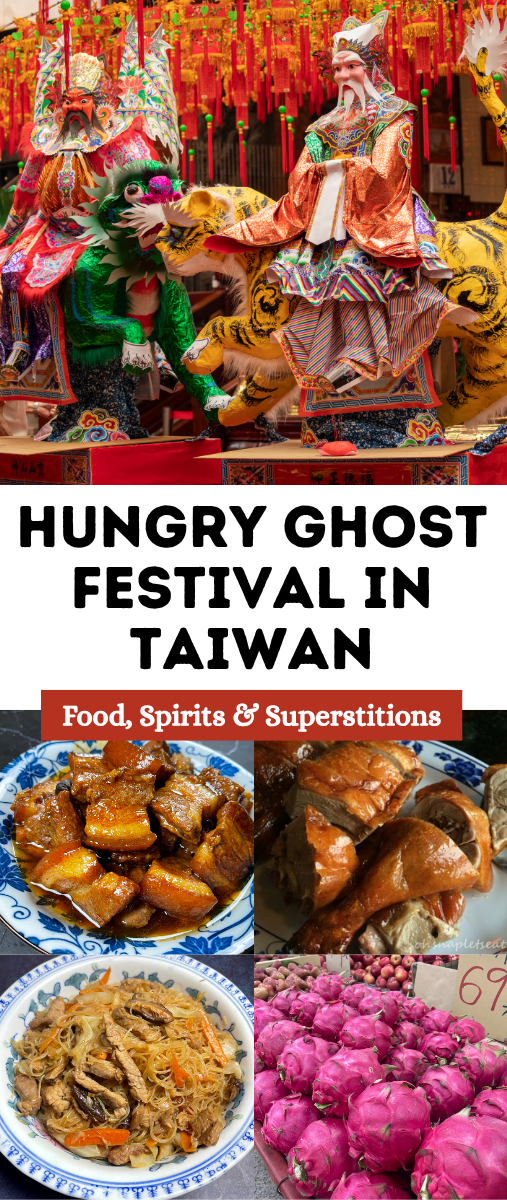
This is probably the part I'm most interested in because... food.
Traditional offerings can include:
- Whole chicken
- Duck
- Pork
- Fish
- Rice
- Fresh fruit
- Cakes and traditional pastries
- Instant noodles
- Cookies and crackers
- Candy and snacks
- Bottled drinks
- Tea
- Other packaged foods
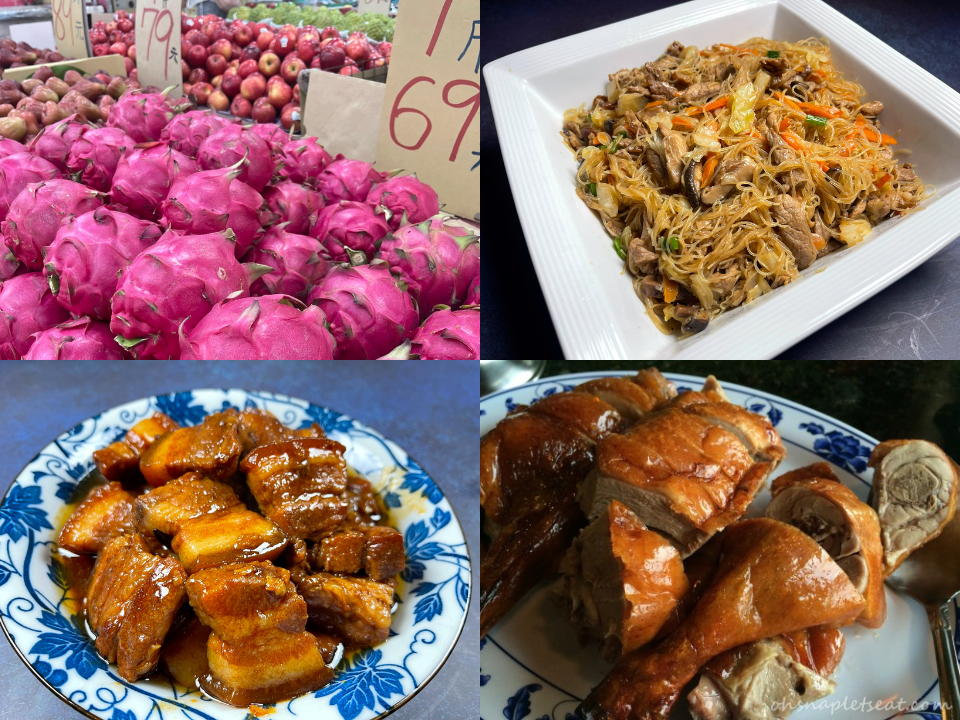
Taiwan's Tourism Administration specifically describes meat, fruit, flowers, chicken, duck, and fish among traditional Zhongyuan offerings, while Taiwan's folk-culture records also document everything from rice and gua bao to instant noodles, cookies, beverages, and fruit.
So a modern Pudu table can be pretty amazing to look at.
You might see traditional cooked dishes sitting right next to boxes of crackers, bags of chips, instant ramen, canned drinks, and other everyday foods.
The idea is to provide the visiting Good Brothers with a generous feast.
What Happens to the Food Afterward?
Fortunately, the food doesn't normally get thrown away!
Once the worship ceremony is finished, the offerings can be brought back inside and eaten.
So while the food is offered symbolically to the spirits first, it ultimately becomes food for the family, employees, or community too.
There is even a practical food-safety issue involved. Taiwan's Food and Drug Administration has reminded people not to leave meat and other perishable Pudu offerings sitting outside in the summer heat too long and recommends thoroughly reheating appropriate foods before eating them.
Honestly, this may be one of the most Taiwanese government announcements ever: please feed the ghosts, but also please practice proper food safety. 😂
Ghost Month Taboos in Taiwan
Ghost Month also comes with a LOT of traditional taboos.
How seriously people follow them varies enormously. Some families are very traditional, while others might know all the superstitions but not really change their everyday lives because of them.

You may hear warnings such as:
Avoid Swimming
One of the best-known Ghost Month superstitions is avoiding swimming in oceans, rivers, and other bodies of water.
Traditional belief holds that spirits of people who died in water may seek someone to take their place, so some people avoid water activities during the month.
Avoid Weddings
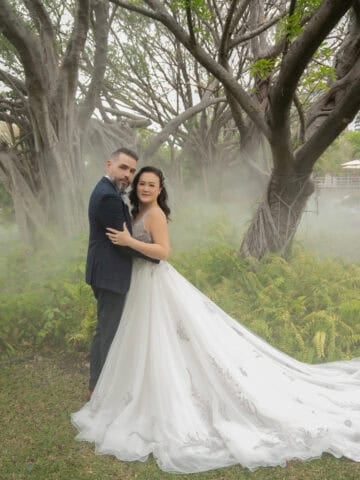
Ghost Month traditionally isn't considered an auspicious time for weddings, so some families avoid scheduling weddings during the seventh lunar month.
Avoid Moving Into a New Home
Some people also avoid moving, opening a new business, or making other major life changes during Ghost Month.
Don't Whistle at Night
You may hear that whistling at night can attract spirits. Honestly I forget and whistle all the time lol
Avoid randomly taking photographs at night
Taiwan's Ministry of Labor actually includes "no random taking of photographs" among common Ghost Month customs. The folk concern is essentially that you might photograph or attract the attention of something you weren't intending to...
Don't Stick Chopsticks Upright in Rice
This is actually good etiquette to know in Taiwan even outside Ghost Month.
Two chopsticks standing vertically in a bowl of rice resemble incense sticks used during offerings to the dead, so doing this at the dinner table is generally considered bad luck and inappropriate.
There are MANY more Ghost Month superstitions depending on the family and region, and you'll probably hear increasingly specific ones the longer you ask people about them!
The important thing to remember is that these are folk beliefs and traditions, not a list of rules that every Taiwanese person follows.
Why Are There So Many Food Offerings?
At the heart of Pudu is the idea that not every spirit has descendants who can provide offerings for them.
Traditionally, families honor their own ancestors, but the wandering Good Brothers may have no family left to worship them.
Pudu therefore extends hospitality beyond one's own ancestors.
Food, incense, prayers, and other offerings are provided so these spirits can eat, receive care, and hopefully continue peacefully on their way rather than causing trouble for the living.
It's part respect, part compassion, and, depending on whom you ask, perhaps a little bit of "we fed you, so please don't haunt us." 😂
The Keelung Ghost Festival
If you want to see one of Taiwan's biggest Ghost Month celebrations, Keelung (基隆) is famous for its annual Keelung Zhongyuan Ghost Festival (雞籠中元祭).
The festival lasts for roughly a month and includes ceremonies associated with opening the spirit gates, lanterns, processions, Pudu ceremonies, and the spectacular releasing of water lanterns.
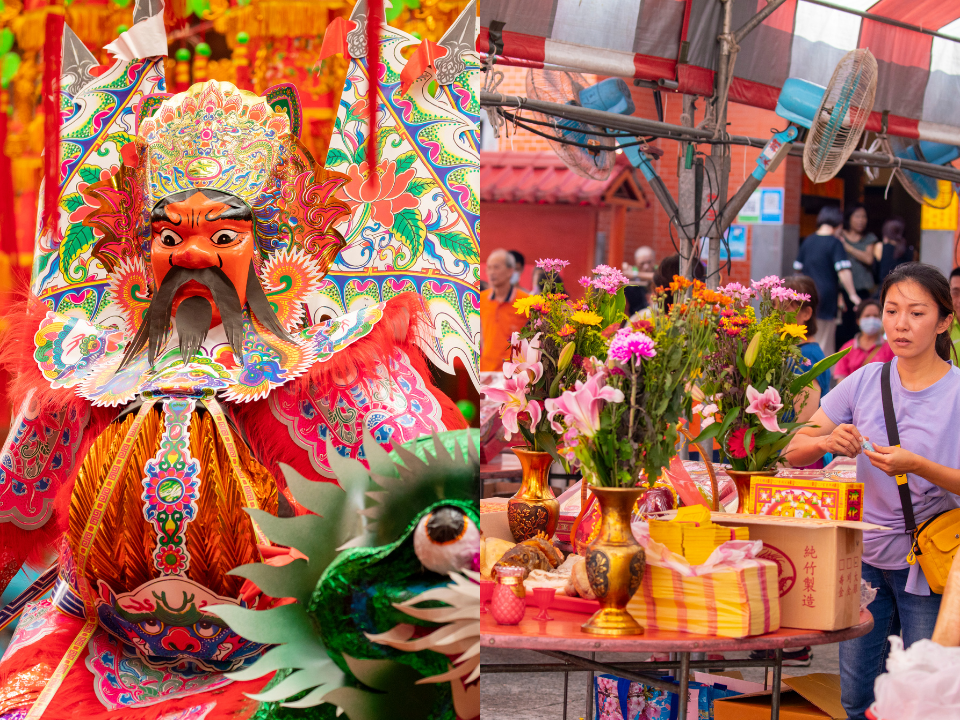
During these religious celebrations, you may also see 神將 (shénjiàng), or deity/general figures, dressed in elaborate costumes with dramatic face paint, long beards, and traditional armor. These figures represent gods or guardian deities associated with Taiwanese temple culture, rather than the wandering "Good Brothers" themselves.
Water lanterns are traditionally released to help guide spirits lost at sea toward land so they can receive offerings.
The Keelung celebration has an especially fascinating history and has been recognized as an important Taiwanese folk cultural tradition.
For 2026, the Keelung festivities began with ceremonies on August 12 and 13. The famous water-lantern procession and release is scheduled for August 26, followed by Zhongyuan Pudu on August 27.
So if you're traveling around Taiwan during Ghost Month, Keelung is definitely one of the places to experience it.
Is Hungry Ghost Festival the Same as Ghost Month?
Not exactly!
This confused me at first too because the terms are sometimes used interchangeably in English.
Ghost Month (鬼月) refers to the entire seventh month of the lunar calendar.
Zhongyuan Festival (中元節) falls on the 15th day of that month.
Zhongyuan Pudu (中元普渡) refers to the worship ceremonies and offerings made for wandering spirits. Pudu ceremonies aren't necessarily limited to one single day and can be held throughout the seventh lunar month in Taiwan.
And Hungry Ghost Festival is the English name you'll most commonly see used for Zhongyuan Festival.
Ghost Month in Modern Taiwan
What I find especially interesting about Ghost Month is how visible the tradition still is in modern Taiwan.
You don't necessarily need to go looking for a historic temple ceremony to encounter it.
An apartment complex might organize Pudu.
A restaurant might set up offerings outside.
An office might have employees gather around a table piled with snacks and drinks.
A neighborhood might hold a much larger communal ceremony.
And then, once everything is finished, everyone takes the food back inside.
Like so many Taiwanese traditions, ancient religious and folk beliefs coexist pretty naturally with everyday modern life.
One minute you're looking at centuries-old rituals honoring wandering spirits.
The next minute one of those spirits is apparently being offered a package of instant noodles and a bottle of tea.
Very Taiwan. 😂
Experiencing Ghost Month in Taiwan
If you're visiting Taiwan during the seventh lunar month, you don't need to be afraid of Ghost Month!
Instead, it's a fascinating opportunity to see a part of Taiwanese culture that visitors don't always hear as much about as Lunar New Year, Dragon Boat Festival, or Mid-Autumn Festival.
If you come across a Pudu ceremony, be respectful of the offerings and worshippers, don't touch food or religious items that have been set out, and ask before getting close to photograph a private ceremony.
And if a Taiwanese auntie tells you not to go swimming, whistle at night, move into a new house, get married, or do approximately 37 other things until Ghost Month is over...
Well.
You can decide how brave you are. 👻
Pin for later!
Got questions or comments? Drop them below!