
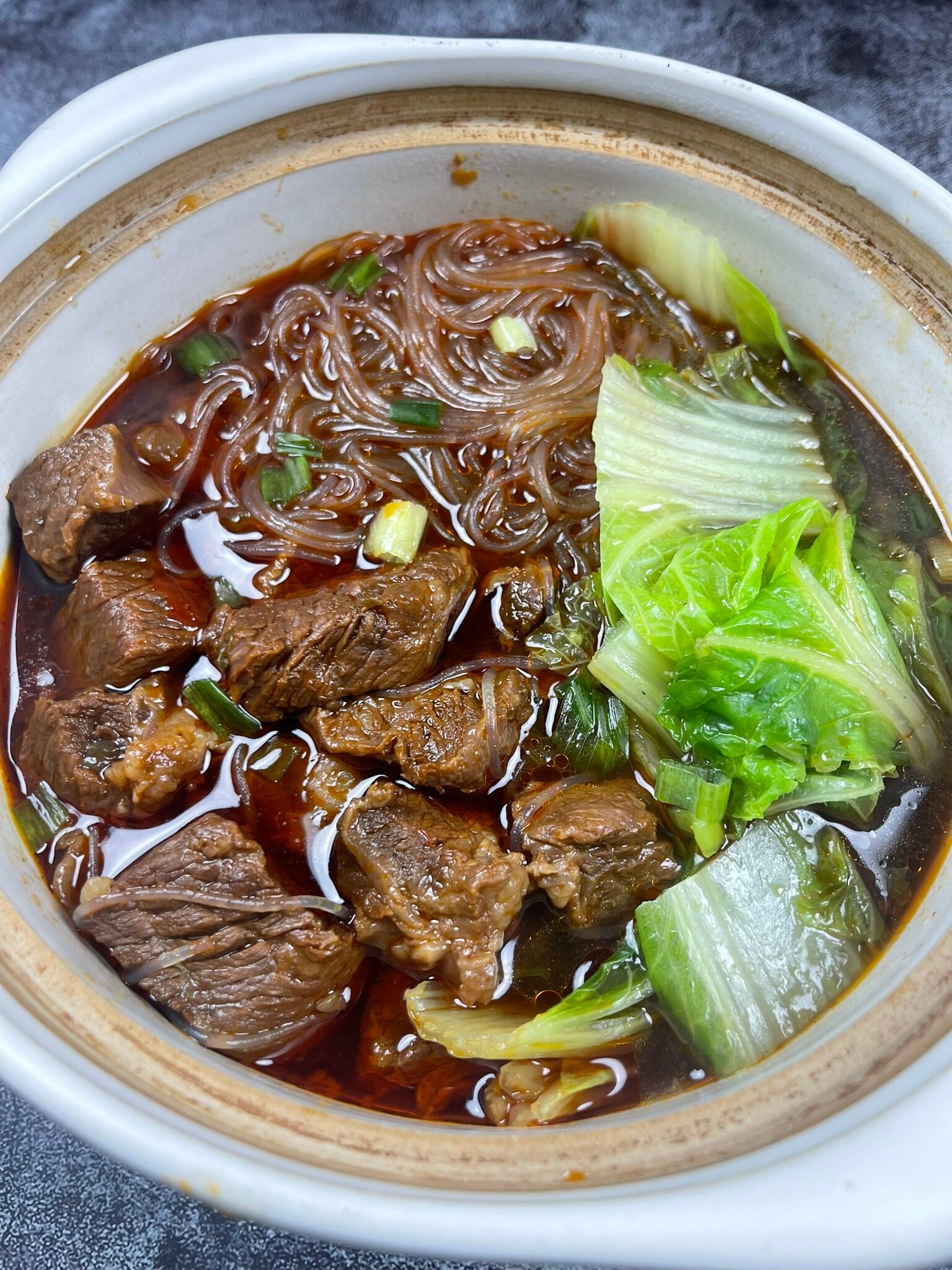
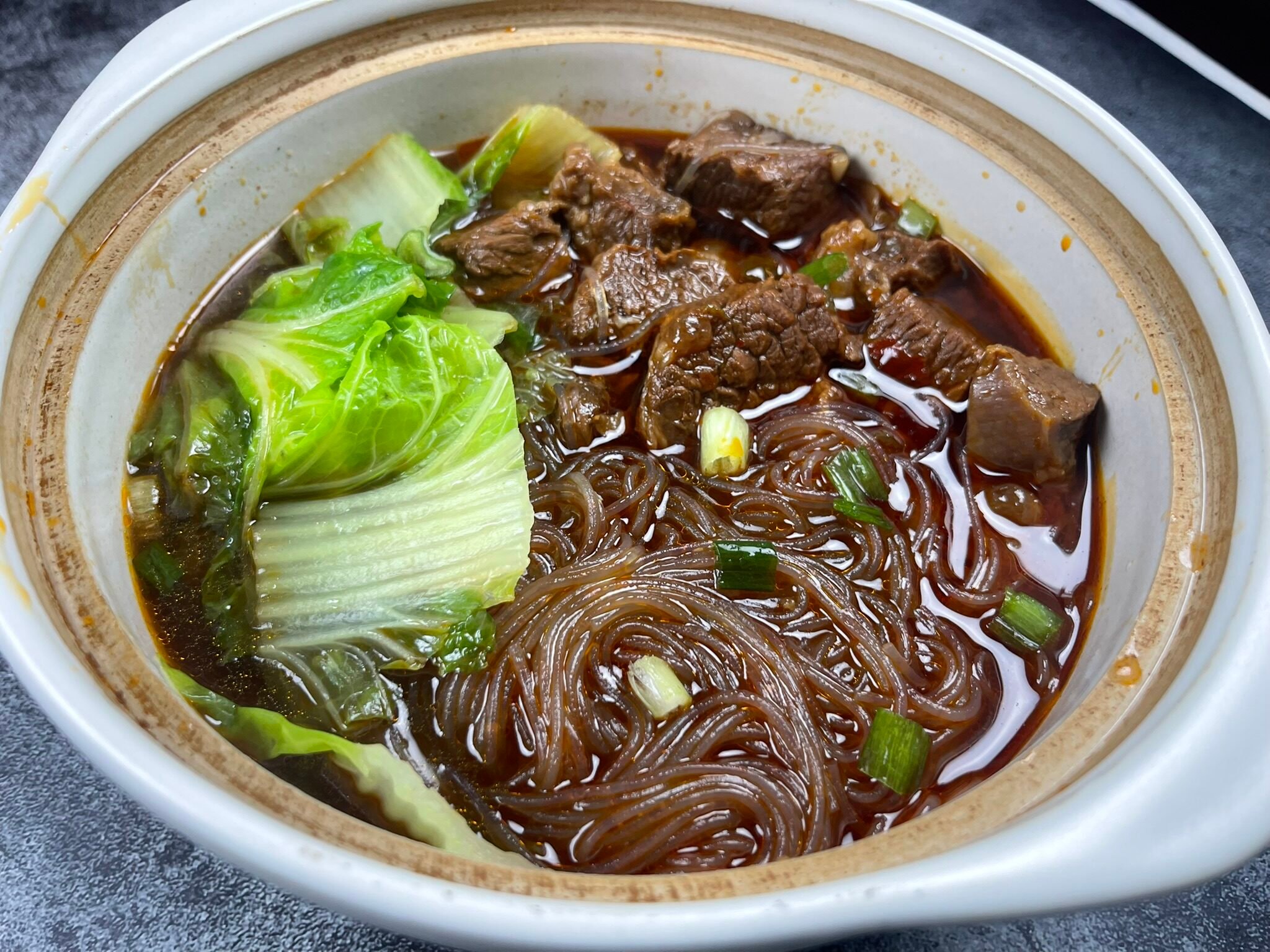
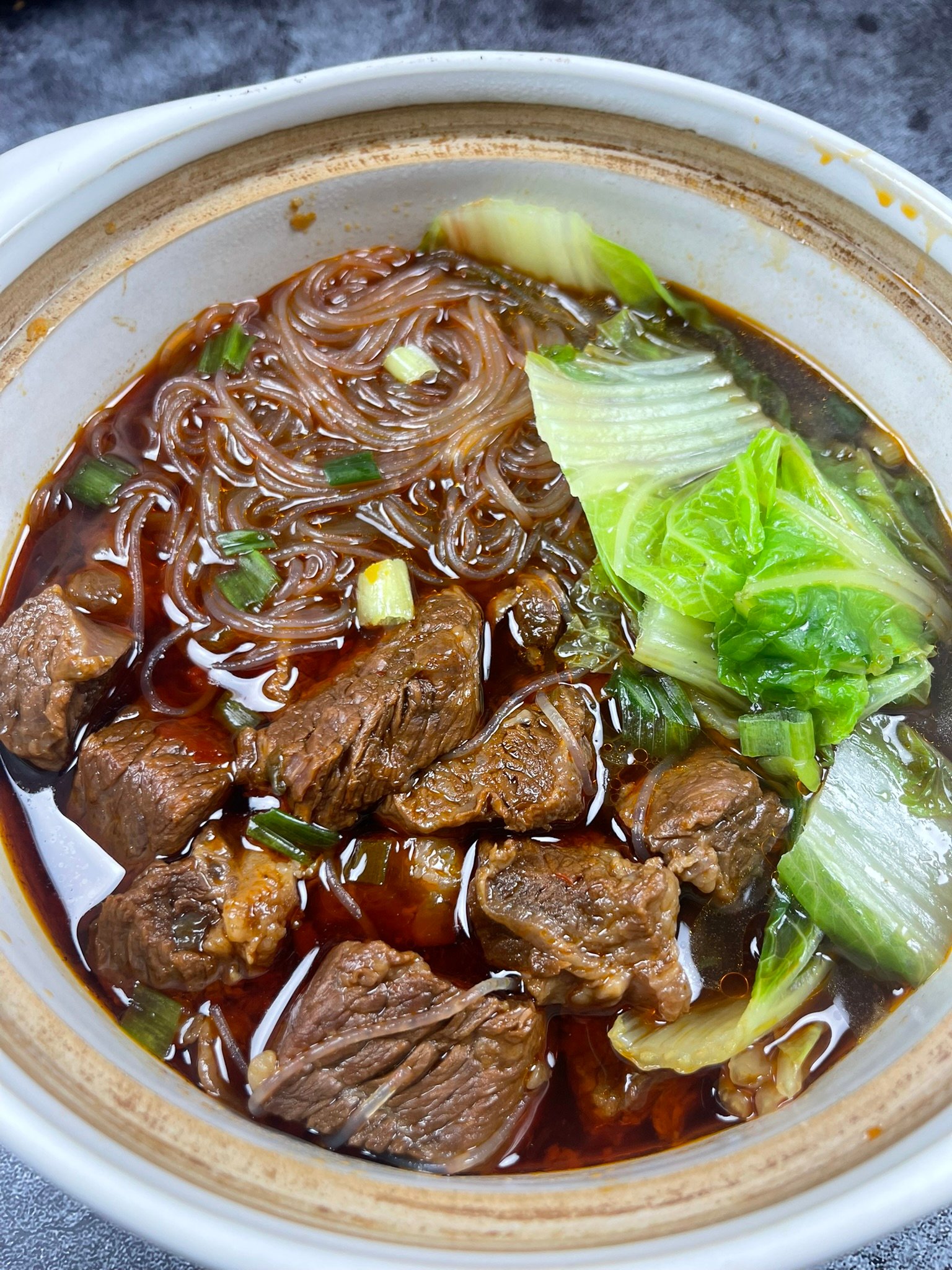
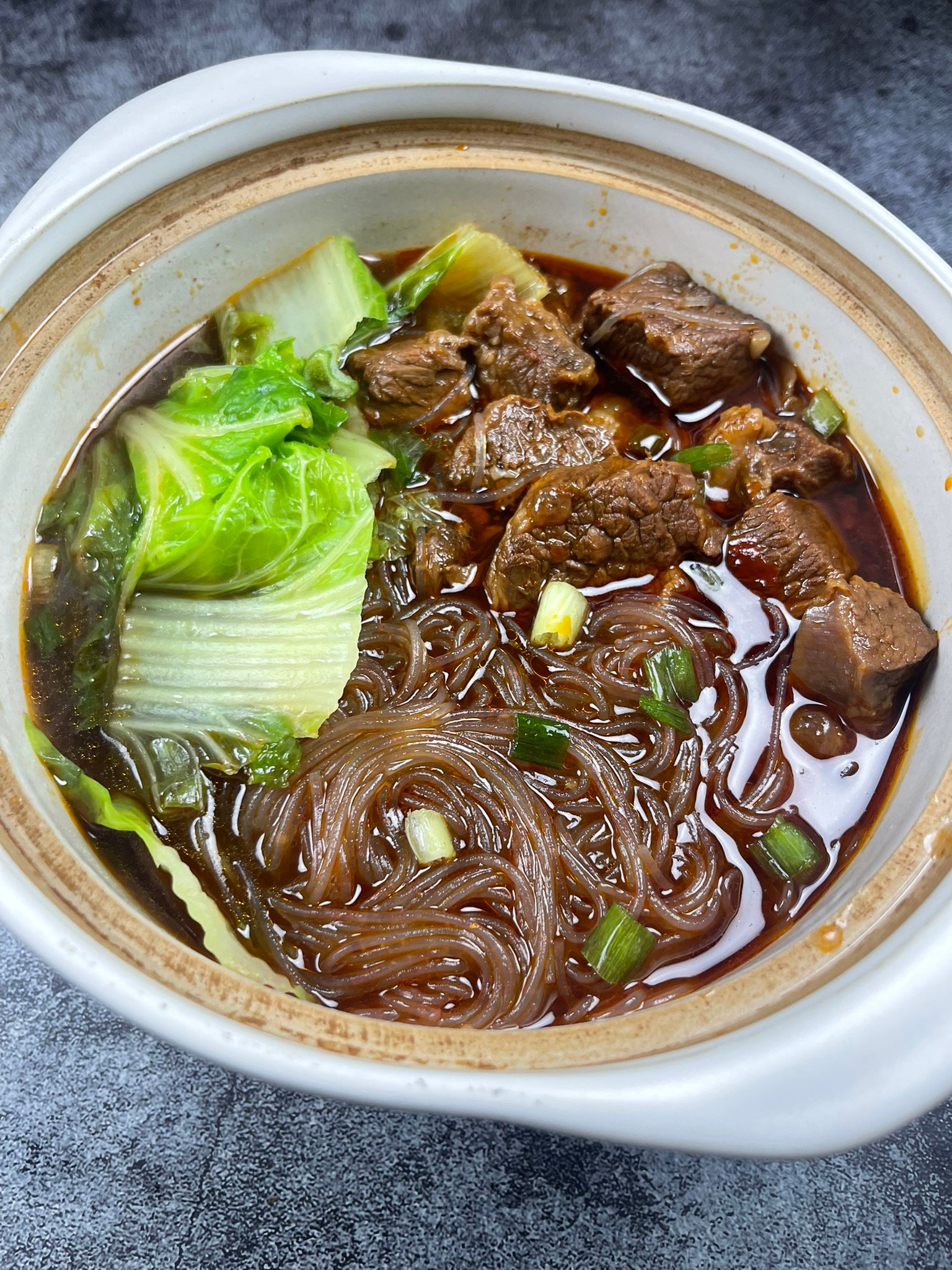
This Chinese Braised Beef Stew with Glass Noodles (紅燒牛肉粉絲煲) features tender chunks of beef simmered with soy sauce, aromatics, and star anise. A cozy one-pot meal with vermicelli noodles and optional veggies-perfect for chilly nights!

Jump to:
Growing up in a Taiwanese household, soy-braised dishes like this were a cold-weather favorite. Actually, who am I kidding - I can eat this any time through out the year 😀 This version, with glass noodles (粉絲), is comforting and full of flavor - and while it's not the same as 紅燒牛肉麵 (Red Braised Beef Noodle Soup), it's got similar vibes with less work and no need to boil separate noodles.
About the Ingredients
Here is some extra info about the dish:
Beef
I like using short rib, beef shank, or brisket for this recipe - they all have enough fat and connective tissue to become tender and flavorful after simmering. If you're going for extra richness, short rib is your best bet. Shank gives you that classic red-braised chew.
Doubanjiang (豆瓣醬)
This fermented chili bean paste is the secret to deep, umami-packed flavor. It adds a mild kick and a savory backbone to the stew. You can find it at most Asian grocery stores or online.

Soy Sauce & Dark Soy Sauce
Regular soy sauce gives salty, savory flavor, while dark soy sauce is thicker and darker - it's used mainly for color and depth. Don't skip the dark soy if you want that signature red-braised look.
Rice Wine
This Chinese cooking wine adds complexity and helps tenderize the beef. You can use either michiu (米酒) or Shaoxing wine (紹興酒) - both work well in this stew. Michiu is lighter and more neutral, while Shaoxing adds a slightly deeper, more savory flavor. If you don't have either on hand, dry sherry is a decent substitute, but if you cook Chinese food regularly, it's worth picking up a bottle of authentic rice wine to keep in your pantry.

Aromatics (Garlic, Green Onion, Optional Onion)
These build the flavor base of the stew. I use crushed garlic and green onions, and sometimes throw in a quartered onion for a little extra sweetness and body in the broth.
Glass Noodles (粉絲)
These are made from mung bean starch and turn soft and slurpable when simmered in broth. You'll usually see them soaked in warm water before cooking to help them soften faster and more evenly - but honestly, if you're making a soup or stew like this, you can toss them right into the pot and let them cook directly in the broth.
Soaked noodles take about 5-7 minutes to cook; unsoaked noodles may need 7-9 minutes. Just keep an eye on them and stir occasionally to prevent clumping.
Optional Veggies
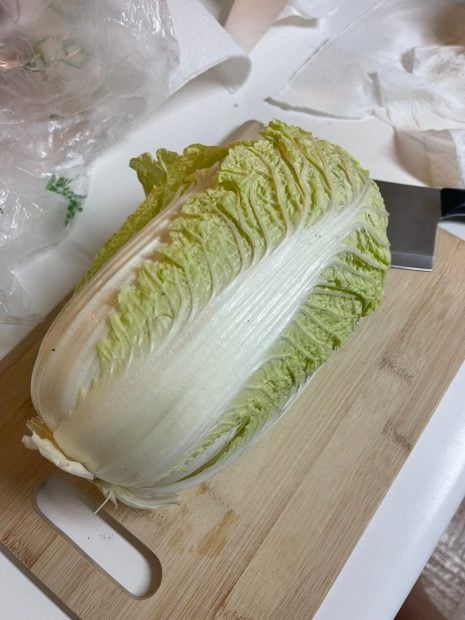
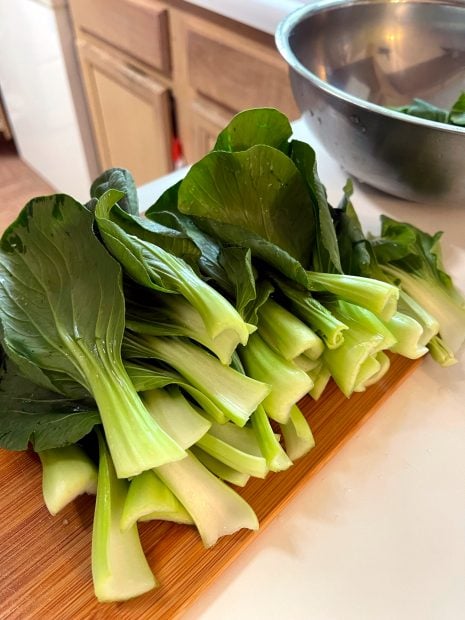
I like to add Napa cabbage or bok choy near the end for freshness and balance. Totally optional - the stew is delicious either way.
Optional Spices
Want extra warmth or spice? Toss in Sichuan peppercorns for a subtle numbing heat, dried chilies for more kick, or a second star anise for stronger licorice spice. Totally customizable depending on how bold you want the flavor.
How to cook Chinese Braised Beef Stew with Glass Noodles (紅燒牛肉粉絲煲)
First, gather your ingredients:
- 1½ lbs short rib meat, beef shank, or brisket, cut into 2-inch chunks
- Water, enough to cover the beef by about 1 inch (approximately 5-7 cups)
- 4 cloves garlic, crushed and roughly chopped
- 2 green onions, cut into 2-inch pieces (halved)
- 2 tablespoons soy sauce
- 1 tablespoon dark soy sauce (adds rich color)
- 2 tablespoons rice wine
- 1 tablespoon doubanjiang (chili bean paste)
- 1 teaspoon sugar (or rock sugar, if available)
- 1 bundle mung bean vermicelli / glass noodles (粉絲), soaked in warm water for 10 minutes (optional)
- Napa cabbage or bok choy, chopped (optional)
- Optional spices:
- 2 star anise
- 1 teaspoon sichuan peppercorn
- 3-5 dried chili peppers
Prepare your ingredients
Cut the beef into 2-inch chunks. Crush and roughly chop the garlic, and cut the green onions into 2-inch sections. If using Napa cabbage or bok choy, chop that as well and set aside for later.
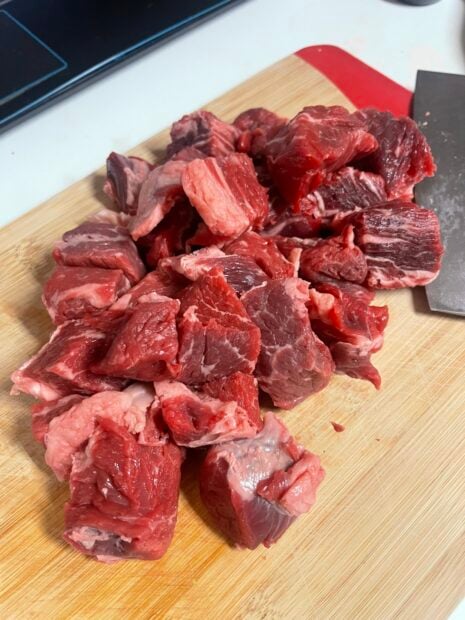
For the glass noodles, you can soak them in warm water for 10 minutes to help them soften more evenly - or skip the soak and add them directly to the stew later; just let them simmer a few extra minutes until tender.
Parboil the Beef (Optional but Recommended)
Place the beef chunks in a pot of cold water and bring it to a boil. As soon as it reaches a full boil and scum starts to rise, turn off the heat. Drain immediately and rinse the beef under cold water to remove impurities. Set aside.
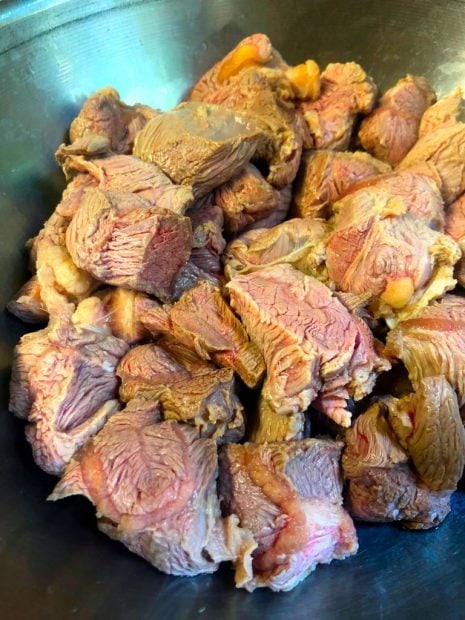
Sauté Aromatics and Doubanjiang
In a large pot or Dutch oven, heat a bit of oil over medium heat. Add garlic, half the green onions, and onion (if using), and sauté for 1-2 minutes until fragrant.
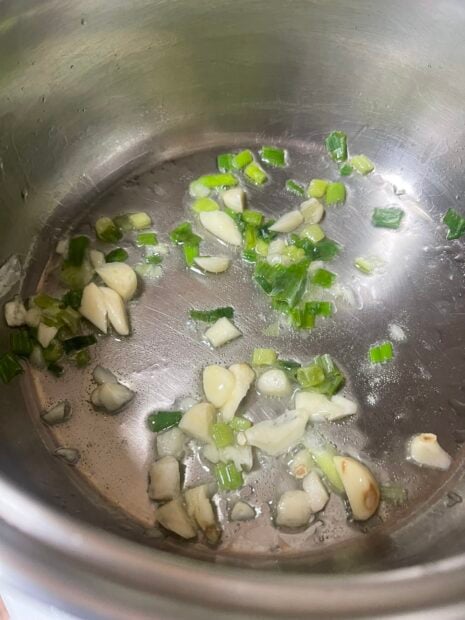
Build the Stew Base
Add beef to the pot along with green onions, doubanjiang, soy sauces, rice wine, sugar, and star anise. If using optional spices (Sichuan peppercorns, dried chilies), add them now. Add enough water to cover the beef by about 1 inch. Bring to a boil.
Simmer the Stew
Once boiling, reduce heat to low. Cover and simmer for 1½ to 2 hours, or until the beef is tender.
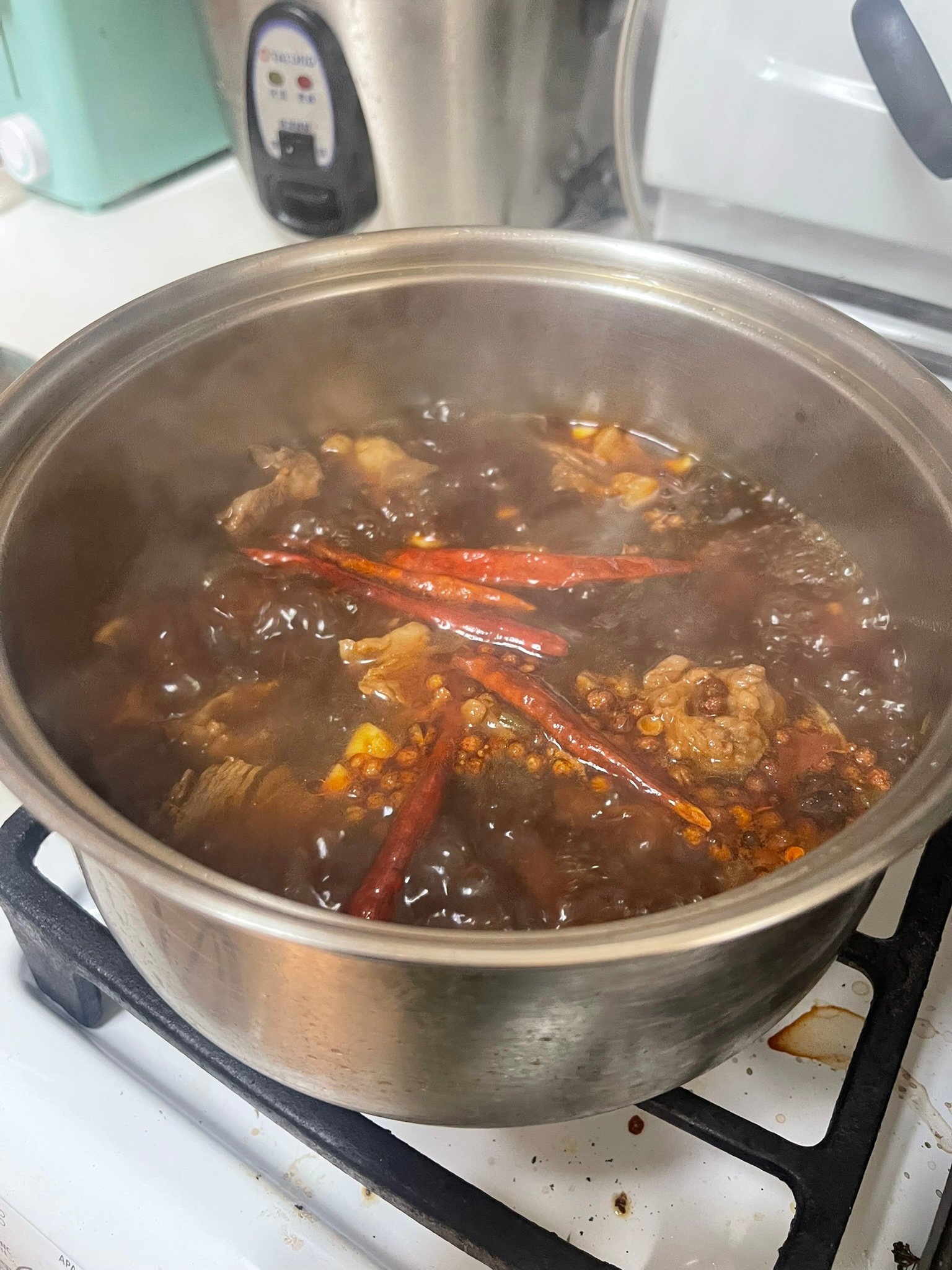
Add Vegetables (Optional)
Stir in chopped Napa cabbage or bok choy during the last 15-20 minutes. Simmer uncovered to allow the broth to concentrate slightly.
Add Glass Noodles
Add the glass noodles to the stew and simmer until they're soft and translucent.
- If not soaked, simmer for 7-9 minutes, stirring occasionally so they don't clump.
They'll soak up the flavor of the broth beautifully. - If pre-soaked, cook for 5-7 minutes.
Taste and Serve
Adjust seasoning with more soy sauce or salt, if needed. Sprinkle with rest of green onions. Serve hot, optionally topped with sesame oil or green onions.
Frequently Asked Questions (FAQ)
Can I make this ahead of time?
Yes! This stew tastes even better the next day as the flavors develop. Store it in the fridge for up to 4 days. Just reheat gently on the stovetop and add a splash of water if the noodles have soaked up too much broth.
Can I freeze it?
You can freeze the beef and broth portion (without noodles or veggies). Glass noodles don't hold up well in the freezer and can turn mushy when reheated.
Do I have to use doubanjiang?
Doubanjiang adds amazing umami and a hint of spice, but you can skip it if you prefer a milder stew.
What kind of beef works best?
Short rib gives the richest flavor, but beef shank or brisket are also great options for that fall-apart tender texture. Just make sure to simmer low and slow!
What's the difference between this and Taiwanese beef noodle soup?
They share a similar flavor base, but this version is thicker and cozier - more of a stew than a soup. Also, glass noodles are used here instead of wheat noodles.
Chinese Braised Beef Stew with Glass Noodles Recipe
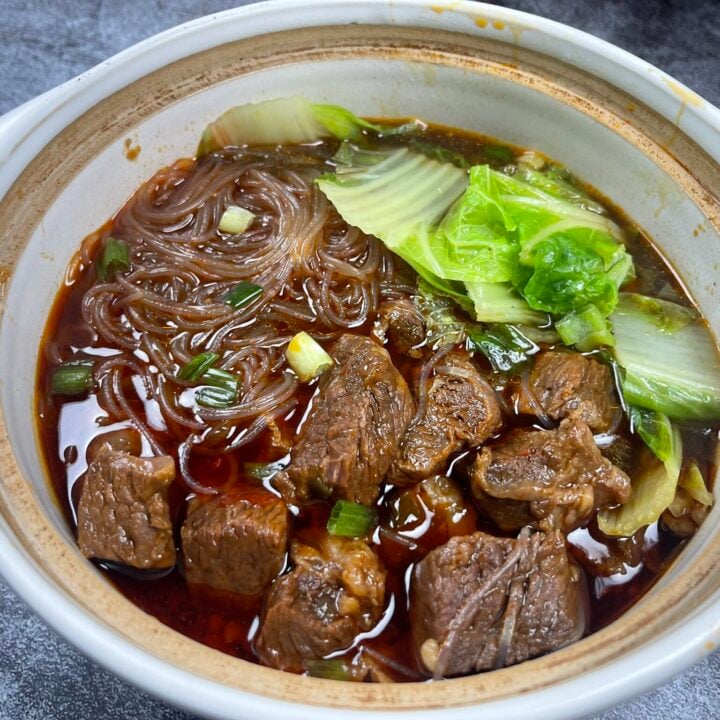
This Chinese Braised Beef Stew with Glass Noodles (紅燒牛肉粉絲煲) features tender chunks of beef simmered in a savory soy-based broth with garlic, doubanjiang, and warming spices. Glass noodles soak up all that rich flavor, making it a cozy, one-pot meal perfect for cold days or anytime you’re craving something comforting and satisfying.
Ingredients
- 1½ lbs short rib meat, beef shank, or brisket, cut into 2-inch chunks
- 6 cups water
- 4 cloves garlic, crushed and roughly chopped
- 2 green onions, cut into 2-inch pieces (halved)
- 1 small onion, quartered (optional)
- 2 tablespoons soy sauce
- 1 tablespoon dark soy sauce
- 2 tablespoons Shaoxing wine or michiu
- 1 tablespoon doubanjiang (chili bean paste)
- 1 teaspoon sugar (or rock sugar)
- 1 bundle mung bean vermicelli (glass noodles), soaked in warm water for 10 minutes (optional)
- Napa cabbage or bok choy, chopped (optional)
Optional Spices:
- 1 additional star anise
- 1 teaspoon Sichuan peppercorns
- 3–5 dried chili peppers
Instructions
- Cut the beef into chunks. Prep the garlic, green onions, and optional vegetables. Soak the glass noodles if desired.
- Place the beef in a pot of cold water and bring to a boil. Once it reaches a rolling boil, turn off the heat. Drain and rinse the beef under cold water.
- In a soup pot or Dutch oven, heat oil over medium heat. Add the garlic, green onions, and onion if using. Sauté for 1-2 minutes, then stir in the doubanjiang and cook for 30 seconds.
- Add the beef, soy sauces, wine, sugar, and star anise. Include optional spices if using. Add enough water to cover the beef by about 1 inch. Bring to a boil.
- Lower the heat to a simmer. Cover and cook for 1½ to 2 hours, or until the beef is tender.
- If using vegetables, stir in the chopped cabbage or bok choy during the last 15-20 minutes of simmering.
- Add the glass noodles and simmer until tender, about 5-7 minutes if pre-soaked or 7-9 minutes if not soaked. Stir occasionally to prevent sticking.
- Taste the broth before serving and adjust seasoning if needed. For a bolder flavor, add more soy sauce, salt, or doubanjiang to taste and simmer for a few more minutes. Sprinkle with the remaining green onions and serve hot.
Notes
- Flavor tip: For a bolder, richer broth, increase the doubanjiang to 1½-2 tablespoons, add an extra tablespoon of soy sauce, or simmer uncovered near the end to concentrate the broth. Different brands of doubanjiang can vary in saltiness and intensity, so taste and adjust before serving.
- Glass noodle prep: Soaking speeds up cooking, but unsoaked noodles work fine in stew - just simmer a few extra minutes and stir to prevent clumping.
- Noodle timing: Add noodles right before serving to avoid over-softening if storing leftovers.
- Optional veggies: Napa cabbage and bok choy balance the richness of the broth, but you can skip them or swap in spinach or Chinese celery.
Recommended Products
As an Amazon Associate and member of other affiliate programs, I earn from qualifying purchases.
-
 Lungkow Vermicelli Bean Thread Glass Noodles 8 ct 10.56 oz/300gm: Non GMO Product of Taiwan
 -
NESTLADY Yellow Rock Sugar 180g - 100% Natural 黄冰糖
-
Sichuan Pixian Boad Bean Paste with Red Chili Oil - 17.6 oz (500g) | Hong You Dou Ban
-
Michiu (Rice Cooking Wine)- 750ml (Pack of 1) by QIAN HU
-
Lee Kum Kee Premium Dark Soy Sauce (16.9 oz - 1 Pack), Full-Bodied Naturally Brewed Soy Sauce, Non GMO Soybeans, Vegan, No MSG, Best for Adding Natural Colors to Stews, Gravies, Braised Dishes & Stir-Fried Noodles
-
Wan Ja Shan Organic Aged Soy Sauce, 33.8fl.oz


Nutrition Information:
Yield: 4 Serving Size: 1 bowl based on 4 servingsAmount Per Serving: Calories: 420Total Fat: 18gSaturated Fat: 6gTrans Fat: 0gUnsaturated Fat: 11gCholesterol: 75mgSodium: 850mgCarbohydrates: 36gNet Carbohydrates: 34gFiber: 2gSugar: 3gSugar Alcohols: 0gProtein: 30g
The nutrition information for this recipe is an approximate total per serving. Please double check the nutrition information for your exact ingredients and brands for more precise nutrition information. Keep in mind that if there is a marinade, often times not all the ingredients will be consumed.
More Delicious Chinese Beef Recipes!
Beef and Vegetables Stir Fry - Tender marinated beef stir fried with baby corn, asparagus, and carrots in a savory sauce. Colorful, flavorful, and perfect for weeknights.
Stir Fry Ground Beef - An easy, tasty stir fry made with ground beef, onions, mushrooms, and garlic. Simple, fast, and great for busy days.
Beef Cucumber Stir Fry - Marinated sliced beef stir fried with crunchy cucumber and garlic. Light, fresh, and surprisingly flavorful.
Beef Yu Choy Stir Fry - Tender marinated beef cooked with yu choy (choy sum) in a savory sauce. A classic Chinese veggie-and-beef pairing that's quick and delicious.
Pin for later!
Got questions or comments? Drop them below!