
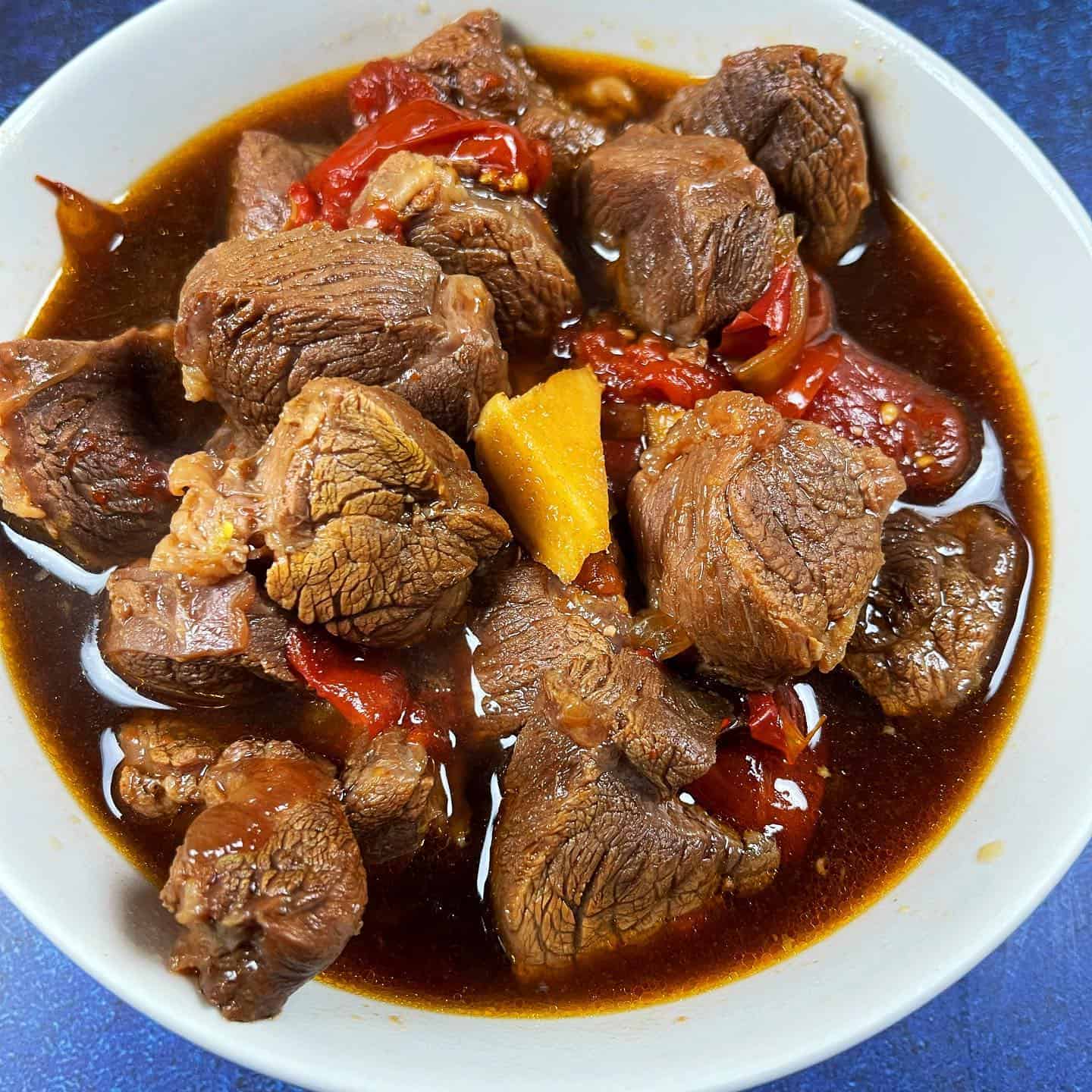
Red Braised Beef, also called Hong Shao Niu Rou (紅燒牛肉), is a comforting dish made by slowly simmering beef with soy sauce, rice wine, ginger, garlic, star anise, and other aromatics until tender.
Jump to:
- What does braised beef mean?
- Why is it called Red Braised Beef?
- The best beef for red braised beef
- How to customize red braised beef
- What is doubanjiang?
- How to make Red Braised Beef
- Slow Cooker Red Braised Beef
- Instant Pot Red Braised Beef
- Red Braised Beef Recipe (Hong Shao Niu Rou 紅燒牛肉)
- Pin for later!
- More Delicious Stews Recipes!
Serve it with steamed rice and vegetables for a complete meal, or add noodles, broth, bok choy, and a boiled egg to turn it into Taiwanese Beef Noodle Soup!
What does braised beef mean?
Braising is a cooking method in which meat is first browned or briefly cooked at a higher temperature and then slowly simmered in liquid until tender.
Although braising is common in Asian cooking, you'll find similar techniques around the world. French beef bourguignon, for example, is also made by slowly cooking beef in a flavorful liquid.
Braising is similar to stewing, but braised dishes typically use larger pieces of meat and less liquid. Stews generally contain smaller pieces of meat that are fully submerged.
By the way - if you like red braised beef, you will most likely also enjoy my red braised pork belly, red braised chicken, and red braised fish!
Why is it called Red Braised Beef?
Red Braised Beef is called Hong Shao Niu Rou (紅燒牛肉) in Chinese:
- Hong Shao (紅燒) means "red cooked" or "red braised."
- Niu Rou (牛肉) means "beef."
Red braising is a Chinese cooking technique that uses ingredients such as soy sauce, sugar, rice wine, and aromatics to create a rich, reddish-brown sauce. Dark soy sauce can also be added for a deeper color.
Tomatoes and doubanjiang are not required for every red-braised dish, but they add extra flavor and are especially delicious in Taiwanese-style braised beef.
The best beef for red braised beef
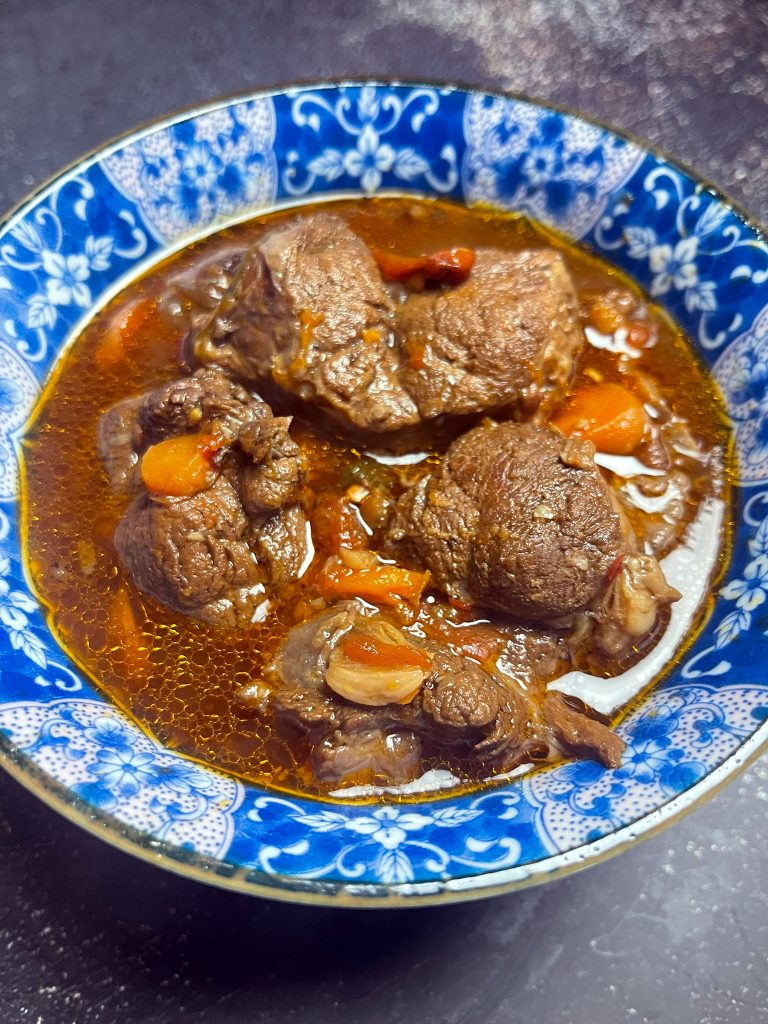
Beef shank is one of my favorite cuts for this recipe because its connective tissue becomes tender and flavorful during the long cooking process. It also holds its shape well instead of completely falling apart.
However, you don't have to use beef shank. Other good choices include:
- Chuck roast
- Brisket
- Precut beef stew meat
Whatever cut you choose, slice it into approximately 2-inch chunks so the pieces cook evenly. If you're using a large, bone-in beef shank in the slow cooker, you can also leave it whole and break the meat into pieces after cooking.
How to customize red braised beef
This dish is very customizable! You can add almost any vegetables you enjoy, including:
- Carrots
- Daikon radish
- Potatoes
- Cabbage
- Mushrooms
- Onions
Add firm vegetables such as carrots, daikon, and potatoes during the final 30-45 minutes of cooking so they become tender without completely falling apart.
Cabbage and mushrooms cook more quickly, so add those during the final 15-20 minutes. You can also add extra tomato wedges near the end if you prefer them to remain more intact.
Try not to add too many vegetables at once because they release additional liquid and can crowd the pot.
Make it spicy
For a spicier braise, add more doubanjiang or include dried red chili peppers or chili oil. If you prefer a milder dish, leave out the doubanjiang entirely.
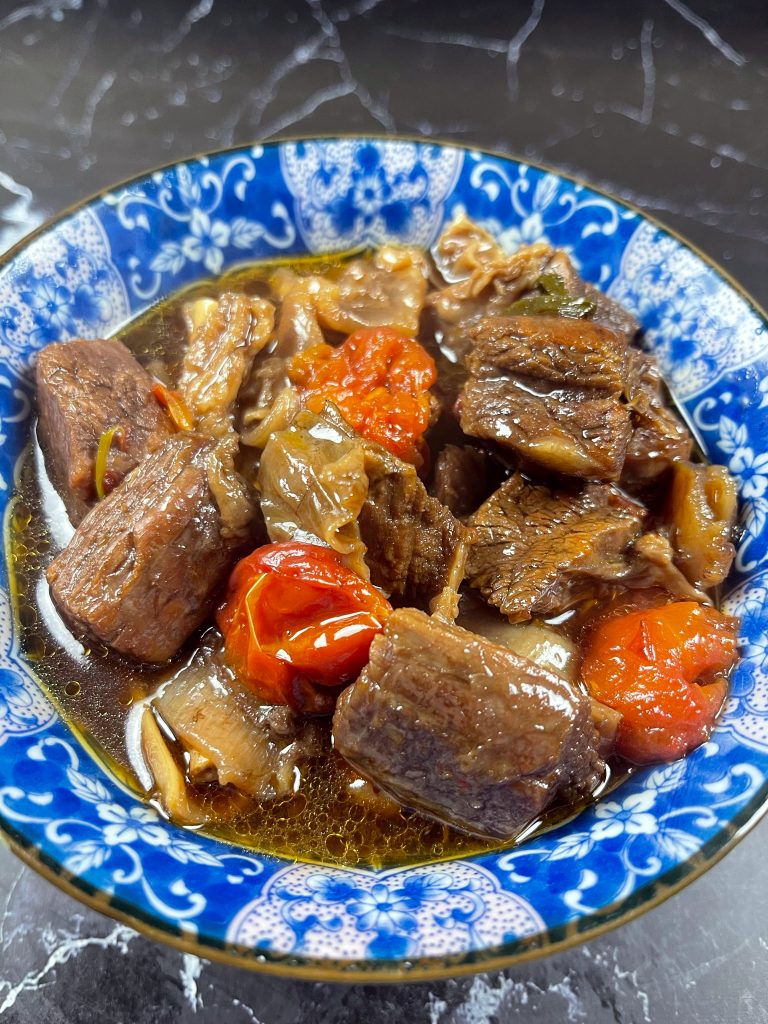
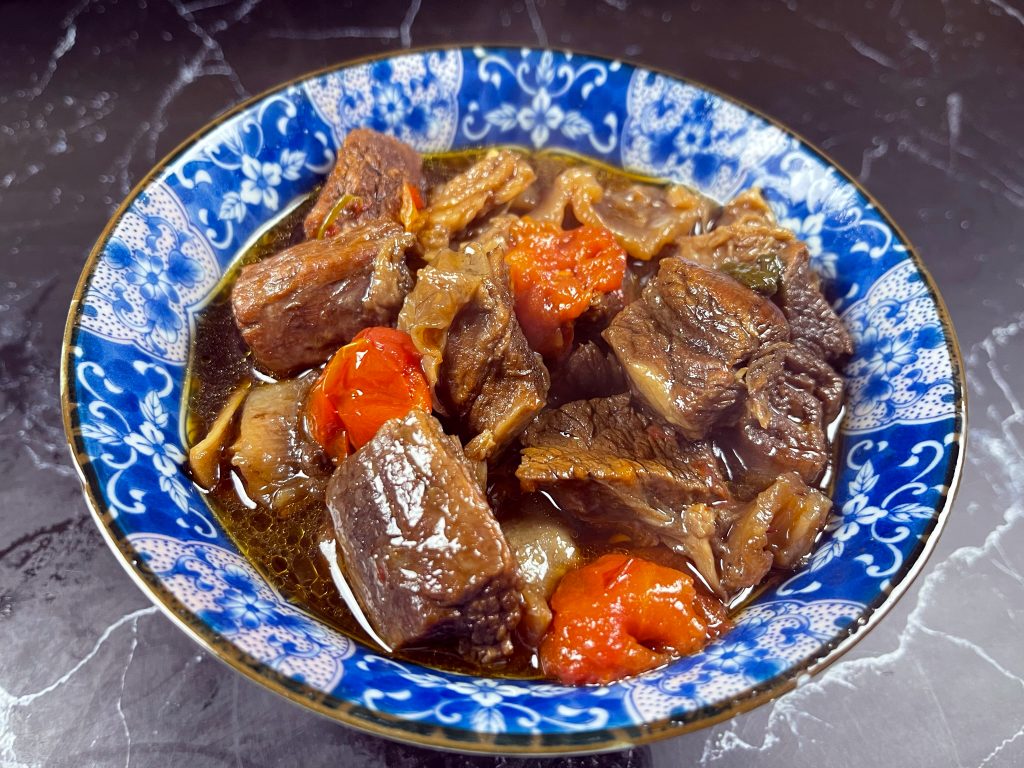
What is doubanjiang?
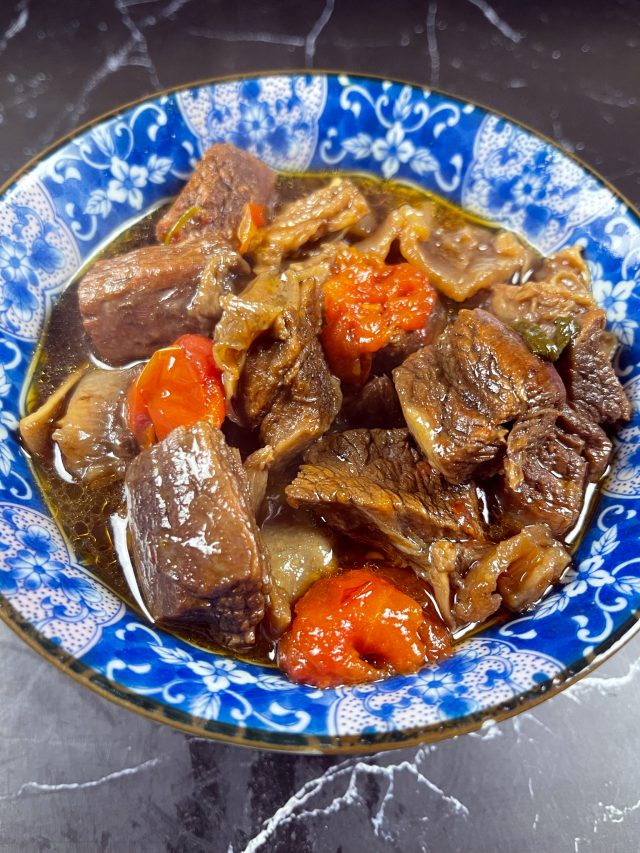
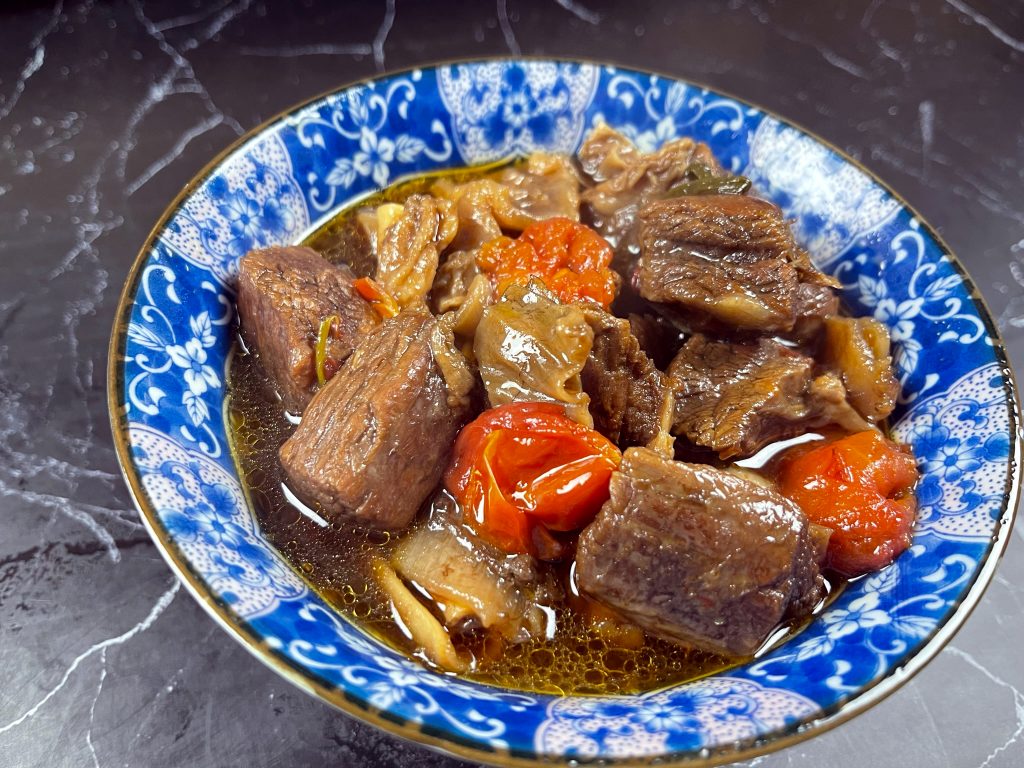
Doubanjiang (豆瓣醬), also called chili bean paste, is a savory fermented bean paste commonly used in Sichuan cooking. It is traditionally made with fermented broad beans, chili peppers, salt, and other seasonings.
Different brands vary considerably in saltiness and heat, so begin with 1 tablespoon and add more if desired.
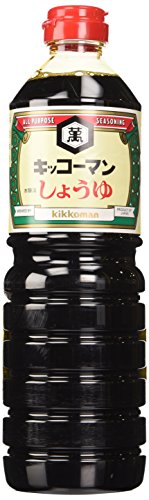
Doubanjiang is optional in this recipe, but it gives the braising liquid a deeper, slightly spicy flavor. You can find it at most Asian supermarkets or online. Lee Kum Kee Chili Bean Sauce, also labeled Toban Djan, is one widely available option.
I also use chili bean paste in dishes such as Mapo Tofu, Szechuan Chicken, Twice Cooked Pork, and Jalapeño Chicken.
How to make Red Braised Beef
Ingredients
- 2-3 pounds beef shank, chuck roast, brisket, or stew meat, cut into 2-inch chunks
- Water, for blanching
- 1 tablespoon cooking oil
- 6 cloves garlic, smashed
- 2-inch piece fresh ginger, sliced
- 3 green onions, cut into large pieces
- ½ cup soy sauce
- 2 tablespoons dark soy sauce, optional
- ¼ cup rice wine
- 1-2 tablespoons doubanjiang or chili bean paste, optional
- 1 tablespoon rock sugar or brown sugar
- 2 star anise pods
- 2 tomatoes, cut into wedges, optional but recommended
- 8-10 cups water or low-sodium beef broth, as needed
Stovetop instructions
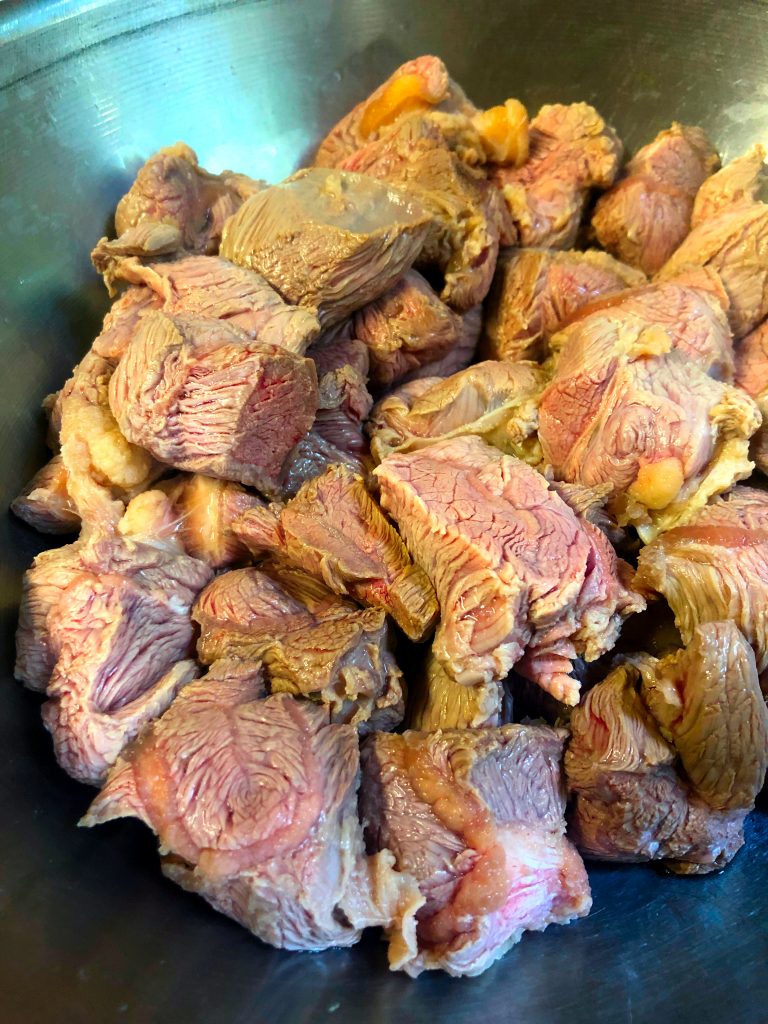
Place the beef in a large pot and cover it with cold water. Bring it to a boil and cook for 2-3 minutes. Drain the beef, rinse away any foam or impurities, and pat it dry.
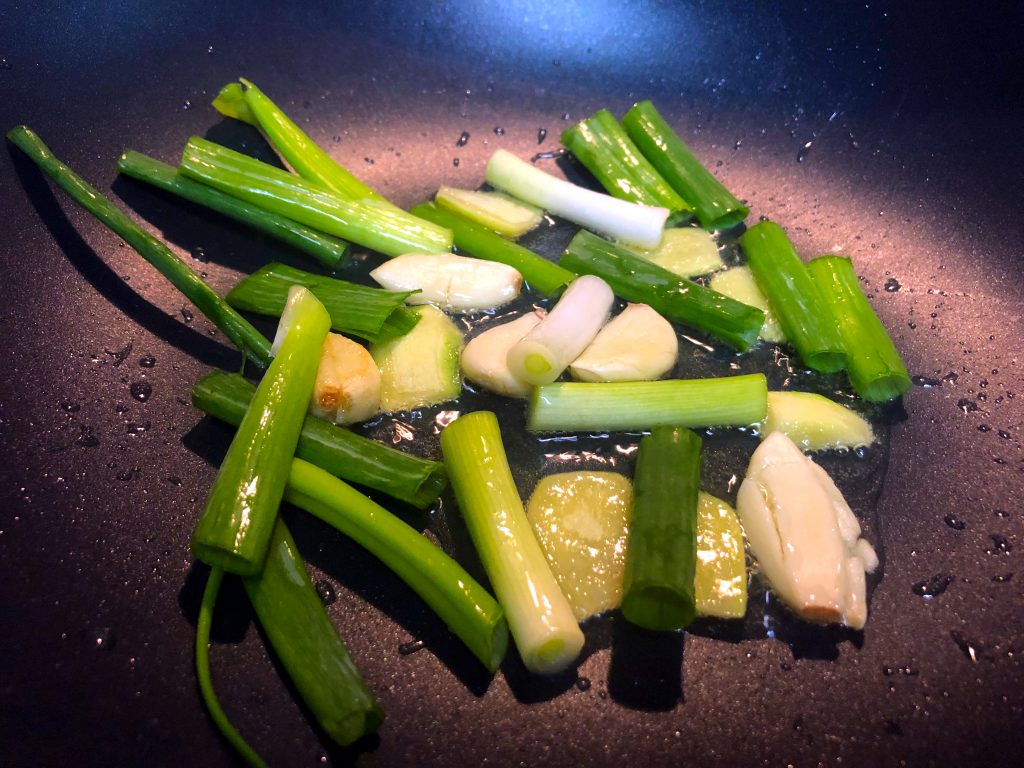
Heat the oil in a large soup pot or Dutch oven over medium-high heat. Add the garlic, ginger, and green onions. Stir-fry for about 1 minute, or until fragrant.
If using doubanjiang, add it to the pot and cook for another 30 seconds.
Add the beef and cook for 3-5 minutes, stirring occasionally. Add the soy sauce, dark soy sauce, rice wine, sugar, star anise, and tomatoes. Stir until everything is evenly combined.
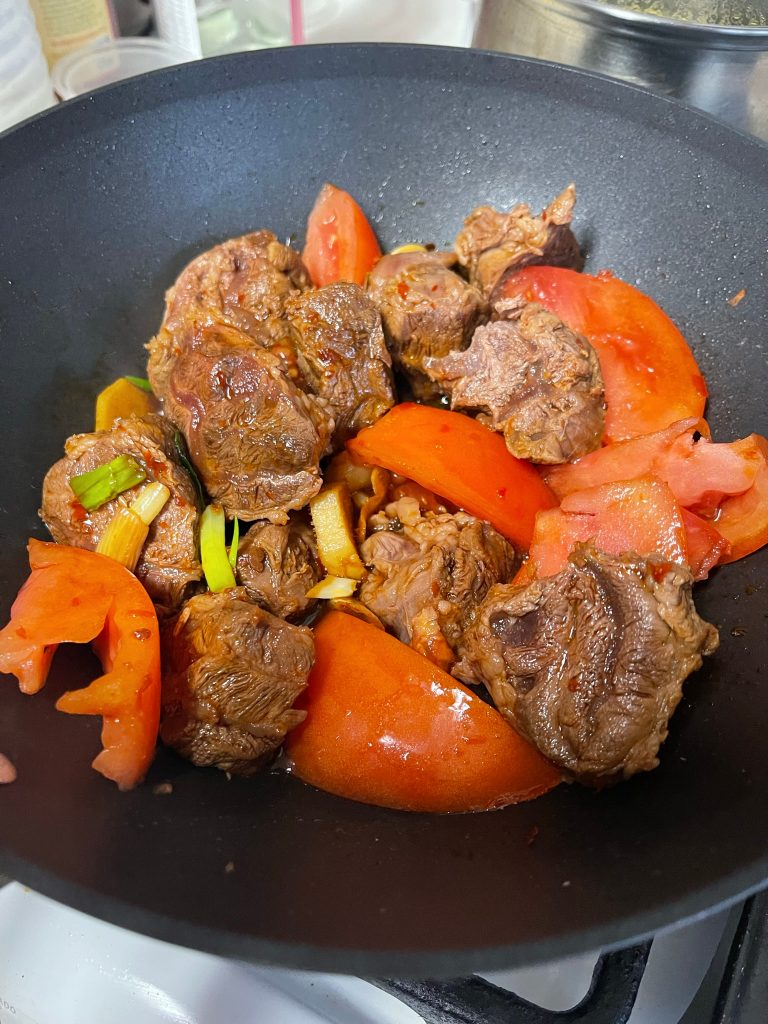
Pour in 8 cups of water or low-sodium beef broth, or enough to cover the beef. Bring the liquid to a boil.
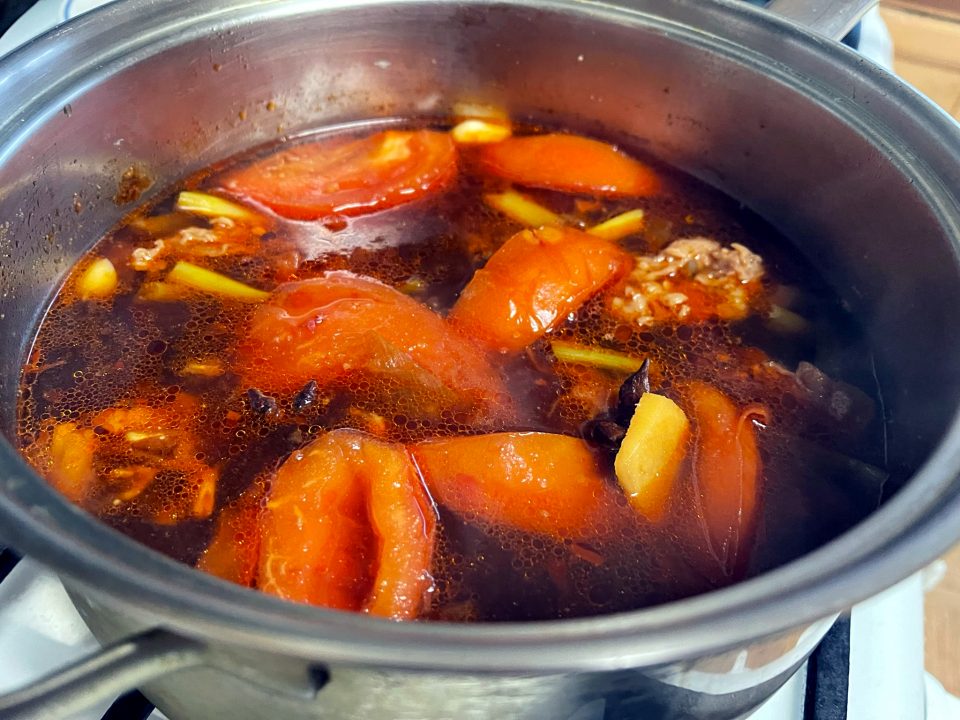
Reduce the heat to low, partially cover the pot, and simmer for 2-3 hours, or until the beef is tender. Stir occasionally and add more water or broth as needed.
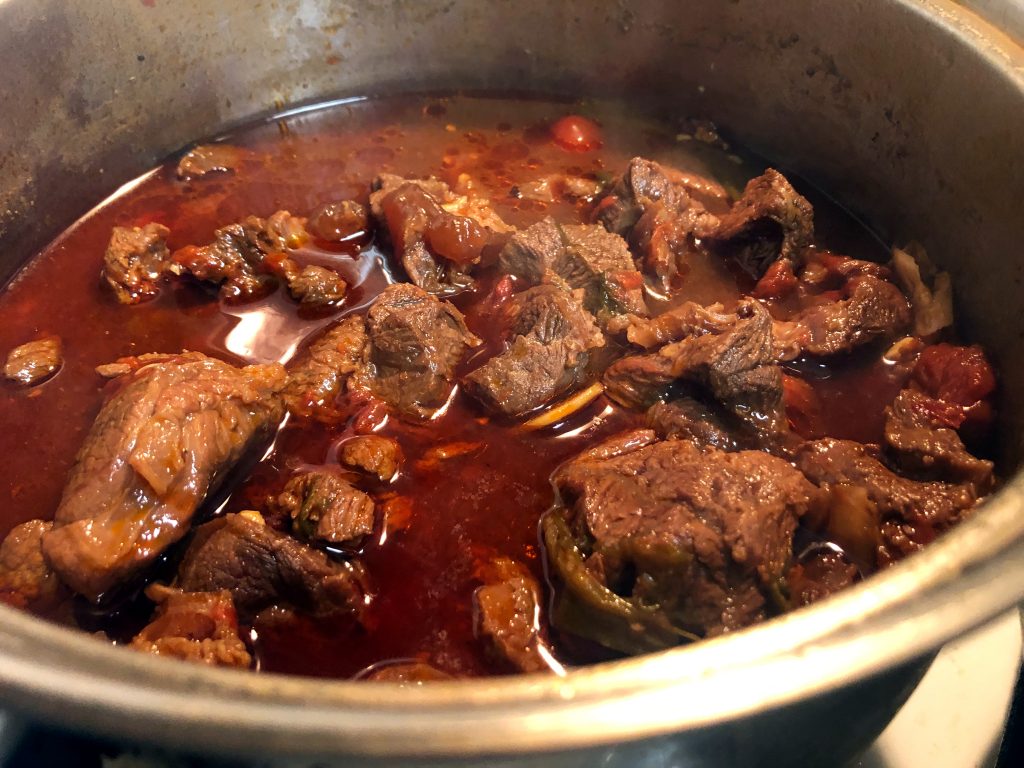
If you're adding carrots, daikon, or potatoes, add them during the final 30-45 minutes. Add cabbage or mushrooms during the final 15-20 minutes.
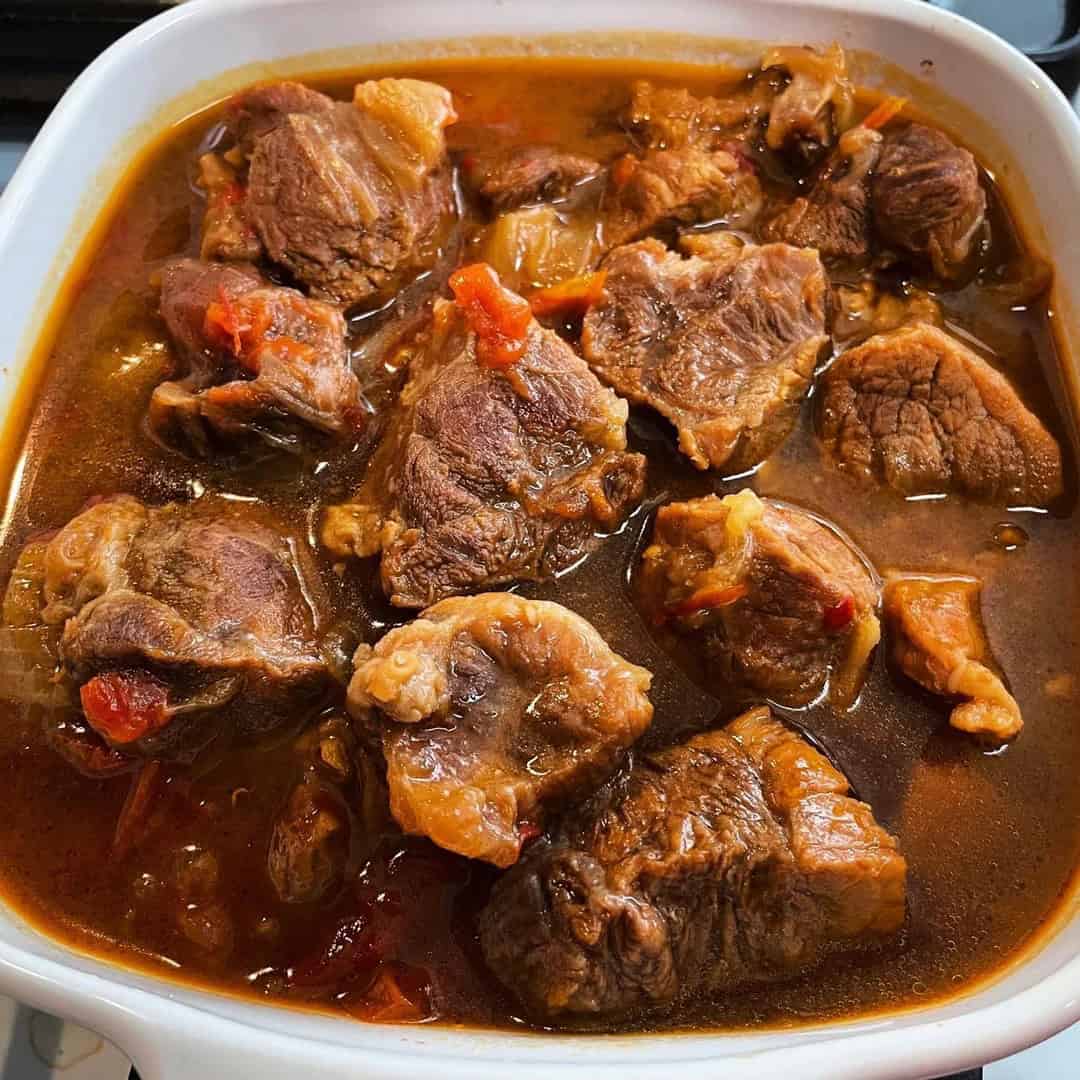
Taste the broth before serving and adjust the seasoning if needed. Serve the beef and vegetables with steamed rice, or add noodles and additional broth to make beef noodle soup!
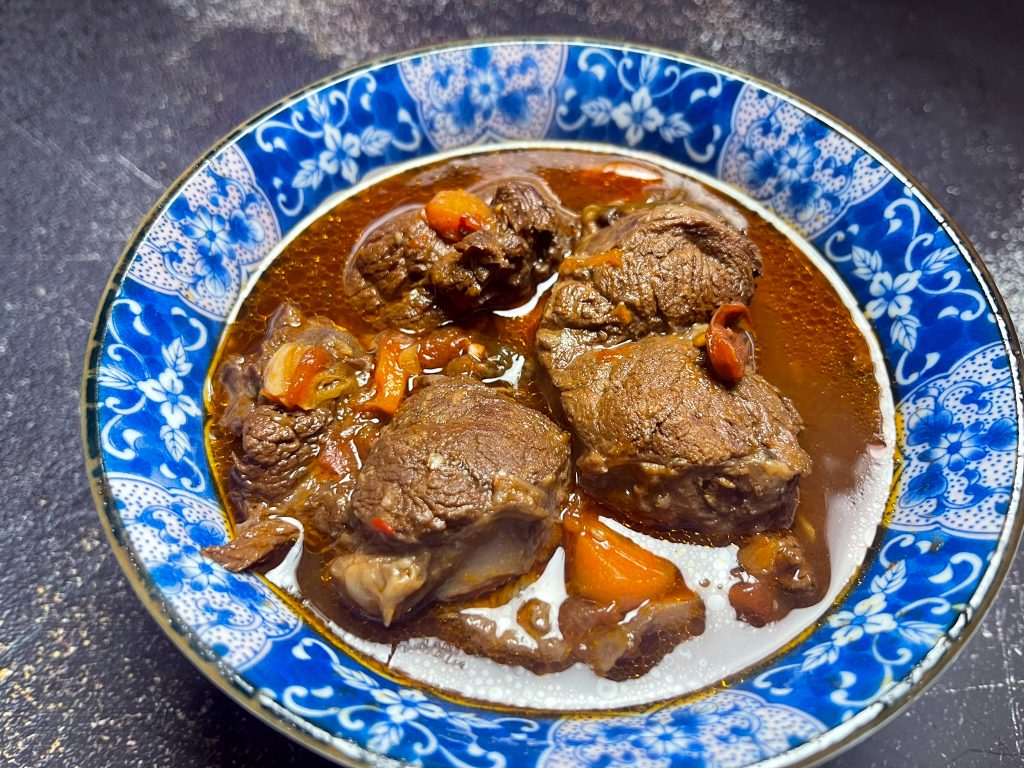
Slow Cooker Red Braised Beef
Blanch and rinse the beef as described above.
Heat the oil in a large skillet over medium-high heat. Add the garlic, ginger, and green onions and cook until fragrant. Add the doubanjiang, if using, and cook for another 30 seconds.
Add the beef and cook for 3-5 minutes. Stir in the soy sauce, dark soy sauce, rice wine, sugar, star anise, and tomatoes.
Transfer everything to the slow cooker. Add enough water or low-sodium beef broth to mostly cover the beef, usually about 6-8 cups depending on the size of your slow cooker.
Cover and cook for 4-5 hours on HIGH or 7-8 hours on LOW, until the beef is tender.
Add carrots, daikon, or potatoes during the final 1-2 hours. Add cabbage or mushrooms during the final 30-45 minutes.
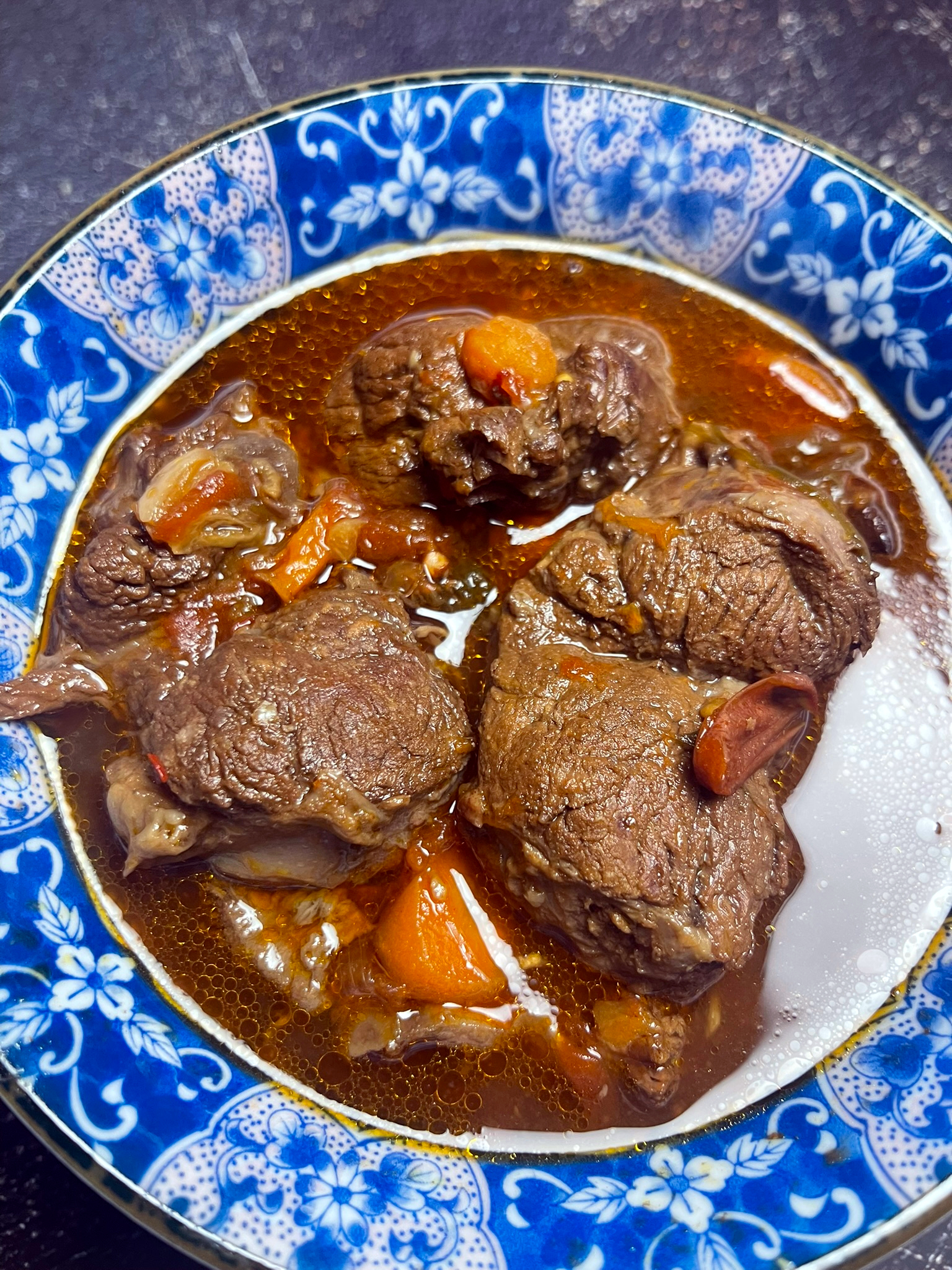
Using a whole bone-in beef shank
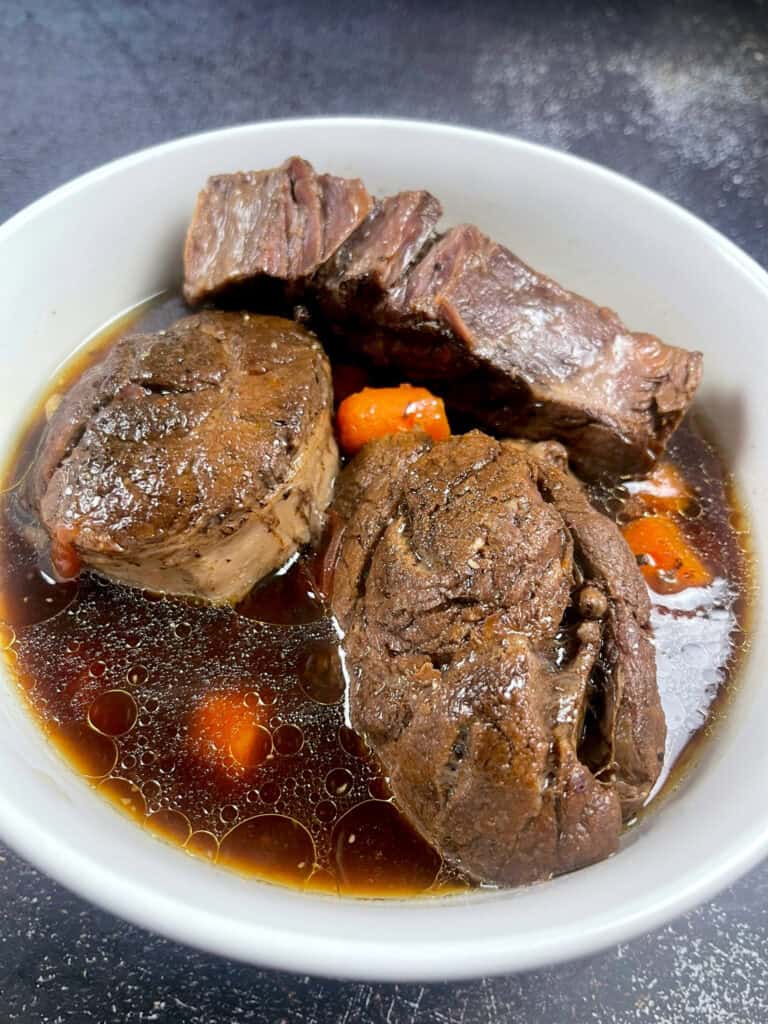
A large bone-in beef shank can be left whole when using the slow cooker. Blanching is optional, but it helps create a cleaner-tasting broth.
Brown the shank as well as you can, then transfer it to the slow cooker with the remaining ingredients. Add enough liquid to come approximately halfway to three-quarters of the way up the beef.
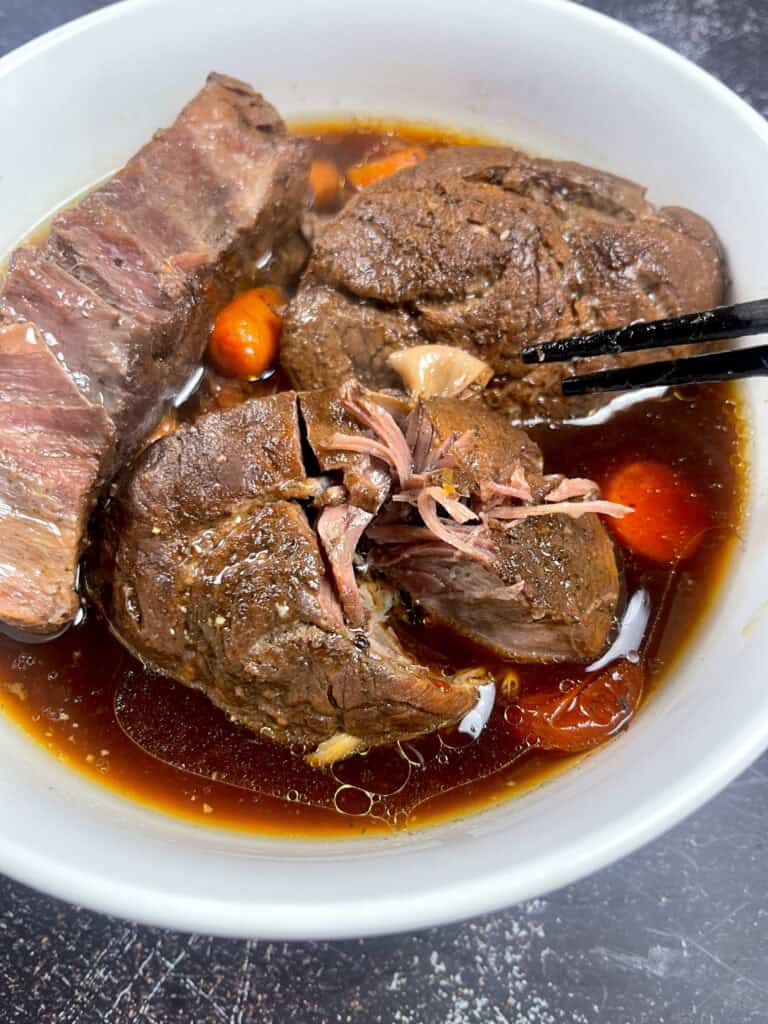
Cook for 5-6 hours on HIGH or 8-9 hours on LOW, until the meat is fork-tender and pulls easily away from the bone.
Instant Pot Red Braised Beef
Blanch and rinse the beef as described above.
Select the Sauté function on the Instant Pot. Once hot, add the oil, garlic, ginger, and green onions. Cook for about 1 minute.
Add the doubanjiang, if using, and cook for another 30 seconds. Add the beef and cook for 3-5 minutes.
Stir in the soy sauce, dark soy sauce, rice wine, sugar, star anise, and tomatoes. Add enough water or low-sodium beef broth to mostly cover the beef without exceeding the pressure cooker's maximum fill line. You will generally need less liquid than with the stovetop method.
Close and lock the lid. Cook on HIGH pressure for 45 minutes, followed by a 15-20 minute natural pressure release. Carefully release any remaining pressure before opening the lid.
For firmer vegetables, remove the lid, select Sauté, and simmer carrots, daikon, or potatoes in the broth until tender. Add cabbage and mushrooms during the final 5-10 minutes.
Taste the broth, adjust the seasoning if necessary, and serve with rice or noodles.
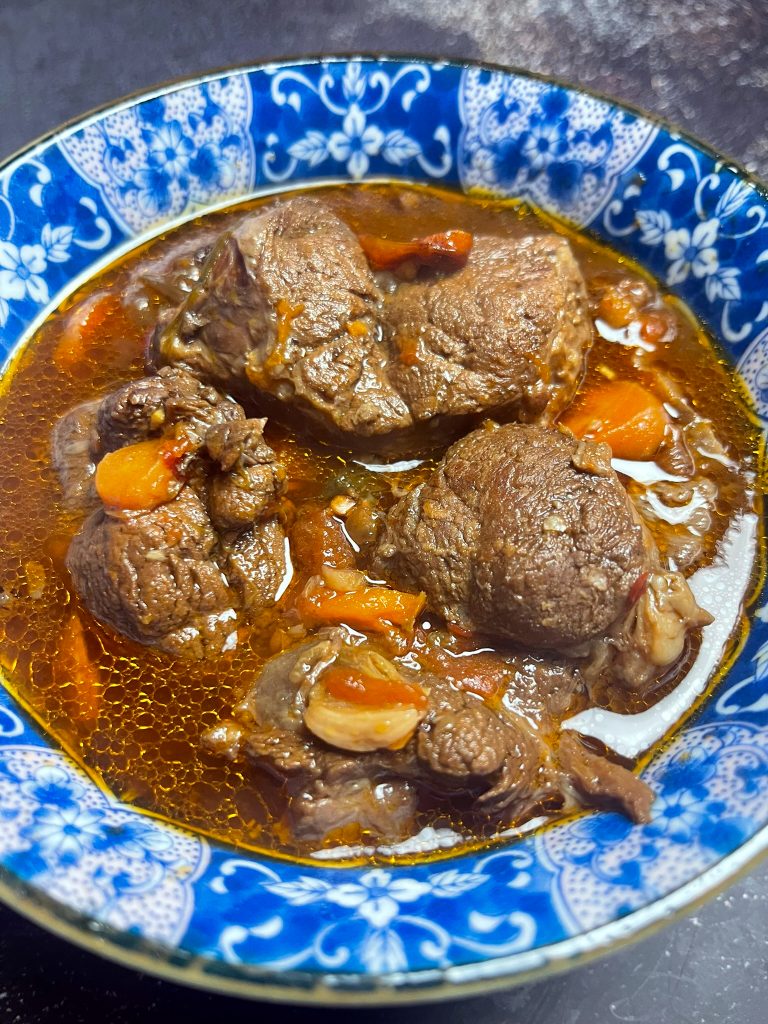
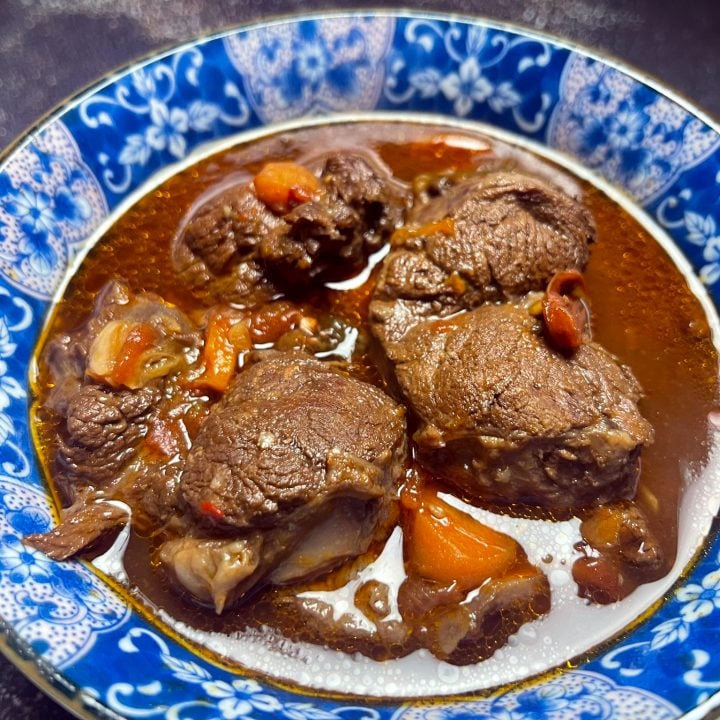
Red Braised Beef Recipe (Hong Shao Niu Rou 紅燒牛肉)
Tender beef is slowly simmered with soy sauce, rice wine, ginger, garlic, star anise, and tomatoes. Serve this savory red braised beef with steamed rice or use it to make Taiwanese beef noodle soup.
Ingredients
- 2–3 pounds beef shank, chuck roast, brisket, or stew meat, cut into 2-inch chunks
- Water, for blanching
- 1 tablespoon cooking oil
- 6 cloves garlic, smashed
- 2-inch piece fresh ginger, sliced
- 3 green onions, cut into large pieces
- ½ cup soy sauce
- 2 tablespoons dark soy sauce, optional
- ¼ cup rice wine
- 1–2 tablespoons doubanjiang or chili bean paste, optional
- 1 tablespoon rock sugar or brown sugar
- 2 star anise pods
- 2 tomatoes, cut into wedges, optional but recommended
- 8–10 cups water or low-sodium beef broth, as needed
Instructions
- Place the beef in a large pot and cover it with cold water. Bring it to a boil and cook for 2–3 minutes. Drain, rinse the beef, and pat it dry.
- Heat the oil in a large soup pot or Dutch oven over medium-high heat.
- Add the garlic, ginger, and green onions. Stir-fry for about 1 minute, or until fragrant.
- Add the doubanjiang, if using, and cook for another 30 seconds.
- Add the beef and cook for 3–5 minutes, stirring occasionally.
- Add the soy sauce, dark soy sauce, rice wine, sugar, star anise, and tomatoes. Stir to combine.
- Pour in 8 cups of water or broth, or enough to cover the beef. Bring to a boil.
- Reduce the heat to low, partially cover, and simmer for 2–3 hours, or until the beef is tender. Stir occasionally and add more liquid as needed.
- Taste the broth and adjust the seasoning if necessary.
- Serve with steamed rice, or add noodles, vegetables, and a boiled egg to make beef noodle soup.
Notes
- Customize this dish with any vegetables you enjoy. Add carrots, daikon radish, or potatoes during the final 30–45 minutes of cooking. Add cabbage or mushrooms during the final 15–20 minutes.
- Doubanjiang adds savory heat but is optional. Because soy sauce, doubanjiang, and beef broth can all contain substantial sodium, wait until the end before adding any extra salt.
- For the slow cooker, use approximately 6–8 cups of liquid and cook for 4–5 hours on HIGH or 7–8 hours on LOW.
- For the Instant Pot, use only enough liquid to mostly cover the beef without exceeding the maximum fill line. Cook on HIGH pressure for 45 minutes, followed by a 15–20 minute natural release.
Recommended Products
As an Amazon Associate and member of other affiliate programs, I earn from qualifying purchases.


Nutrition Information:
Yield: 6 Serving Size: ⅛ of recipeAmount Per Serving: Calories: 330Total Fat: 16gSaturated Fat: 6gTrans Fat: 0gUnsaturated Fat: 9gCholesterol: 90mgSodium: 1300mgCarbohydrates: 8gFiber: 1gSugar: 4gProtein: 35g
The nutrition information for this recipe is an approximate total per serving. Please double check the nutrition information for your exact ingredients and brands for more precise nutrition information.
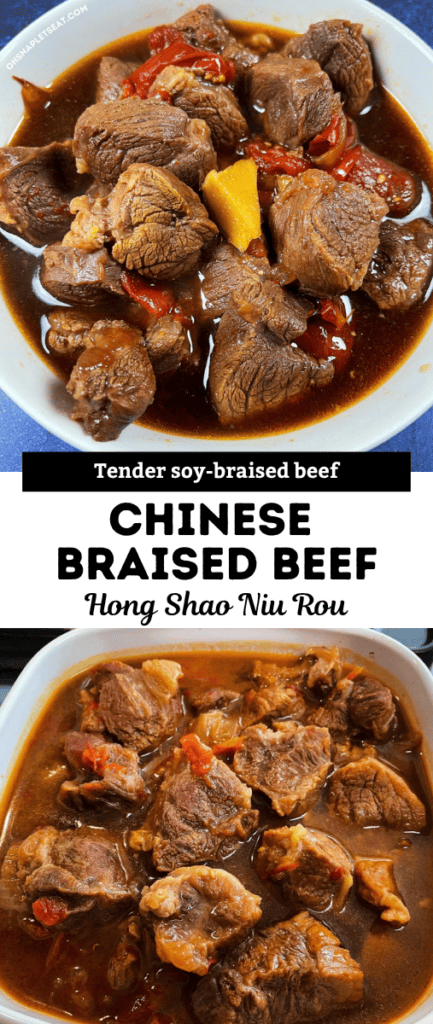
Pin for later!
More Delicious Stews Recipes!
- There is nothing like coming home to the amazing smell of some super flavorful beef stew. That's what this Slow Cooker Chinese Braised Beef Stew does to you - deliciousness = high, effort = low.
- Potatoes go so well in a beef stew! Which is why I have this tasty Chinese Beef Stew with Potatoes recipe to share!
- Or maybe you want something a little lighter? While I do love myself some Red Braised Beef, occasionally I like to switch it up! This Clear Broth Braised Beef is another go to way of making some delicious beef. The beef is cooked with ginger, green onions, dried red peppers, Sichuan peppercorn, and star anise.
- Switch up the protein all together and try this SUPER decadent Red Braised Pork Belly! It's so delicious, I can't help but eat too much!
Owen Streeter says
Can you use a slow cooker
TinaTsai says
Hi there! Good question! Yes you can, I've just added a slow cooker section, but basically after you add all the ingredients you will want to transfer to slow cooker, cover, and then let it cook for 4-5 hours on high heat, or 6-8 hours on low heat.
Duncan Edwards says
This dish oozes tantalizing appeal and aromas, we love it😛
TinaTsai says
Thanks so much Duncan!!