
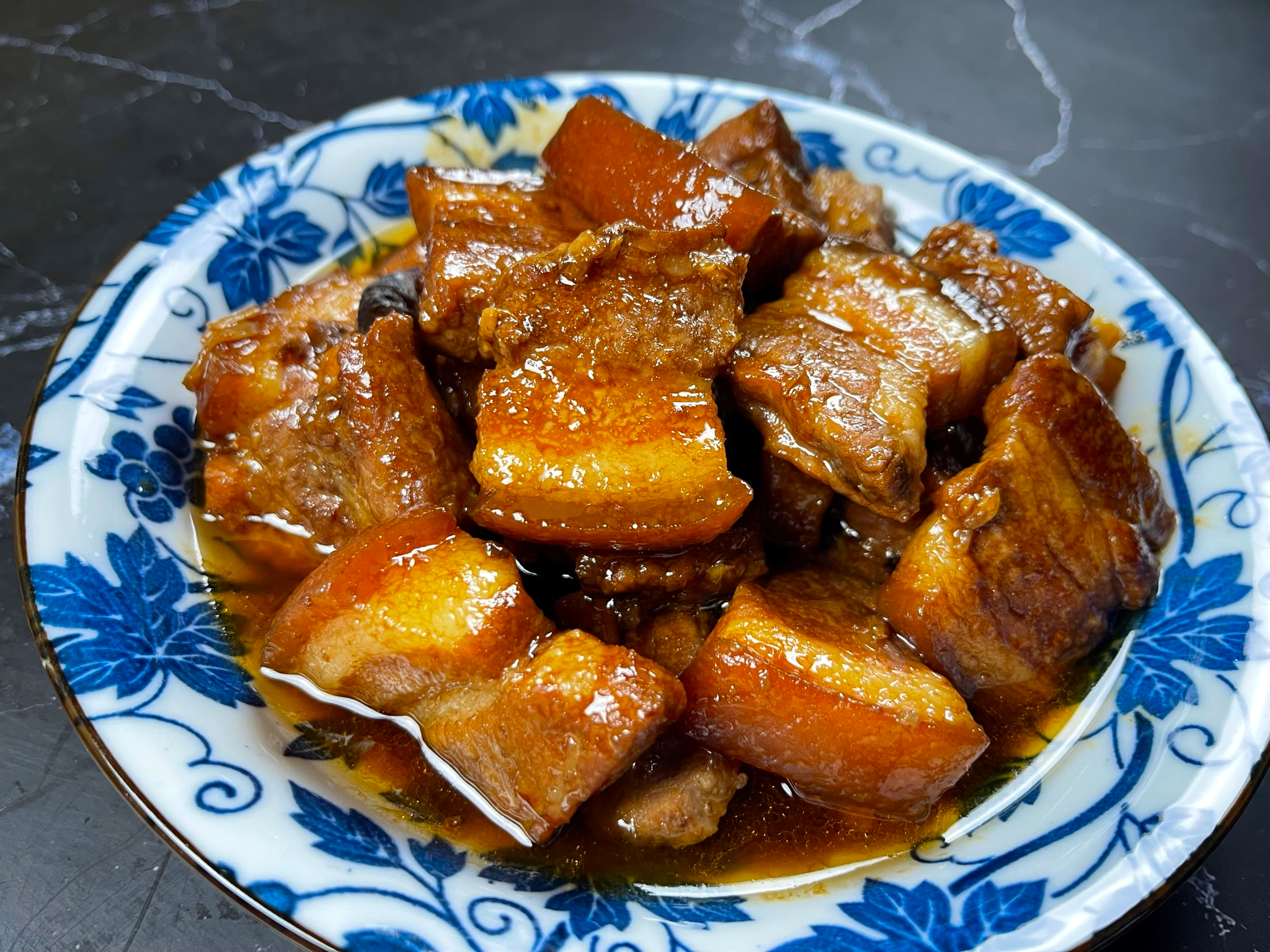
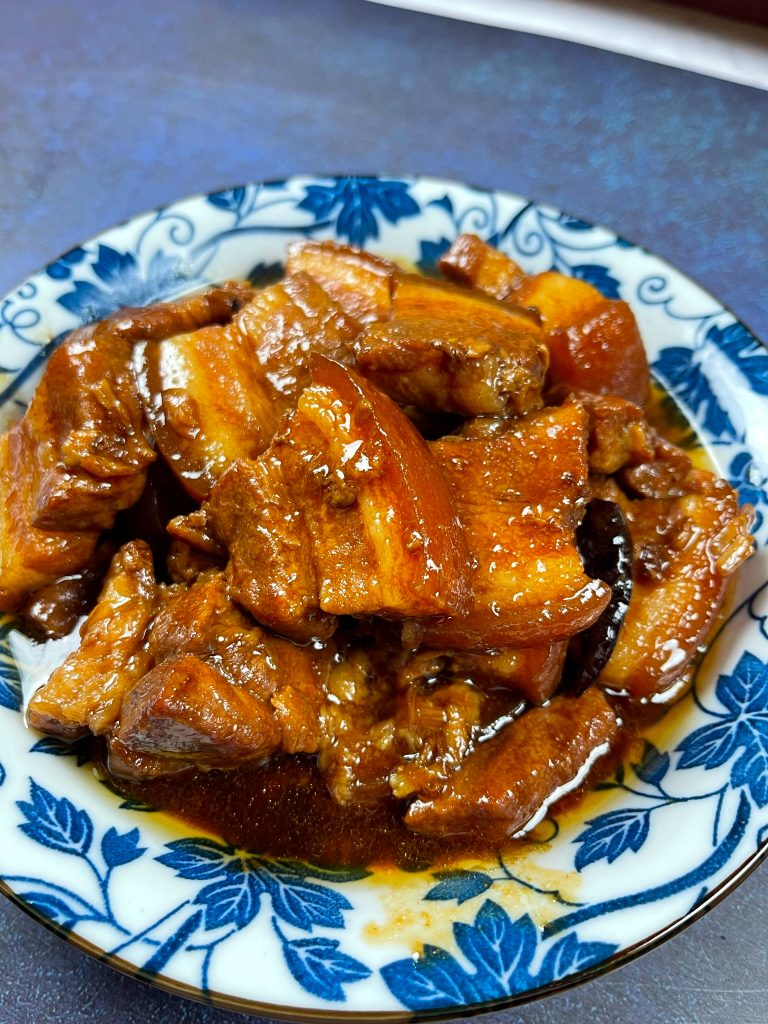
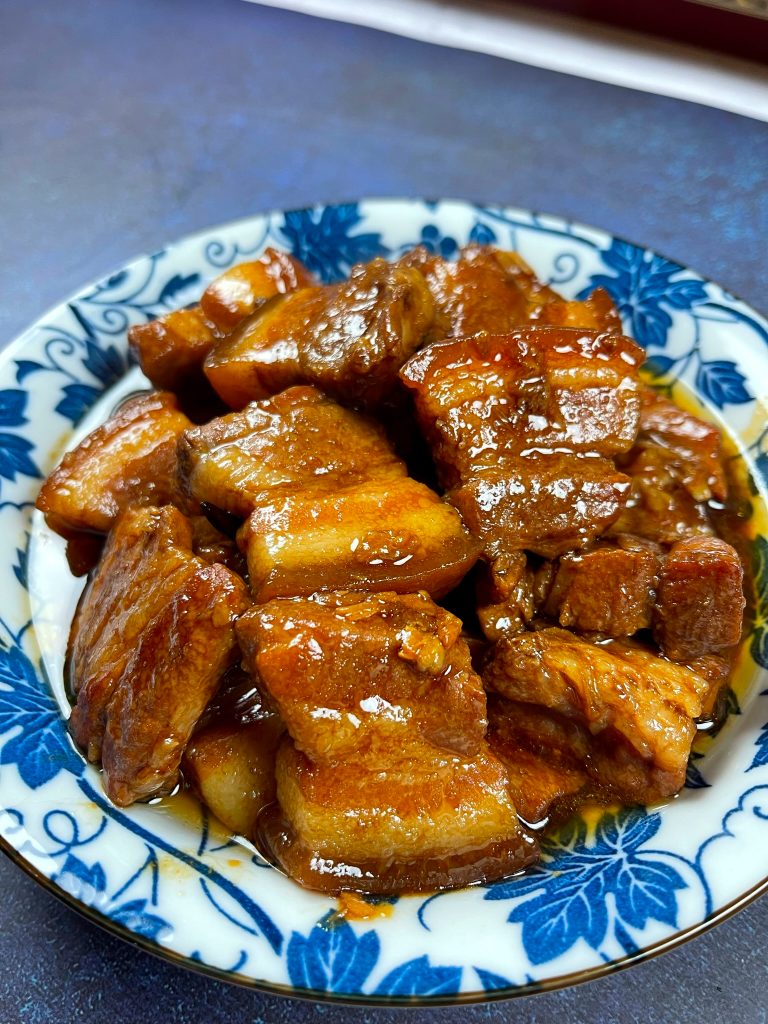
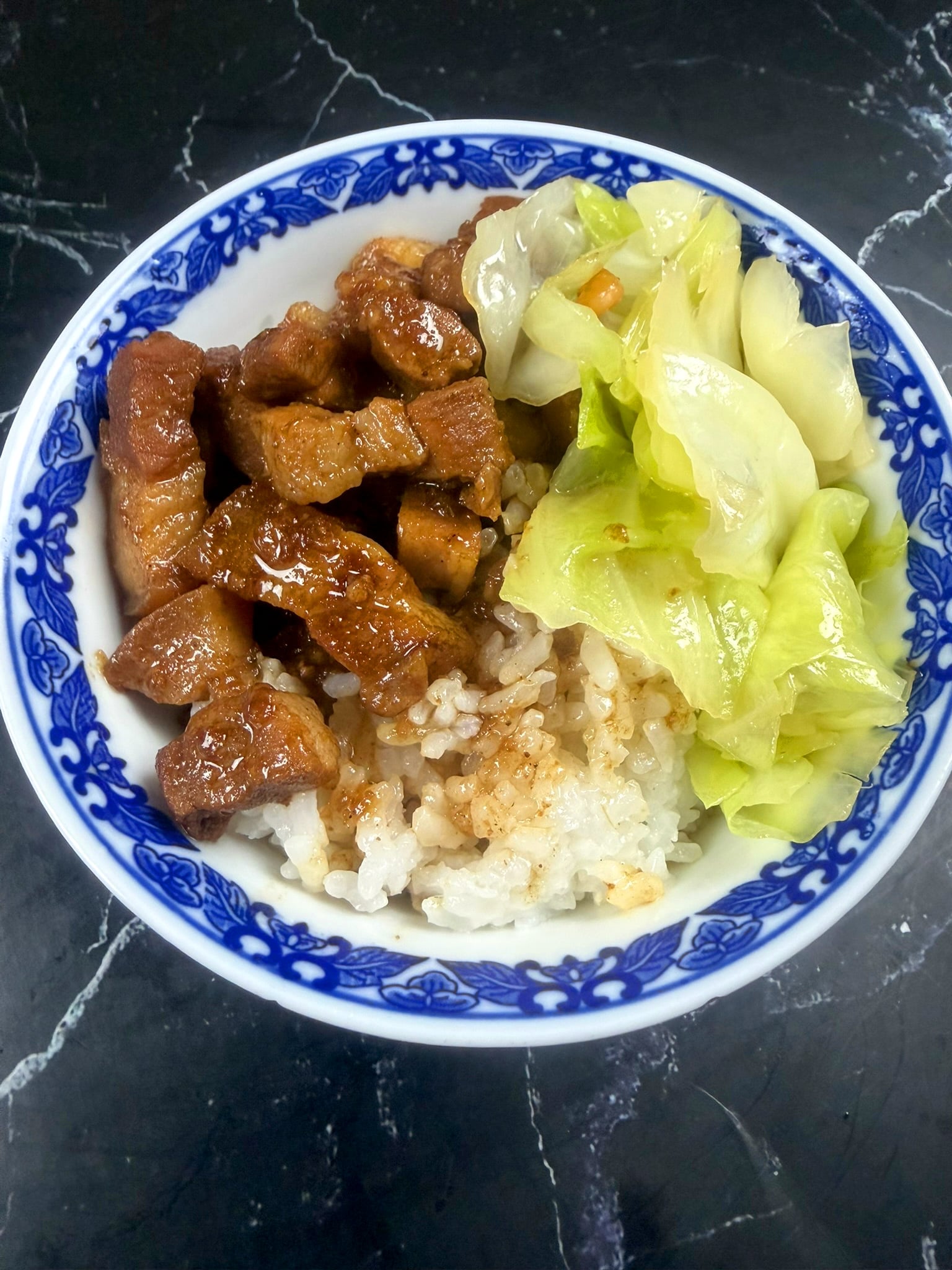
Growing up, I was known as the family carnivore, and Chinese red braised pork belly, aka Hong Shao Rou (紅燒肉), was one of my absolute favorites! Chunks of pork belly are slowly braised with soy sauce, rice wine, garlic, chili bean paste, and sugar until they become tender and flavorful. At the end, the braising liquid is reduced into a rich, savory-sweet, glossy sauce that coats every piece of pork.
Jump to:
- Why You'll Love This Recipe
- What is Red Braised Pork Belly?
- About the Ingredients
- Rock Sugar vs. Brown Sugar for Hong Shao Rou
- Cooking Vessel Tip
- How to make Chinese pork belly (Step by Step)
- Tips for the Best Hong Shao Rou
- Instant Pot Version
- Slow Cooker Version
- Storage & Reheating
- FAQ
- Chinese Red Braised Pork Belly (Hong Shao Rou)
- More Delicious Pork Belly Recipes!
- Pin for later!
Serve it over a bowl of fluffy white rice with a simple veggie stir fry on the side, and you've got my idea of the perfect comfort food.
This is the version I grew up eating and still make at home today!
Why You'll Love This Recipe
- Tender and flavorful - The pork belly slowly braises until soft and juicy while soaking up all that savory-sweet sauce.
- Rich, glossy sauce - Reducing the braising liquid at the end concentrates the flavors and creates a beautiful glaze that coats the pork.
- Full of flavor - Garlic, doubanjiang, soy sauce, rice wine, and sugar create layers of savory, slightly sweet, and mildly spicy flavor.
- Even better the next day - Like many braised dishes, the flavors continue to develop as it sits.
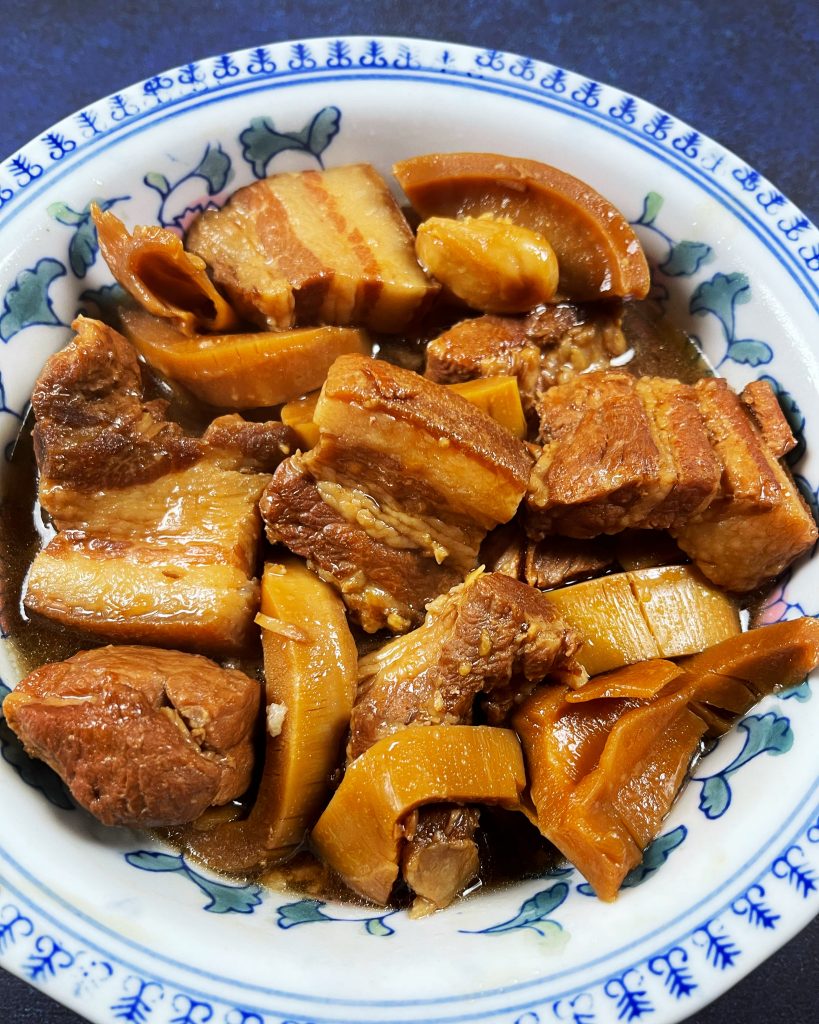
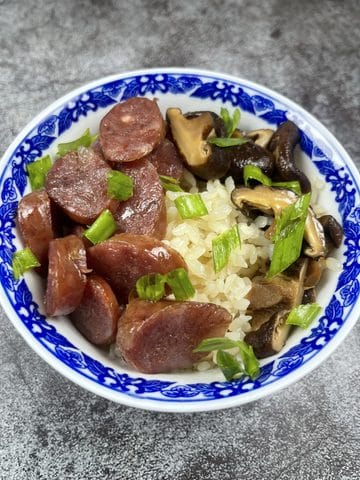
- Customizable - Add bamboo shoots, eggs, or potatoes for variation. For example, here's when we cook it with bamboo shoots:
What is Red Braised Pork Belly?
In Chinese, it's called Hong Shao Rou (紅燒肉).
- Hong Shao 紅燒 = "red cooked" (braising method using soy sauce + sugar for color).
- Rou 肉 = pork.
The mix of chili bean paste, soy sauce, and aromatics infuses the pork with flavor and gives it that signature glossy reddish hue.
Pork Belly Basics: Pork belly is a boneless cut from the underside of the pig, after the loin and ribs are removed. It's not the stomach - it's the fatty, meaty section that becomes bacon after curing and smoking.
By the way - if you like red braised pork belly, you will most likely also enjoy my red braised fish, red braised chicken, and red braised beef!
About the Ingredients
Pork Belly
Pork belly is the star of this dish! It's a rich, fatty cut of pork with alternating layers of meat and fat.
Slow braising allows those layers to become tender and almost melt-in-your-mouth while the outside gets coated in the flavorful sauce.
I cut the pork belly into approximately 1 to 1½-inch cubes so the pieces are large enough to stay juicy during braising.
Garlic
I use several cloves of smashed garlic in my red braised pork belly.
I add the garlic near the beginning of cooking with the brown sugar. It becomes fragrant and adds another layer of flavor before the pork and braising ingredients go into the pot.
Just keep an eye on the heat so the garlic doesn't burn.
Chili Bean Paste (Doubanjiang)
Doubanjiang, also known as chili bean paste, is a savory fermented bean and chili paste that adds lots of umami and a little heat.
I use about 1 to 2 tablespoons, depending on how strongly flavored and spicy I want the dish.
You can find this in Asian supermarkets or online!

Brown Sugar and Rock Sugar
I like using both brown sugar and rock sugar in this recipe.
The brown sugar goes in near the beginning of cooking and helps give the pork a lightly caramelized flavor as it browns.
I add rock sugar later with the braising liquid. It adds sweetness and helps create that beautiful glossy finish when the sauce is reduced at the end.
Don't have rock sugar? No problem! Just substitute additional brown sugar.
So while I like the combination of the two, you absolutely do not need to buy rock sugar specifically for this recipe.
Rice Wine
I normally use michiu, or Taiwanese rice cooking wine, because it's something I frequently cook with at home.
It adds aroma and depth to the braising liquid.
Shaoxing wine can also be used if that's what you have.
Light and Dark Soy Sauce
I use both light and dark soy sauce.
Light soy sauce provides most of the salty, savory flavor, while dark soy sauce contributes a deeper color and slightly richer flavor.
That dark soy sauce also helps give Hong Shao Rou its beautiful deep reddish-brown appearance.
Dried Red Chili Peppers
Dried red chili peppers are optional, but I like adding one or two if I want a little extra heat.
You can leave them out completely for a milder dish.
Rock Sugar vs. Brown Sugar for Hong Shao Rou
Rock sugar is commonly used in Chinese braised dishes and works especially well in Hong Shao Rou because of the smooth sweetness and glossy finish it gives the sauce.
However, I don't consider it a deal breaker.
For my version, I use:
- 1 tablespoon brown sugar at the beginning
- 1 tablespoon rock sugar during braising
If you don't have rock sugar, simply use another tablespoon of brown sugar instead.
The most important thing is creating that balance of salty, savory, and sweet flavors and reducing the sauce properly at the end.
Cooking Vessel Tip
You can make this entire red braised pork belly recipe in one pot, or you can brown the pork in a wok and transfer everything to another pot for braising.
Wok
A wok works really well for browning the pork because you have plenty of surface area to toss and caramelize the pieces.
If your wok isn't ideal for an hour-long braise, you can transfer everything to a pot or clay pot afterward.
Dutch Oven or Pot
Using one pot from start to finish is definitely the easiest option.
You'll also keep all those browned, flavorful bits in the same pot, so nothing gets left behind.
Either method works!
How to make Chinese pork belly (Step by Step)
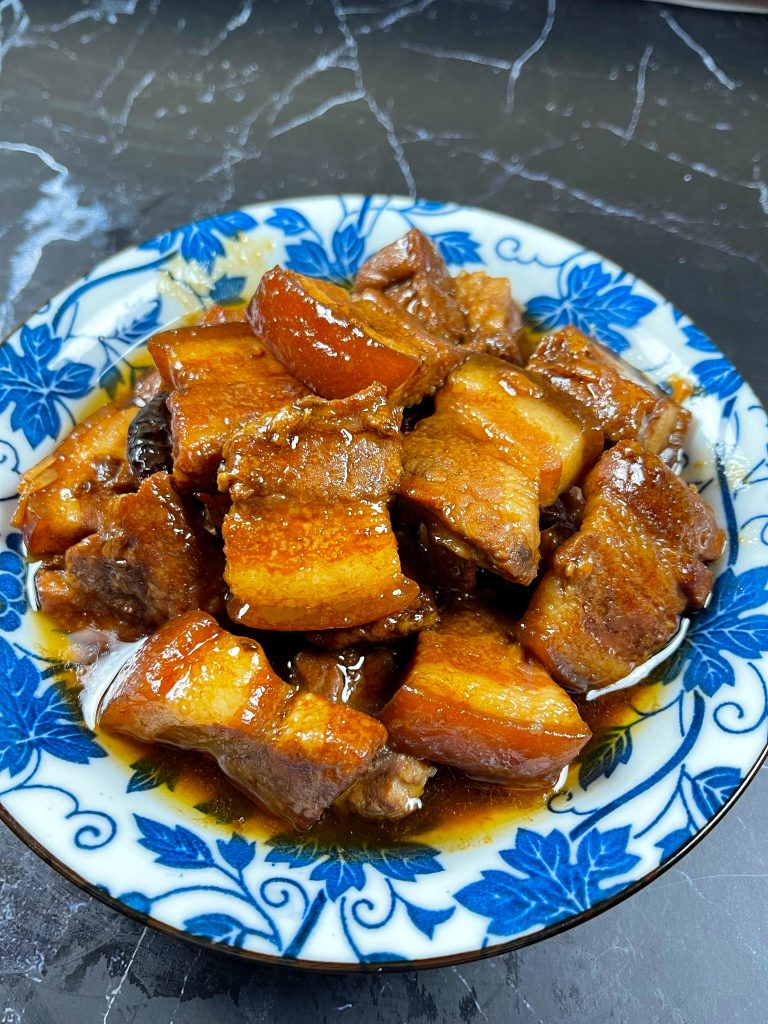
Here's how I make Chinese Red Braised Pork Belly (Hong Shao Rou) at home.
Ingredients
- 1 lb pork belly, cut into 1 to 1½-inch cubes
- 4-5 cloves garlic, smashed
- 1 tablespoon brown sugar
- 1 tablespoon rock sugar
- 1-2 tablespoons chili bean paste (doubanjiang)
- 2-3 tablespoons michiu (rice wine)
- 2 tablespoons light soy sauce
- 1 tablespoon dark soy sauce
- About 1½ cups water, or enough to mostly cover pork belly
- 1-2 dried red chili peppers, optional
- Chopped green onions, for garnish, optional
No rock sugar? Replace the rock sugar with an additional tablespoon of brown sugar.
Instructions
1. Start the aromatics and brown sugar
Heat a large pot or wok over medium heat with a small amount of cooking oil.
Add the smashed garlic, brown sugar, and dried red chili peppers if using.
Cook briefly, stirring, until the garlic becomes fragrant and the brown sugar begins to melt.
Keep an eye on the garlic and sugar so they don't burn.
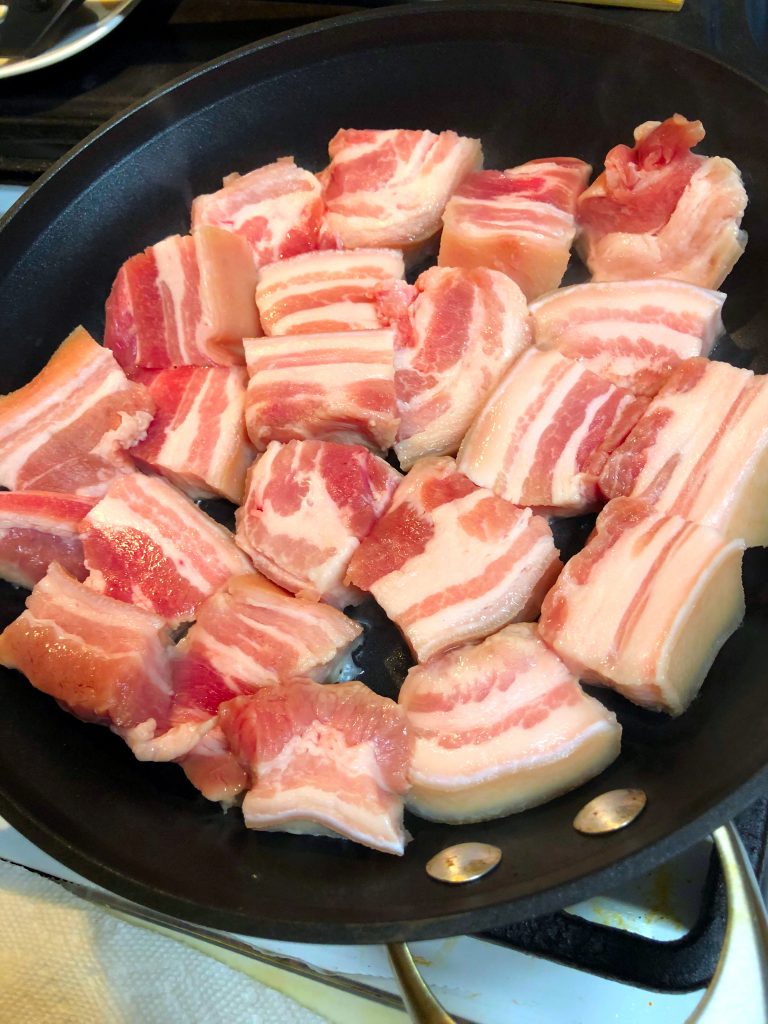
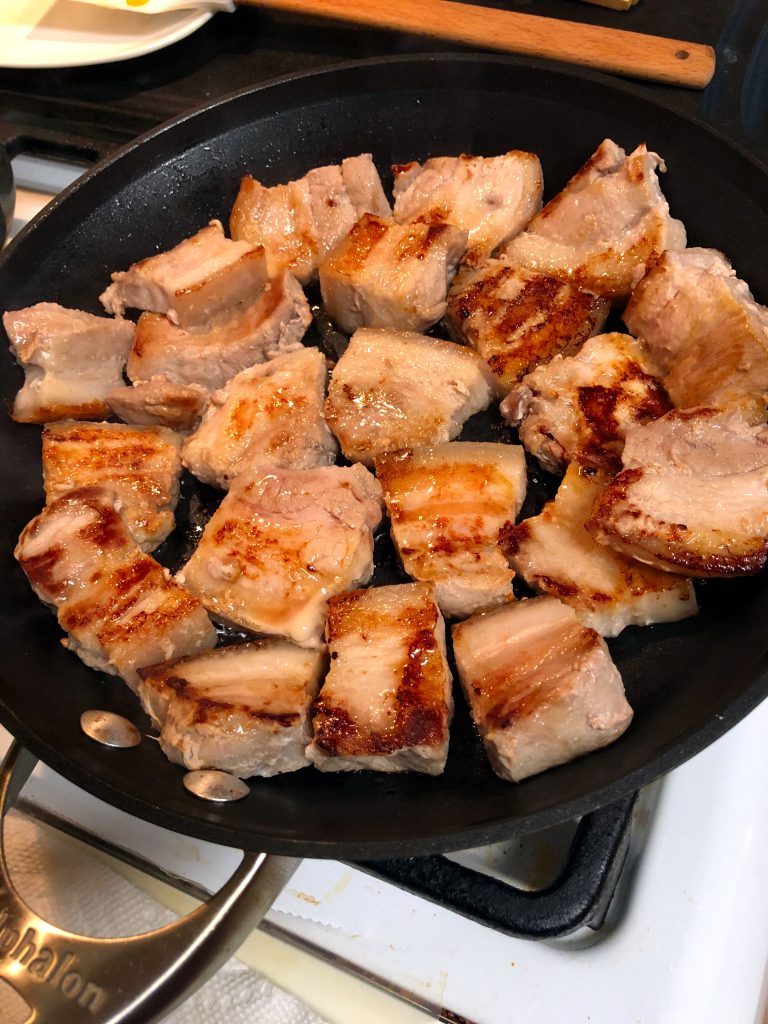
2. Brown the pork belly
Add the pork belly.
Cook, turning the pieces occasionally, until the pork is lightly browned and caramelized on multiple sides.
The pork belly will also begin releasing some of its own fat as it cooks.
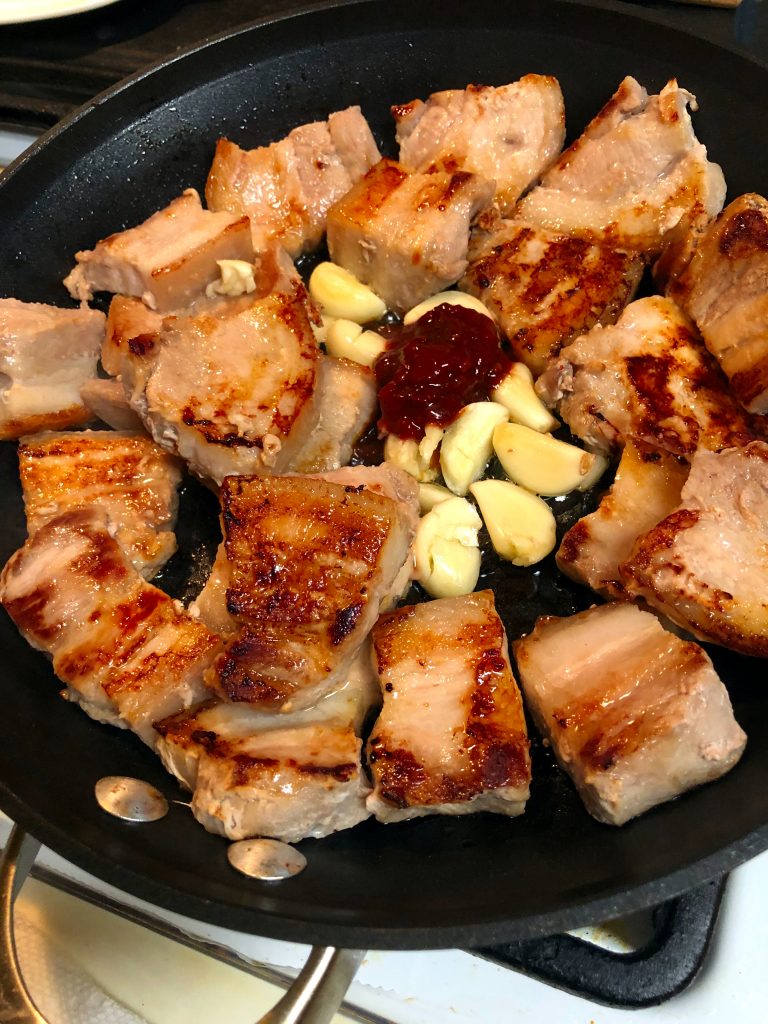
3. Add the chili bean paste
Add the doubanjiang and stir everything together until the pork is evenly coated.
Cook briefly to bring out the flavor of the chili bean paste.
4. Add the braising ingredients
If you're transferring the pork to a clay pot or another pot, you can do that now.
Add the michiu, light soy sauce, dark soy sauce, rock sugar, and enough water to mostly cover the pork belly.
Stir to combine.
5. Braise until tender
Bring everything to a boil.
Reduce the heat to low, cover, and simmer for about 50 to 60 minutes, stirring occasionally.
For extra-soft, melt-in-your-mouth pork belly, you can continue simmering for about 75 to 90 minutes.
If the liquid gets too low before the pork is tender, add a little more water.
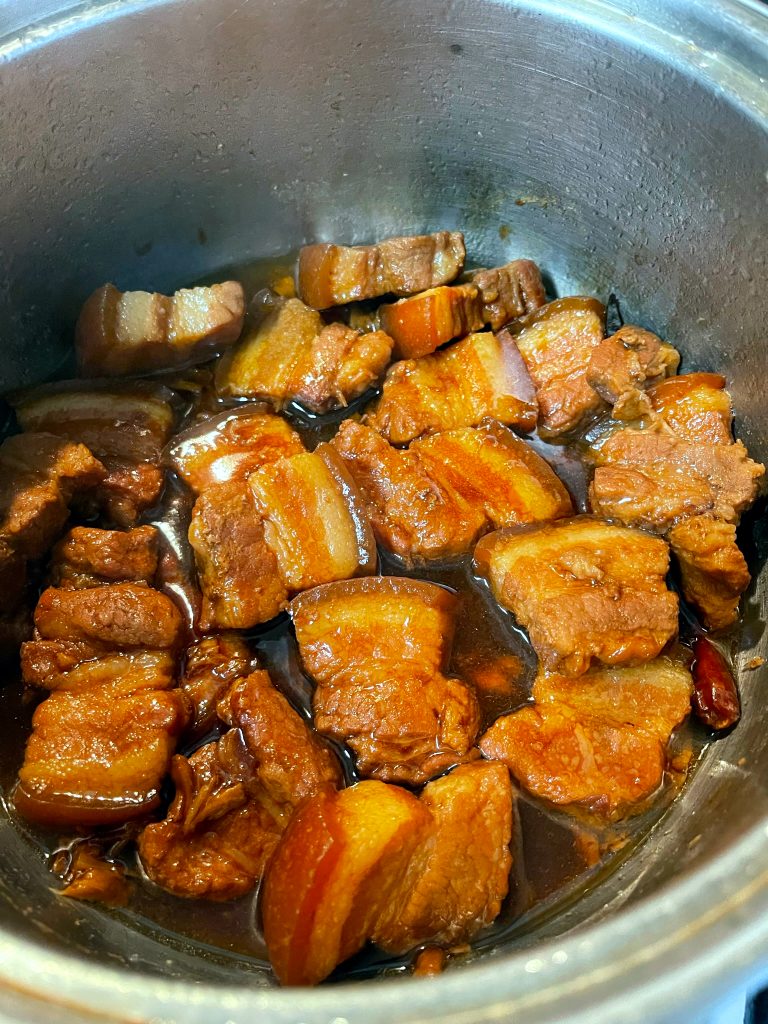
6. Reduce the sauce
Once the pork belly is tender, remove the lid and increase the heat to medium.
Let the sauce simmer uncovered for approximately 5 to 10 minutes, stirring and turning the pork occasionally.
As the liquid evaporates, the sauce will become darker, thicker, and glossier.
Keep a close eye on it toward the end. Because the sauce contains soy sauce and sugar, it can reduce quickly.
You want enough sauce left to coat all of the pork belly, with a little extra for spooning over rice.
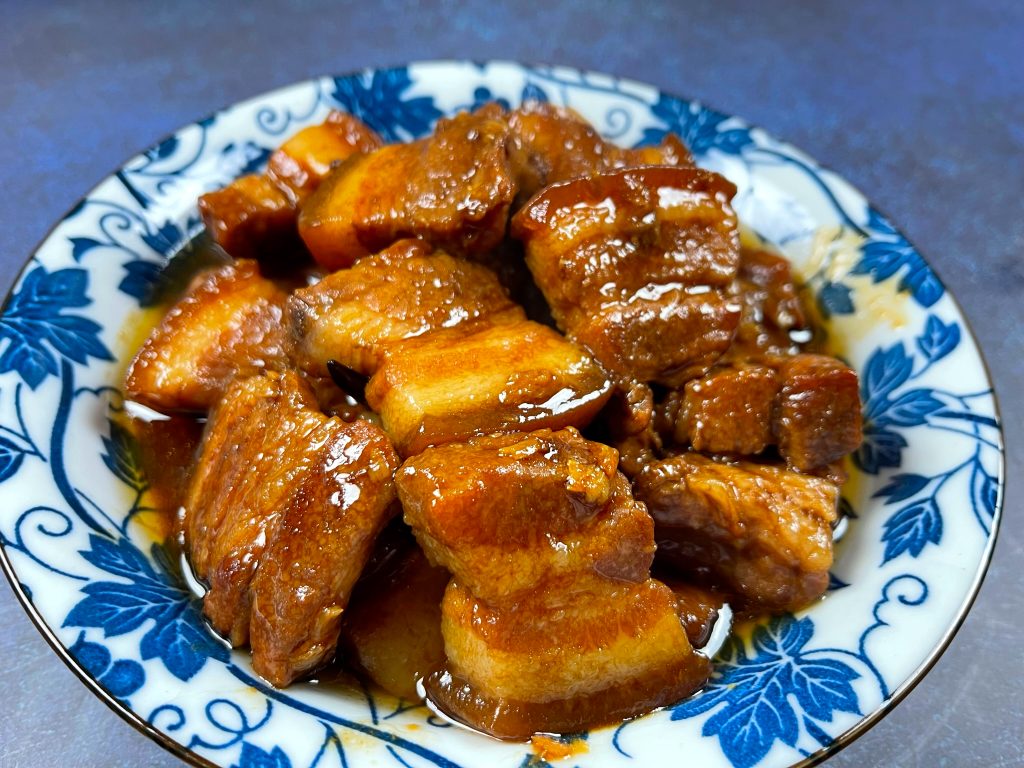
7. Serve
Garnish with chopped green onions if desired.
Serve your red braised pork belly hot with steamed white rice or noodles and your favorite vegetable side dish!
Tips for the Best Hong Shao Rou
Don't rush the braise. The pork needs time at a gentle simmer to become tender. If it's still chewy after 50 minutes, keep cooking it.
Watch the sugar at the beginning. You want the brown sugar to start melting and caramelizing without burning.
Add water as needed. Pots and burners vary. If too much liquid evaporates while the pork is still cooking, add a splash of water and continue braising.
Reduce the sauce after the pork is tender. The covered braise is for tenderizing the pork. The final uncovered simmer is what concentrates the sauce and gives it that glossy consistency.
Don't reduce it completely dry. I like leaving a little sauce in the pot because it's delicious spooned over rice.
Skim excess fat if desired. Pork belly releases quite a bit of fat during cooking. If you feel like there's too much on the surface, spoon some off before reducing the sauce.
Instant Pot Version
- Turn on Sauté and add cooking oil, sugar, and pork belly. Brown both sides.
- Add garlic, chili bean paste, rice wine, soy sauces, and water.
- Close lid, set to High Pressure for 20 minutes.
- Natural release, then open lid. For thicker sauce, simmer on Sauté (Low) uncovered for 10-15 minutes.
Slow Cooker Version
- In a skillet or wok over medium heat, add cooking oil and brown sugar. Let the sugar melt, then add pork belly. Brown both sides until lightly caramelized.
- Add garlic and chili bean paste, stirring to coat.
- Transfer pork mixture to the slow cooker. Add rice wine, light soy sauce, dark soy sauce, and enough water to mostly cover the pork. Stir gently.
- Cook on Low for 6-7 hours or High for 3-4 hours, until the pork is tender.
- If you'd like a thicker sauce, transfer the liquid to a small saucepan and simmer uncovered for 5-10 minutes before serving, or leave the slow cooker uncovered on High for 20-30 minutes.
Storage & Reheating
- Fridge: Store in an airtight container up to 3 days.
- Reheat: Simmer gently on the stove or microwave until warmed through.
- Freezer: Up to 2 months; thaw overnight before reheating.
FAQ
Can I use a different cut of pork instead of pork belly?
Yes! Pork shoulder or pork butt are leaner alternatives that still become tender when braised. They won't be as melt-in-your-mouth as pork belly, but they'll soak up the sauce beautifully.
What if I can't find chili bean paste (doubanjiang)?
If you like a milder dish, you can also skip it and let the soy sauce and aromatics shine.
Do I have to use both light and dark soy sauce?
If you only have light soy sauce, you can use that alone. Dark soy sauce mainly deepens the color and adds a touch more sweetness, so your dish may look lighter without it but will still taste great.
Can I make this ahead of time?
Absolutely! In fact, the flavors deepen overnight. Store in the fridge and gently reheat on the stovetop the next day.
How do I reduce the fat in the sauce?
After braising, let the dish sit for a few minutes and skim the fat off the surface. Or chill overnight - the fat will solidify on top, making it easy to remove.
Can I make this less sweet?
Yes, just use the lower end of the sugar range (1 tbsp). The sugar helps balance flavors and gives the glossy finish, but you can adjust to taste.
What should I serve it with?
Steamed white rice is classic, but it's also great with noodles, tucked into steamed buns, or alongside stir-fried veggies like bok choy, broccoli, or asparagus.
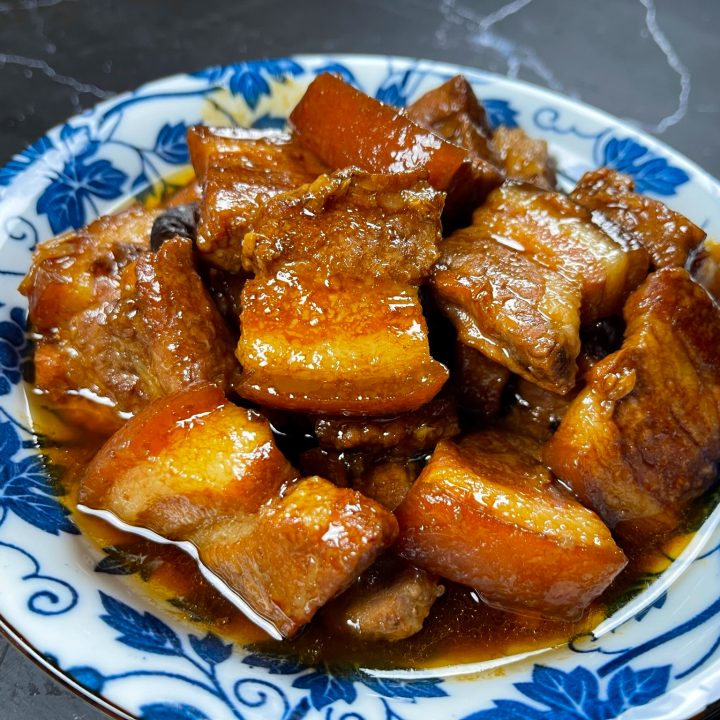
Chinese Red Braised Pork Belly (Hong Shao Rou)
Tender Chinese red braised pork belly, or Hong Shao Rou, simmered with soy sauce, rice wine, garlic, doubanjiang, brown sugar, and rock sugar, then reduced until the pork is coated in a rich, savory-sweet, glossy sauce.
Ingredients
- 1 lb pork belly, cut into 1–1.5 inch cubes
- 4–5 cloves garlic, smashed
- 1–2 tablespoon chili bean paste (doubanjiang)
- 1–2 tablespoon brown sugar (or rock sugar)
- 2–3 tablespoon michiu (rice wine)
- 2 tablespoon light soy sauce
- 1 tablespoon dark soy sauce
- ~1 ½ cups water (enough to mostly cover pork belly)
- (Optional) 1–2 dried red chili peppers
- (Optional) Chopped green onions, for garnish
Instructions
- Heat a large pot or wok over medium heat with a small amount of cooking oil. Add garlic, brown sugar, and dried red chili peppers if using. Cook briefly, stirring, until fragrant and the sugar begins to melt.
- Add pork belly and brown on multiple sides until lightly caramelized.
- Add chili bean paste and stir to coat the pork.
- Transfer to a clay pot if desired, or continue using the same pot. Add rice wine, light soy sauce, dark soy sauce, rock sugar, and enough water to mostly cover the pork. Stir to combine.
- Bring to a boil, then reduce heat to low. Cover and simmer for 50 to 60 minutes, stirring occasionally, until the pork is tender. For extra-soft pork belly, simmer for 75 to 90 minutes. Add a little additional water if needed during cooking.
- Once the pork is tender, remove the lid and increase heat to medium. Simmer uncovered for about 5 to 10 minutes, stirring occasionally, until the liquid reduces into a thick, glossy sauce that coats the pork.
- Garnish with green onions if desired and serve hot with steamed rice or noodles.
Notes
- Rock Sugar Substitute: If you don't have rock sugar, substitute an additional 1 tablespoon brown sugar.
- Watch the Sugar: Keep the heat around medium when starting the garlic and brown sugar so neither burns.
- Adjusting Spice: Use 1 tablespoon doubanjiang and omit the dried chilies for a milder version. Increase to 2 tablespoons doubanjiang and/or add chilies for more heat.
- Sauce Consistency: Braise the pork until tender first, then remove the lid and reduce the sauce. The finished sauce should be glossy and thick enough to coat the pork while leaving a little extra for serving over rice.
- Excess Fat: Pork belly naturally releases fat while braising. If desired, skim some fat from the surface before reducing the sauce.
- Cooking Vessel: You can brown and braise the pork in the same pot or brown it in a wok and transfer it to a pot or clay pot.
- Make-Ahead: This dish tastes even better the next day as the flavors continue to develop.
- Storage: Refrigerate leftovers for up to 3 days or freeze for up to 2 months.
- Instant Pot and Slow Cooker: See the full blog post above for alternate cooking methods.
Recommended Products
As an Amazon Associate and member of other affiliate programs, I earn from qualifying purchases.
-
 Eleulife Wok Pan with Lid, 13 Inch Carbon Steel Wok with Spatula, Nonstick Woks and Stir-fry Pans, No Chemical Coated Flat Bottom Chinese Wok for Induction, Electric, Gas Stove, All Stoves
 -
Lee Kum Kee LKK Chili Bean Sauce (Toban Djan) 13 Oz, 1 Pack
-
Kikkoman Japan Made Soy Sauce, 33.8 Ounce
-
Michiu (Rice Cooking Wine)- 750ml (Pack of 1) by QIAN HU



Nutrition Information:
Yield: 4 Serving Size: 1Amount Per Serving: Calories: 608Total Fat: 60gSaturated Fat: 22gUnsaturated Fat: 38gCholesterol: 82mgSodium: 699mgCarbohydrates: 1gFiber: 0gSugar: 0gProtein: 12g
The nutrition information for this recipe is an approximate total per serving. Please double check the nutrition information for your exact ingredients and brands for more precise nutrition information.
More Delicious Pork Belly Recipes!
- Want to switch it up? This Red Braised Pork Belly with Bamboo Shoots adds a delicious crunch and earthy flavor to the classic dish - a match made in heaven!
- How about an easy and tasty stir fry? Try this Pork Belly Cabbage Stir Fry, it only takes 20 minutes!
- For something quick and satisfying, check out this Pan-Fried Pork Belly - crispy edges, juicy center, and super simple to make! You can serve with your favorite spices or dipping sauce as well!
- Craving something spicy and smoky? You'll love this Twice Cooked Pork - a classic Sichuan dish that's packed with bold flavors and stir-fried perfection.
- If you're a fan of Korean flavors, don't miss this Kimchi Pork Belly Stir Fry - spicy, tangy, and totally addicting!
Pin for later!

Marie Leung says
Hi Tina, Can you do this in a slow cooker?
TinaTsai says
@Marie Leung, Hello! Yes you can! Instead of a clay pot or medium pot, transfer to slow cooker, add all the sauces, and then add 2 cups of water and cook on low for 8 hours. Prior to serving, reduce sauce uncovered on high heat.
Nancy M says
Thanks for the Instant Pot instructions for this recipe! I love red-braised pork belly and will definitely make this!
I would like to mention that, in the “Why is called Red-Braised Pork Belly?” section, the character 肉 means “meat”, not “beef”, and there is one other mention of cooking the beef instead of pork in the same paragraph. 🙂
TinaTsai says
Yes! Thanks, that is correct - nice catch! I copied and pasted it from my red braised beef recipe and forgot to update that part - what I get for being lazy!! I'll go update it now 🙂
Art says
For the instant pot version, do you still need the clay pot or can you just leave it in the IP? Thanks!
TinaTsai says
Wow I never noticed how messed up that instant pot section is! I just updated/fixed it. You don't need any other pots than the instant pot.
Duncan Edwards says
Looking at this presentation reflects an amazing specialty we all love this😛
TinaTsai says
Thanks so much!!