
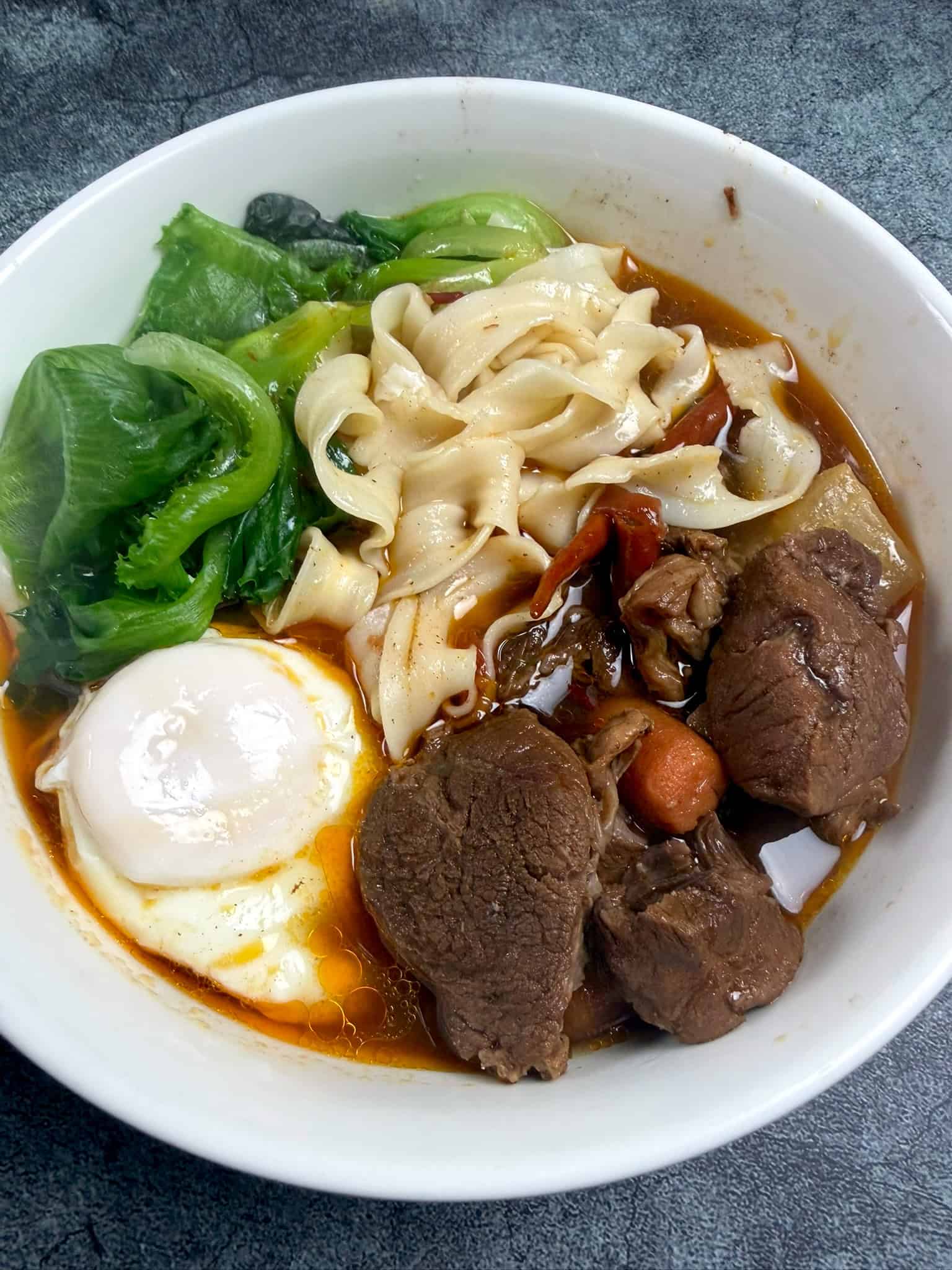
Taiwanese Beef Noodle Soup (牛肉麵) is one of Taiwan's most iconic dishes. Tender beef, flavorful broth, chewy noodles, and vegetables come together in a comforting bowl that's enjoyed everywhere from night markets and noodle shops to family kitchens across Taiwan.
Jump to:
- What is Taiwanese Beef Noodle Soup?
- Why You'll Love This Recipe
- The Key Components of Taiwanese Beef Noodle Soup
- How to Customize Taiwanese Beef Noodle Soup
- Ingredients
- How to Make Taiwanese Beef Noodle Soup
- Storage and Reheat
- FAQ
- Taiwanese Beef Noodle Soup Recipe
- Pin for later!
- More Delicious Taiwanese Recipes to try!
If you've ever searched for a Taiwanese Beef Noodle Soup recipe, you've probably noticed something: no two recipes are exactly alike.
Some versions include tomatoes. Others include carrots, daikon radish, or potatoes. Some are spicy with doubanjiang (chili bean paste), while others focus on the rich flavors of soy sauce, beef, and warming spices. The noodles can be thick, thin, fresh, dried, knife-cut, or hand-pulled.
That's because Taiwanese Beef Noodle Soup isn't a single recipe - it's a dish with countless family variations.
This recipe shares the way I typically make it at home, but I encourage you to treat it as a framework rather than a strict set of rules. One of the best things about Taiwanese Beef Noodle Soup is how adaptable it is.
What is Taiwanese Beef Noodle Soup?
Taiwanese Beef Noodle Soup (牛肉麵, niú ròu miàn) is this amazing comforting dish I grew up eating. But not just me. It's often called Taiwan's unofficial "national dish," it's beloved for its balance of rich, savory broth, tender chunks of beef, chewy noodles, and fresh vegetables.
This dish originated in the mid-20th century and is believed to have been popularized by military families who migrated from mainland China to Taiwan, bringing regional cooking techniques and flavors with them. Over time, Taiwanese cooks adapted those influences using local ingredients and preferences, creating a uniquely Taiwanese flavor profile that's now famous around the world.
At its core, it's a big comforting bowl of slow-simmered beef (usually beef shank) in a flavorful broth, served with chewy noodles and fresh vegetables.
The most famous version is the red-braised style 紅燒 (hong shao), which gets its deep reddish-brown color and rich flavor from soy sauces, doubanjiang (chili bean paste), and aromatic spices like star anise. It's hearty, savory, slightly spicy, and packed with umami. This is the style featured in this recipe and the version I grew up eating.
There's also a clear-broth version called 清燉 (qing dun), which is lighter and cleaner in flavor. Instead of relying on soy sauce and chili bean paste, it highlights ingredients like ginger, green onions, and warming spices to create a fragrant, delicate broth.
In Taiwan (and honestly anywhere this dish is cooked and loved), everyone has their own spin on beef noodle soup. Some add pickled mustard greens (酸菜, suan cai), some make the broth extra spicy, and some swear by hand-pulled noodles for the perfect chewy bite. While restaurant versions often focus on carefully crafted broths and specific cuts of beef, home-cooked versions tend to be much more flexible. Many families simply use whatever vegetables and noodles they have on hand.
However you make it, a good bowl of Taiwanese Beef Noodle Soup is pure comfort in a bowl.
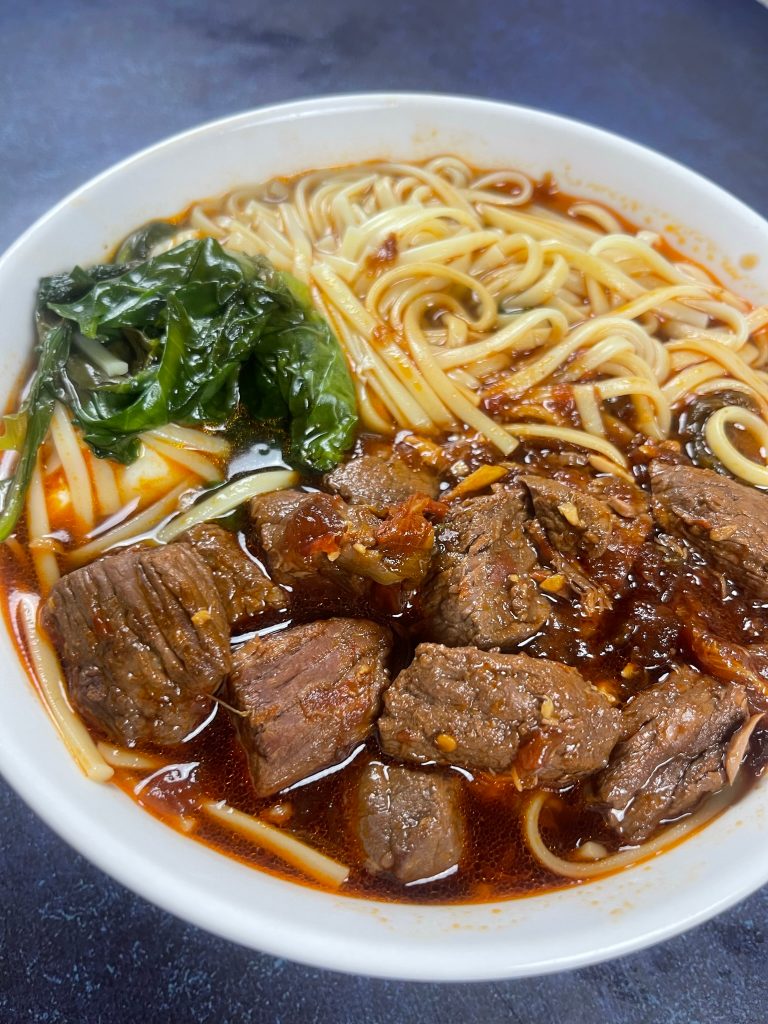
Why You'll Love This Recipe
- Rich, savory broth full of flavor
- Tender braised beef that gets better as it simmers
- Completely customizable
- Great for meal prep and leftovers
- Easy to adapt with different vegetables and noodles
- A hearty, satisfying one-bowl meal
The Key Components of Taiwanese Beef Noodle Soup
Let's break down the main ingredients that make Taiwanese Beef Noodle Soup so flavorful and a few ways you can switch things up if you need to.
Beef
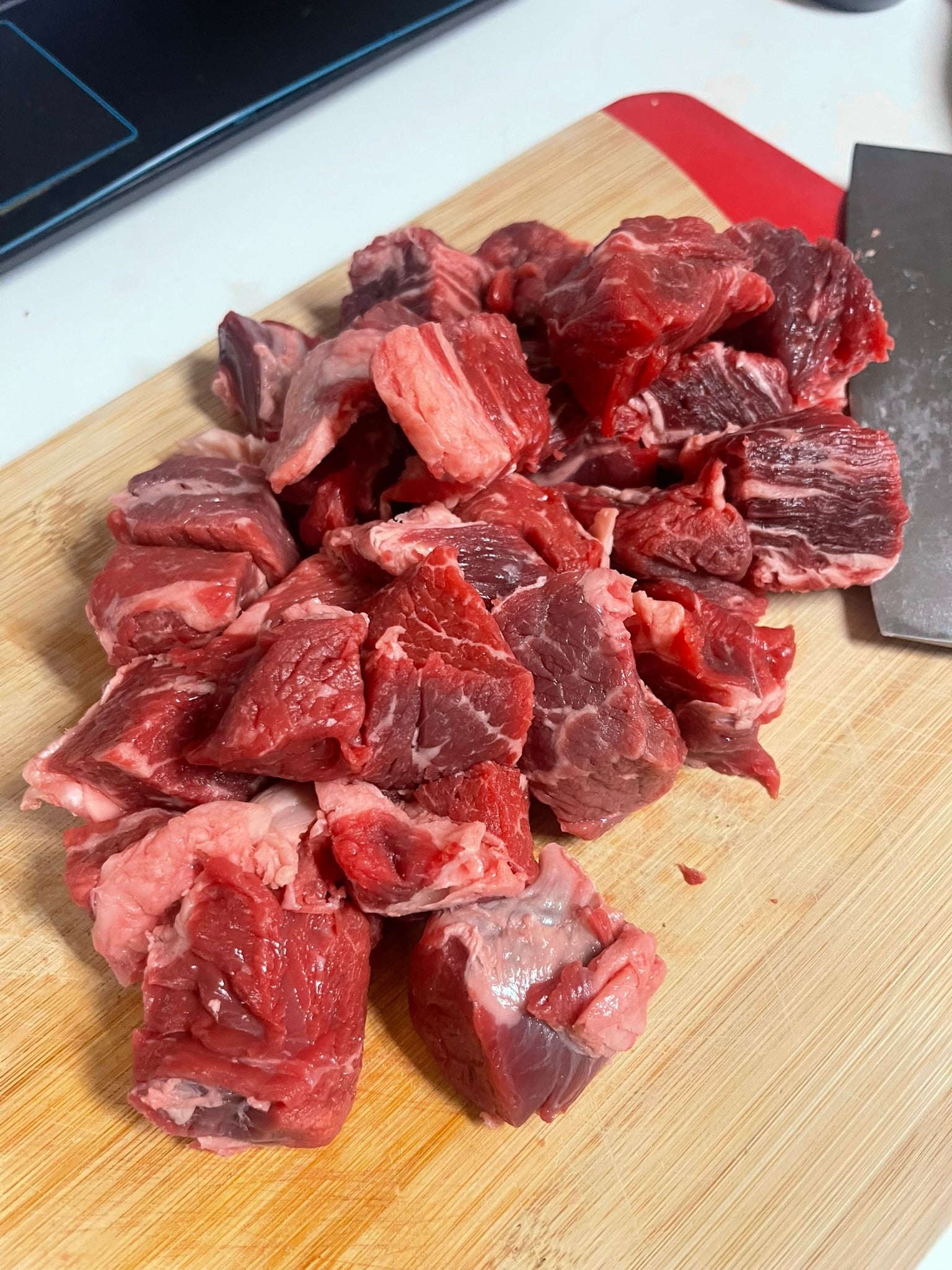
Beef shank is one of the most popular cuts for Taiwanese Beef Noodle Soup because it becomes tender while still holding its shape during a long simmer.
Other cuts that work well include:
- Beef chuck roast
- Beef stew meat
- Short ribs
- Beef brisket
Some home cooks also add beef bones or marrow bones to create a richer broth.
The Broth
The broth is what gives Taiwanese Beef Noodle Soup its signature flavor.
Common ingredients include:
- Soy sauce
- Rice wine
- Garlic
- Ginger
- Scallions
- Star anise
- Rock sugar
- Doubanjiang (optional)
Some versions include tomatoes, which add natural sweetness and acidity to balance the richness of the beef.
Noodles
There is no single "correct" noodle for Taiwanese Beef Noodle Soup.
Popular options include:
- Fresh wheat noodles
- Dried wheat noodles
- Knife-cut noodles
- Hand-pulled noodles
- Wide noodles
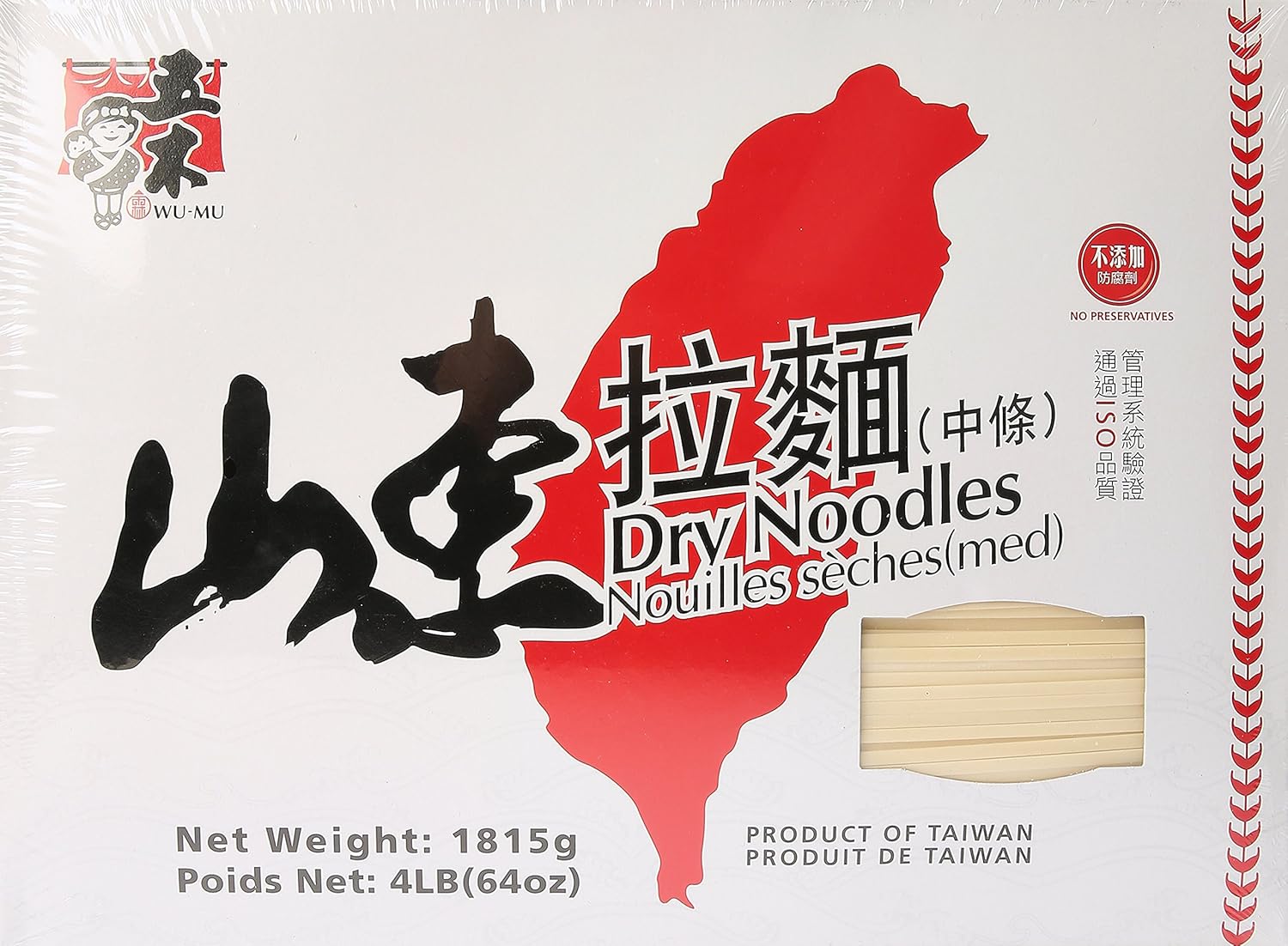
I often use DragonMall Wu-Mu Dry Noodles because I keep them stocked in my pantry for noodle soups.
That said, you can use any type of noodles you prefer, whether they're fresh, dried, thick, thin, knife-cut, or hand-pulled. Use whatever you enjoy most or can easily find.
Vegetables
This is where Taiwanese home cooking really shines.
Depending on the season and what I have available, I might add:
- Tomatoes
- Carrots
- Daikon radish
- Potatoes
- Bok choy
- Lettuce
- Napa cabbage
- Mustard greens
Some days I'll use tomatoes and daikon. Other days I'll use carrots and potatoes. Sometimes I'll simply add a handful of lettuce right before serving.
There is no wrong answer here. The vegetables should complement the broth and make the soup your own. If you're looking for more ideas or want to learn more about Chinese vegetables, check out my post on Different Types of Chinese Vegetables.
How to Customize Taiwanese Beef Noodle Soup
One of the reasons I love this dish is that it changes every time I make it.
For a sweeter broth:
- Add tomatoes and carrots.
For a heartier bowl:
- Add potatoes and extra vegetables.
For a richer broth:
- Simmer beef bones or marrow bones alongside the beef.
For a spicier version:
- Add doubanjiang or chili oil.
For extra greens:
- Add bok choy, lettuce, napa cabbage, or mustard greens just before serving.
Think of the recipe below as your starting point, then customize it based on your preferences and what's already in your kitchen.
Other toppings and additions can make each bowl even more satisfying. Popular options include pan-fried, poached, soft-boiled, or hard-boiled eggs; suan cai (pickled mustard greens); zha cai (pickled mustard stem); hot chili oil; Chinese meatballs made from beef, pork, or squid; and daikon radish. Mix and match based on your tastes and what you have available.

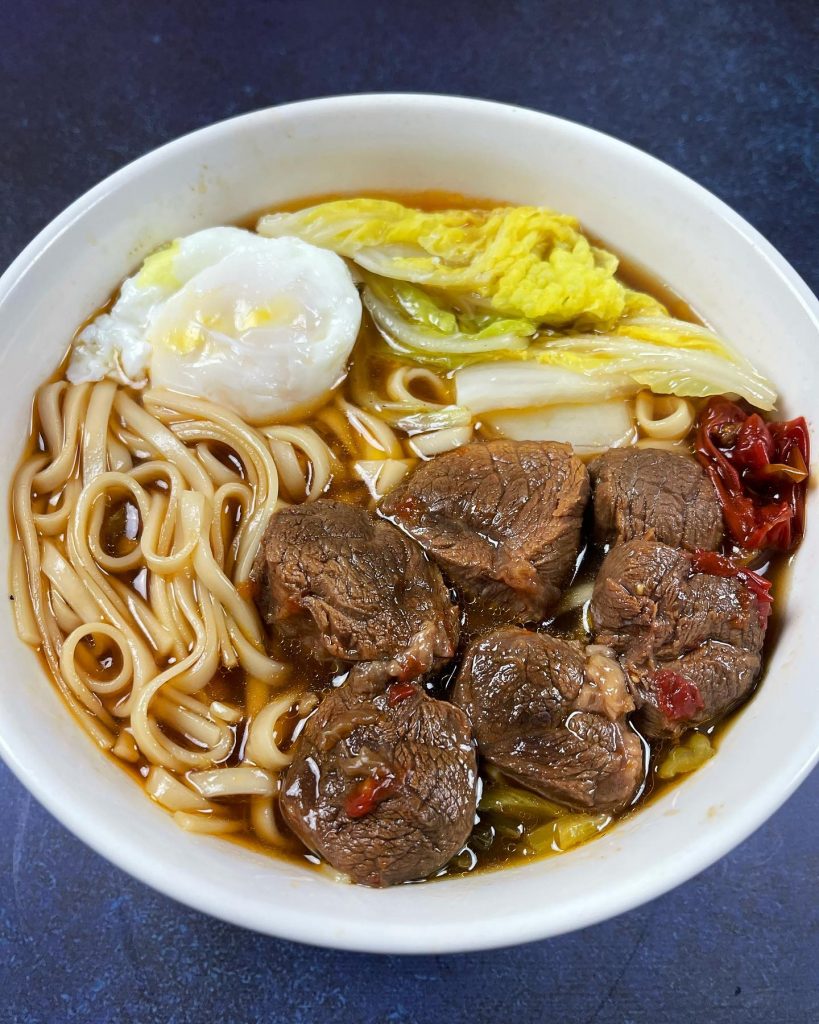
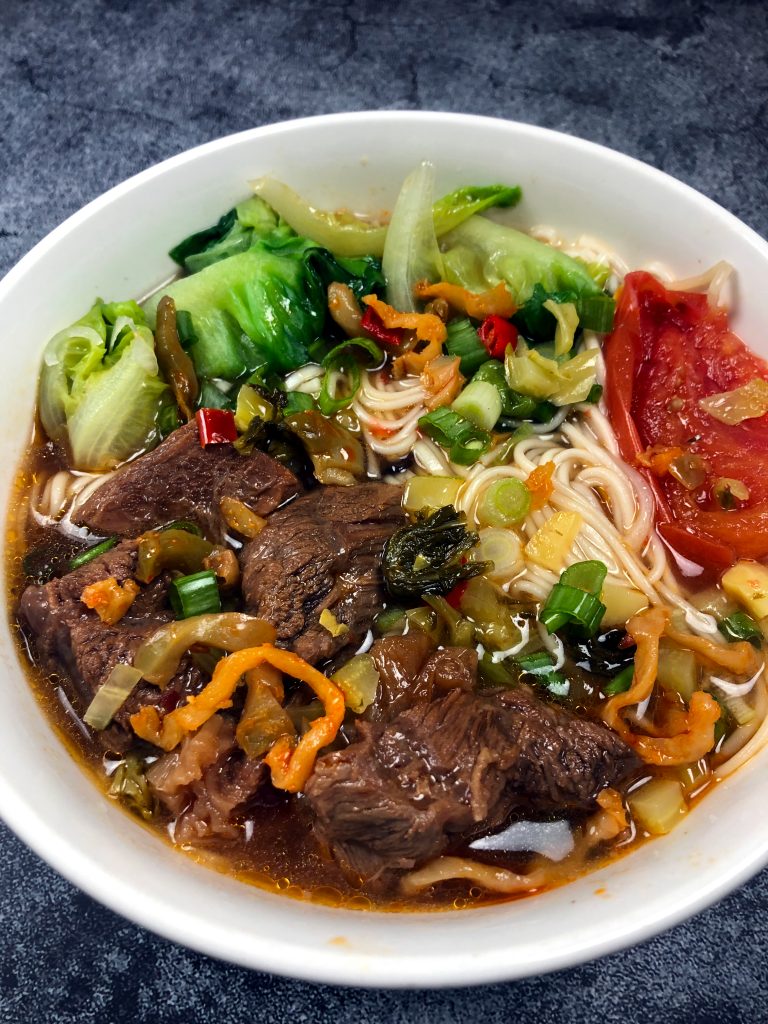
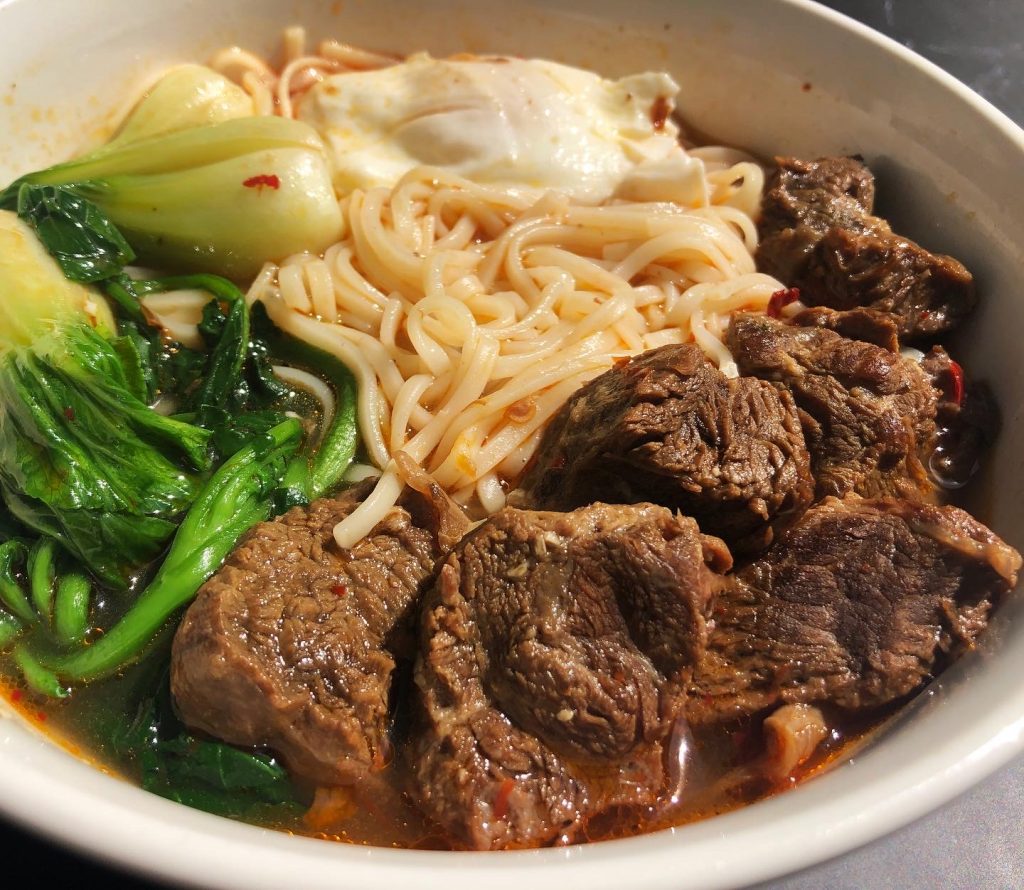

Ingredients
For the Beef and Broth
- 2-3 pounds beef shank, chuck roast, brisket, or stew meat
- 1 tablespoon oil
- 1 onion, roughly chopped (optional)
- 6 cloves garlic, smashed
- 2-inch piece ginger, sliced
- 3 green onions, cut into large pieces
- ½ cup soy sauce
- 2 tablespoons dark soy sauce (optional)
- ¼ cup rice wine
- 1-2 tablespoons doubanjiang (optional)
- 1 tablespoon rock sugar or brown sugar
- 2 star anise pods
- 8-10 cups water or beef broth
Optional Vegetable Add-ins
Choose any combination you like:
- 2 tomatoes, cut into wedges
- 2 carrots, cut into chunks
- 1 small daikon radish, cut into chunks
- 2 potatoes, cut into chunks
- Bok choy
- Napa cabbage
- Lettuce
- Mustard greens
For Serving
- Cooked wheat noodles
- Green onions, sliced
- Cilantro (optional)
- Pickled mustard greens (suan cai), optional
- Chili oil, optional
- Soft-boiled, hard-boiled, poached, or fried eggs (optional)
How to Make Taiwanese Beef Noodle Soup
Step 1: Blanch the Beef (Optional)
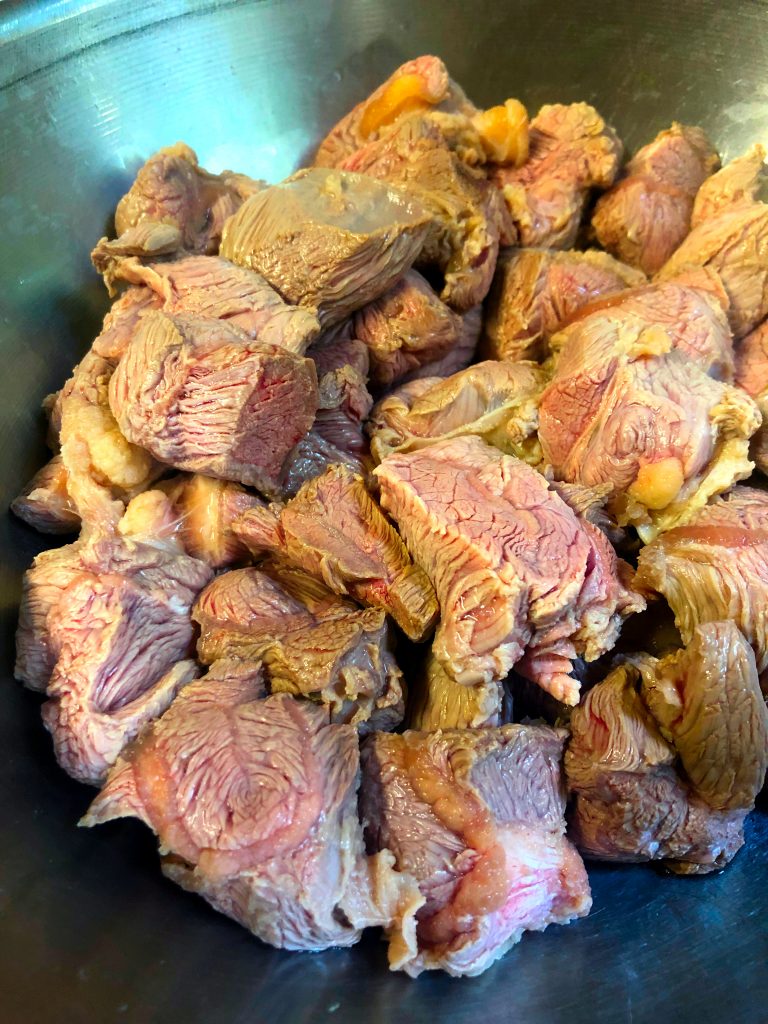
For a cleaner-tasting broth, place the beef in a large pot and cover with cold water. Bring to a boil and let it boil for 2-3 minutes, or until foam and impurities rise to the surface.
Drain the beef, rinse it under clean water, and set aside. While this blanching step is optional, it helps remove impurities and creates a clearer broth.
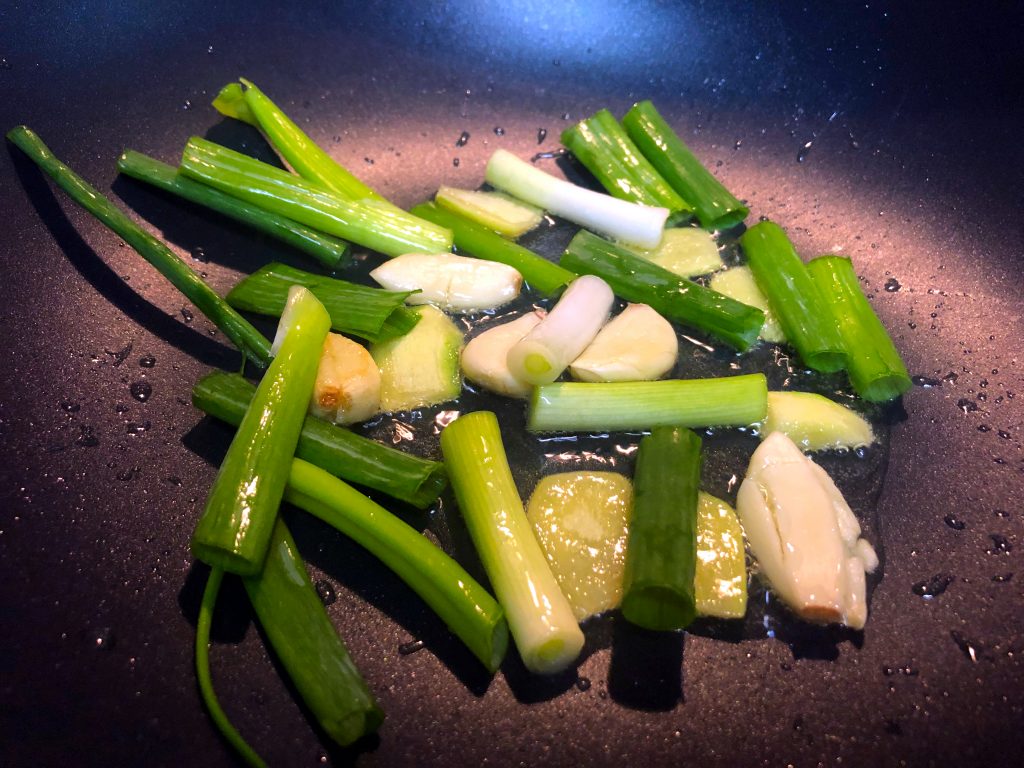
Step 2: Sauté the Aromatics
Heat oil in a large pot or Dutch oven over medium-high heat.
Add garlic, ginger, and green onions. Stir fry for 1-2 minutes, or until fragrant.
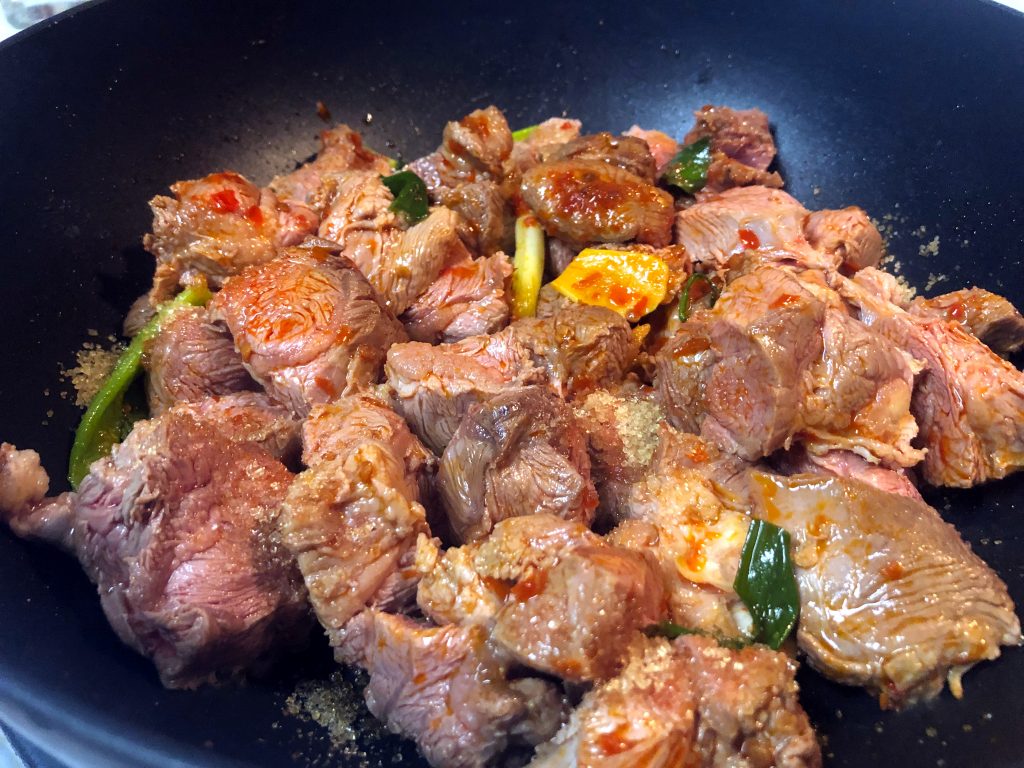
Step 3: Add the Beef and Seasonings
Add the blanched beef back to the pot.
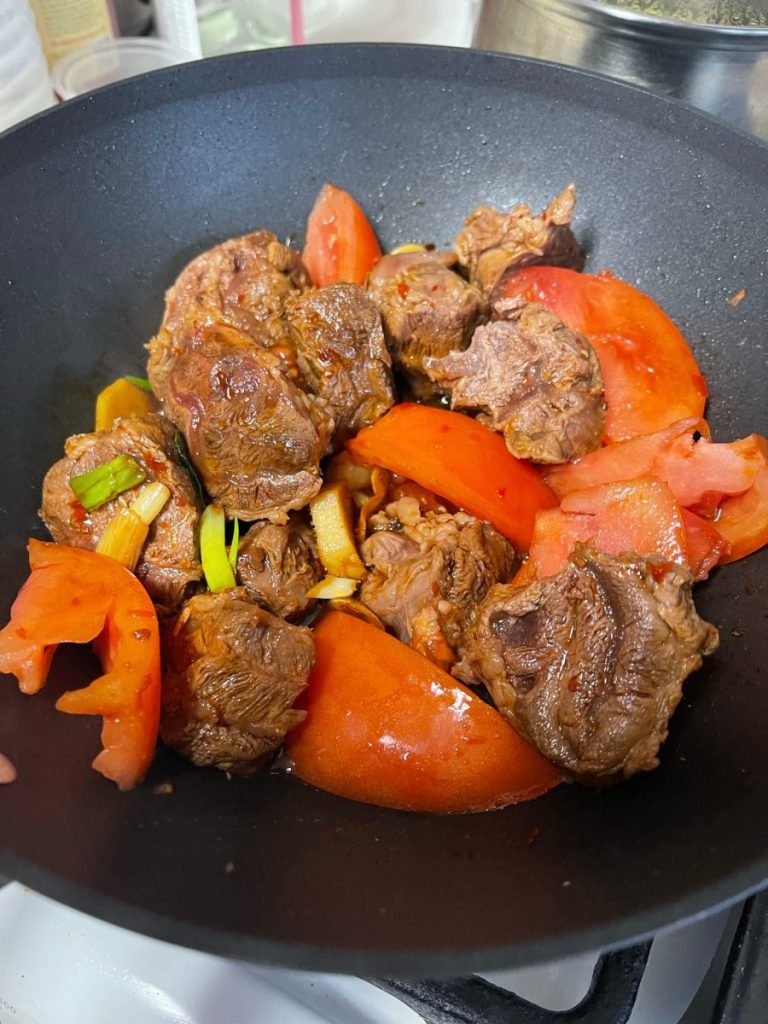
Stir in soy sauce, dark soy sauce if using, rice wine, doubanjiang, sugar, and star anise. Stir everything together for 1-2 minutes so the beef is coated in the sauce and aromatics.
If using tomatoes, add them here and stir fry briefly until they begin to soften.
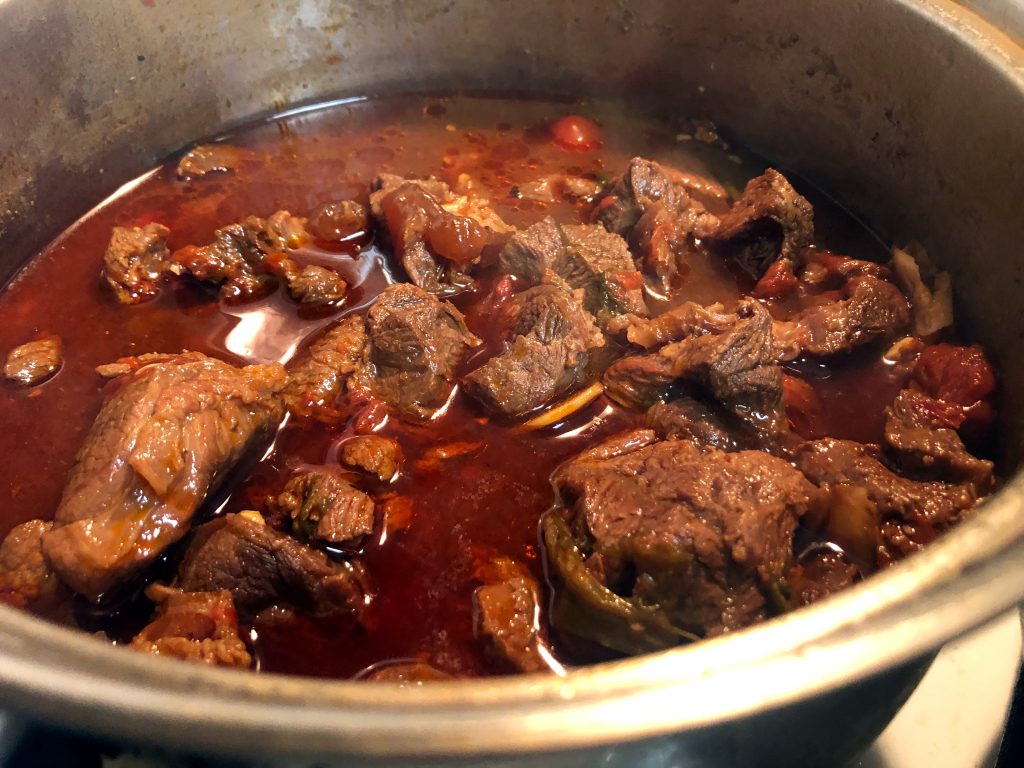
Step 4: Simmer the Beef
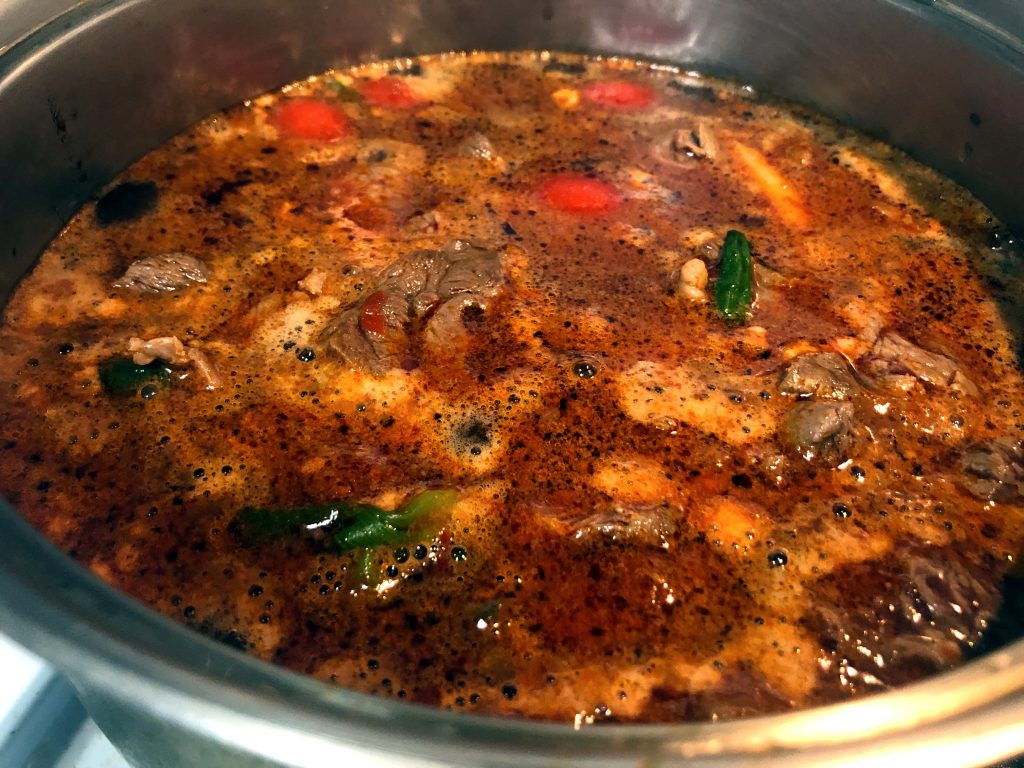
Add water or beef broth and bring to a boil.
Reduce heat to low, cover partially, and simmer for 2-3 hours, or until the beef is tender.
If using beef bones or marrow bones, add them at this stage and simmer them with the beef.
Step 5: Add Root Vegetables
If using carrots, daikon radish, or potatoes, add them during the last 30-45 minutes of cooking.
Simmer until the vegetables are tender and have absorbed the broth flavor.
Step 6: Cook the Noodles and Greens
Cook the noodles according to package instructions.
Leafy greens such as bok choy, napa cabbage, lettuce, or mustard greens can be quickly blanched with the noodles, cooked separately, or added directly to the hot broth right before serving.
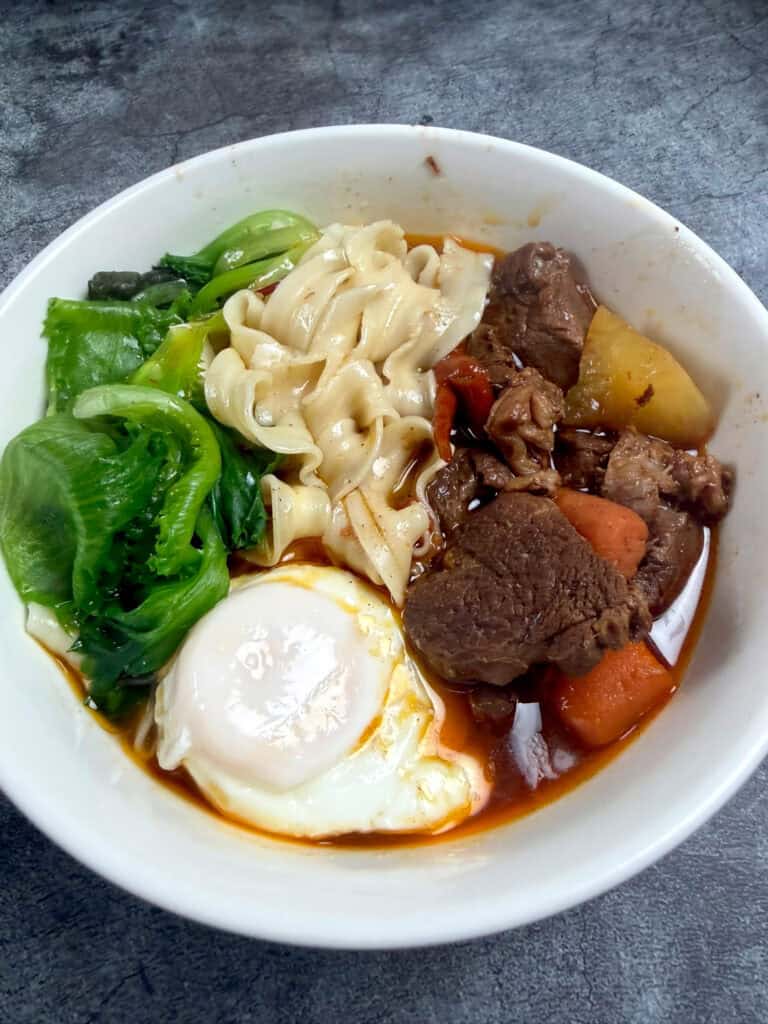
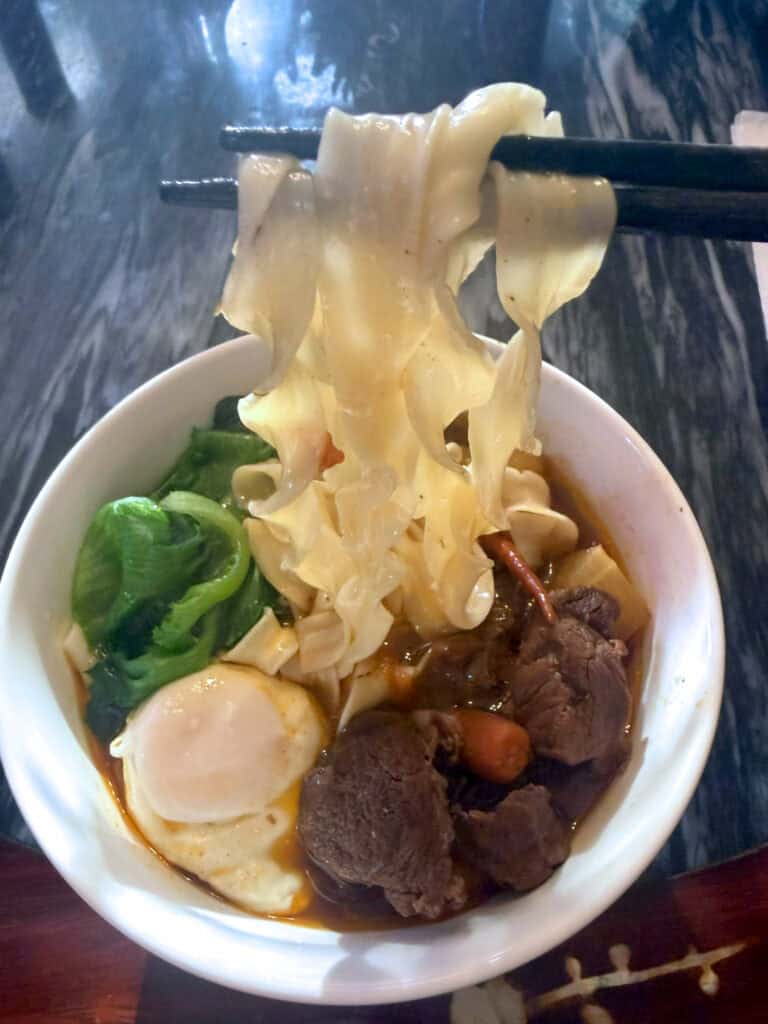
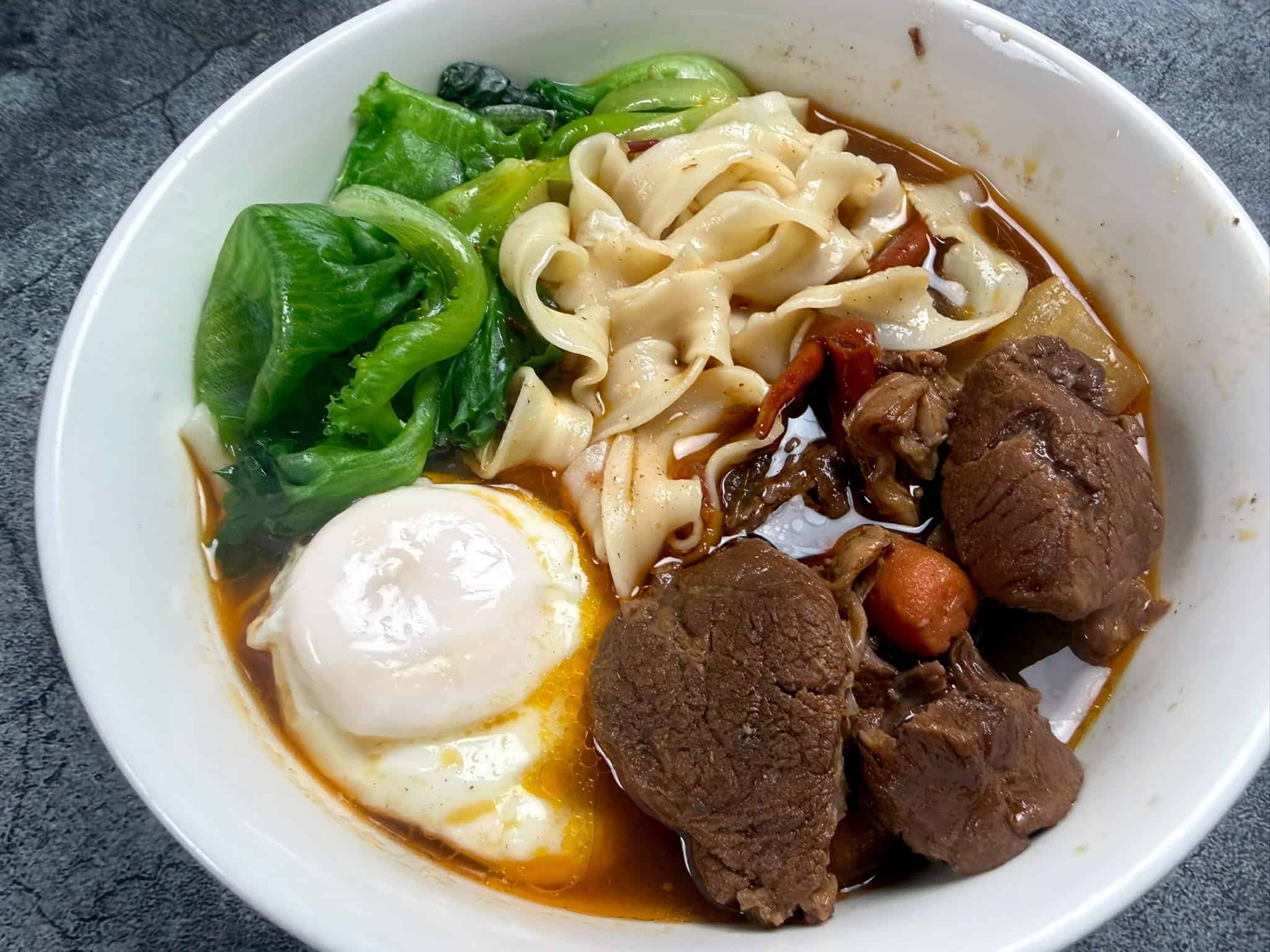
Step 7: Assemble the Bowls
Divide noodles among serving bowls.
Top with beef, vegetables, leafy greens, and hot broth.
Add green onions, pickled mustard greens, chili oil, or an egg if desired. Serve hot.
Storage and Reheat
Refrigerate:
- Store the beef and broth together in an airtight container for up to 4 days.
- Keep the cooked noodles in a separate container so they don't soak up all the broth and get mushy.
- Greens and garnishes (like bok choy, scallions, or suan cai) should also be stored separately and added fresh when reheating.
Freeze:
- Beef and broth freeze beautifully for up to 3 months.
- Let it cool completely, then portion into freezer-safe containers or heavy-duty freezer bags. This makes it easy to thaw only what you need later.
- Noodles generally don't freeze well - cook them fresh for the best texture, just add to beef and broth to make the whole Taiwanese Beef Noodle Soup.
Reheat:
- Thaw frozen beef and broth overnight in the fridge if frozen.
- Warm gently on the stovetop over medium-low heat until hot - avoid boiling for too long or the beef may dry out.
- Cook fresh noodles just before serving, then combine everything in a bowl with any fresh greens or toppings.
Make-Ahead:
- The red-braised beef can be made 1-2 days ahead - the flavors actually deepen after a night in the fridge.
- You can prep toppings (like chopped scallions or pickled mustard greens) in advance so the Taiwanese Beef Noodle Soup assembly is quick.
FAQ
Can I make Taiwanese Beef Noodle Soup less spicy?
Absolutely! Reduce or omit the doubanjiang and dried red chilies. You can also use a mild chili bean paste instead of the spicier versions.
Can I make this in an Instant Pot?
Yes - pressure cook the braised beef on high for about 45 minutes, then natural release. The flavor is slightly different from the stovetop version, but still delicious.
Can I make it gluten-free?
Yes - swap in gluten-free soy sauce or tamari and use rice noodles or other gluten-free noodles.
What's the best way to store leftovers without losing texture?
Keep broth, beef, and noodles in separate containers. Assemble right before eating for the best texture.
Can I double the recipe?
Yes - just make sure your pot is big enough. You may need to simmer a little longer if the pot is very full so the beef becomes tender.
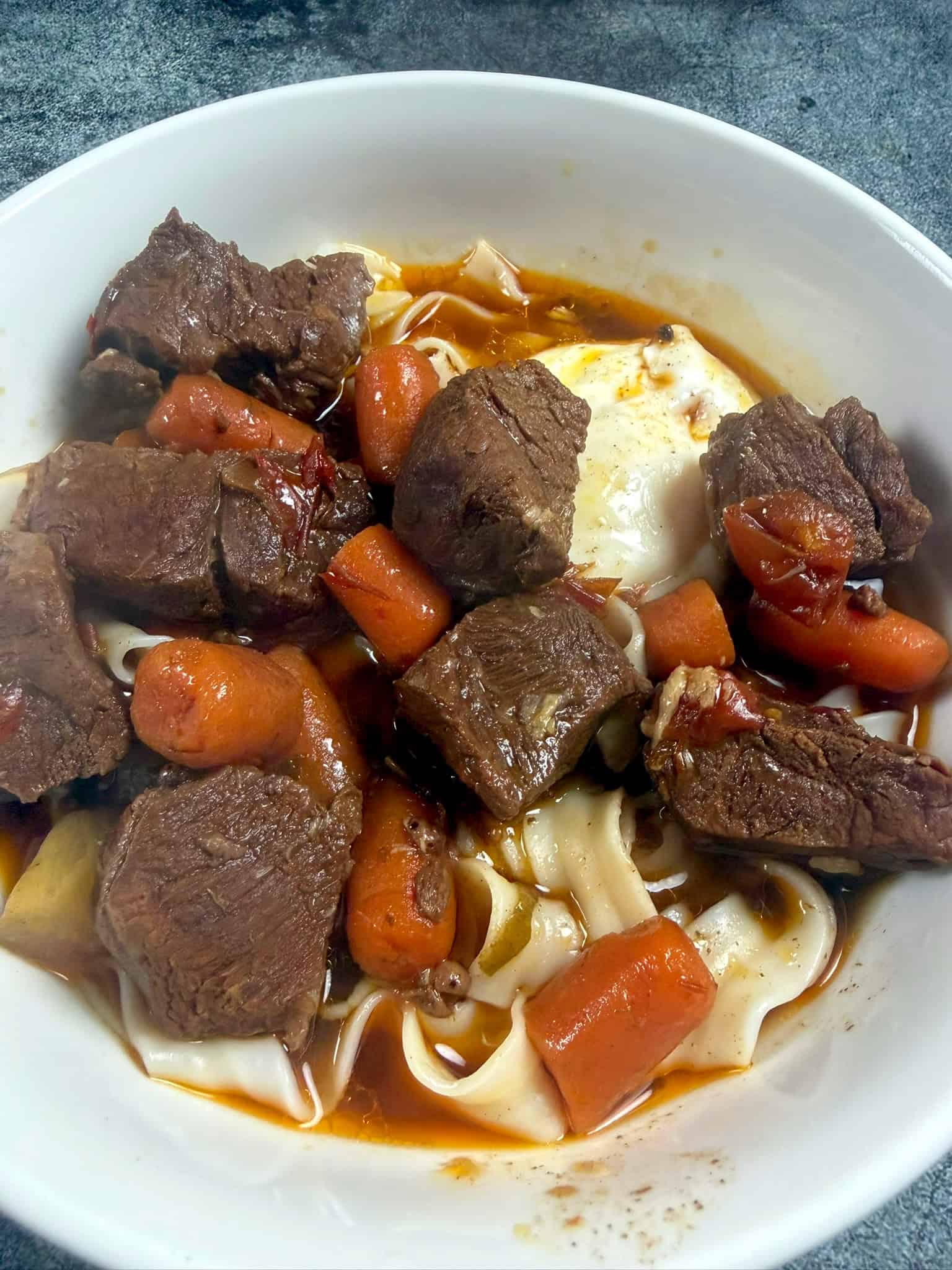
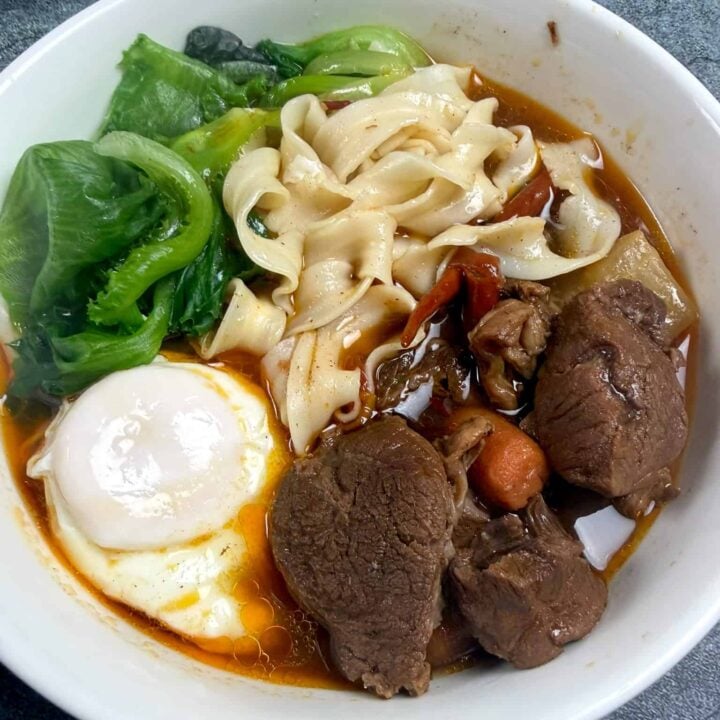
Taiwanese Beef Noodle Soup Recipe
Taiwanese Beef Noodle Soup is a comforting bowl of tender braised beef, rich savory broth, chewy noodles, and customizable vegetables. Add tomatoes, carrots, daikon radish, potatoes, leafy greens, or whatever vegetables you have on hand.
Ingredients
Beef and Broth
- 2–3 pounds beef shank, chuck roast, brisket, or stew meat, cut into chunks
- 1 tablespoon oil
- 6 cloves garlic, smashed
- 2-inch piece ginger, sliced
- 3 green onions, cut into large pieces
- ½ cup soy sauce
- 2 tablespoons dark soy sauce, optional
- ¼ cup rice wine
- 1–2 tablespoons doubanjiang, chili bean paste, optional
- 1 tablespoon rock sugar or brown sugar
- 2 star anise pods
- 2 tomatoes, cut into wedges, optional but recommended
- 8–10 cups water or beef broth
Optional Vegetable Add-Ins (Choose any combination)
- Carrots, cut into chunks
- Daikon radish, cut into chunks
- Potatoes, cut into chunks
- Bok choy
- Napa cabbage
- Lettuce
- Mustard greens
For Serving
- Cooked wheat noodles
- Green onions, sliced
- Pickled mustard greens, optional
- Chili oil, optional
- Soft-boiled, hard-boiled, poached, or fried eggs, optional
Instructions
- Place the beef in a large pot and cover with cold water. Bring to a boil and let it boil for 2–3 minutes, or until foam and impurities rise to the surface. Drain, rinse the beef under clean water, and set aside. This step is optional but helps create a cleaner-tasting broth.
- Heat oil in a large pot or Dutch oven over medium-high heat. Add garlic, ginger, and green onions. Stir fry for 1–2 minutes, or until fragrant.
- Add the blanched beef back to the pot. Stir in soy sauce, dark soy sauce if using, rice wine, doubanjiang, sugar, and star anise. Stir everything together for 1–2 minutes so the beef is coated in the sauce and aromatics.
- If using tomatoes, add them to the pot and stir fry briefly until they begin to soften.
- Add water or beef broth and bring to a boil. Reduce heat to low, cover partially, and simmer for 2–3 hours, or until the beef is tender.
- If using carrots, daikon radish, or potatoes, add them during the last 30–45 minutes of cooking. Simmer until tender.
- Cook noodles according to package instructions. Leafy greens such as bok choy, napa cabbage, lettuce, or mustard greens can be quickly blanched with the noodles, cooked separately, or added directly to the hot broth right before serving.
- Divide noodles among serving bowls. Top with beef, vegetables, leafy greens, and hot broth.
- Garnish with green onions, pickled mustard greens, chili oil, or an egg if desired. Serve hot.
Notes
- Beef shank is a great choice because it becomes tender while still holding its shape.
- You can also use chuck roast, brisket, short ribs, or stew meat.
- Tomatoes add sweetness and acidity to the broth, but they are optional.
- Carrots, daikon radish, potatoes, bok choy, napa cabbage, lettuce, and mustard greens all work well.
- Store beef and broth separately from noodles for the best texture.
- The broth often tastes even better the next day.
Recommended Products
As an Amazon Associate and member of other affiliate programs, I earn from qualifying purchases.
-
![Sichuan Zha Cai (Preserved Mustard Stems) - Hot/Spicy - 3.53oz [Pack of 3]](data:image/svg+xml,%3Csvg%20xmlns='http://www.w3.org/2000/svg'%20viewBox='0%200%20240%20240'%3E%3C/svg%3E) Sichuan Zha Cai (Preserved Mustard Stems) - Hot/Spicy - 3.53oz [Pack of 3]
Sichuan Zha Cai (Preserved Mustard Stems) - Hot/Spicy - 3.53oz [Pack of 3] -
10 Pcs Fine Bone China Blue and White Chinese Soup Bowls Ceramic Porcelain Bowl, with Free 10 Porcelain Spoons Rice Bowl
-
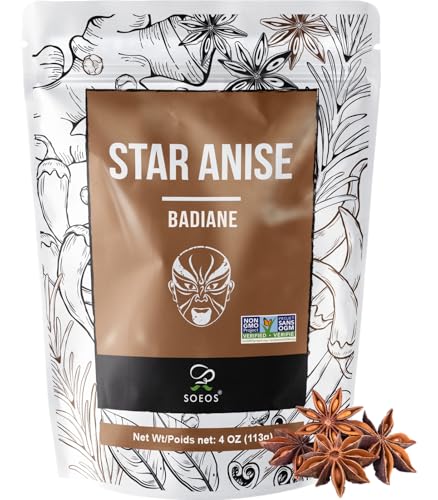
Soeos Star Anise Seeds (Anis Estrella), Whole Chinese Star Anise Pods, Dried Anise Star Spice, 4 oz.
-
8oz Asian Taste Sour Mustard (Pickled Vegetable), Pack of 3
-
Hiware 10-Pairs Fiberglass Chopsticks - Reusable Chopsticks Dishwasher Safe, 9 ½ Inches - Black
-
DragonMall Wu-Mu -- Dry Noodle 4 LB (Med), 64.0 Ounce
![Sichuan Zha Cai (Preserved Mustard Stems) - Hot/Spicy - 3.53oz [Pack of 3]](https://m.media-amazon.com/images/I/51zGhttD8rL._SL500_.jpg)



Nutrition Information:
Yield: 6 Serving Size: 1 bowlAmount Per Serving: Calories: 575Total Fat: 22gSaturated Fat: 8gTrans Fat: 0gUnsaturated Fat: 12gCholesterol: 115mgSodium: 1250mgCarbohydrates: 45gNet Carbohydrates: 41gFiber: 4gSugar: 7gProtein: 46g
The nutrition information for this recipe is an approximate total per serving. Please double check the nutrition information for your exact ingredients and brands for more precise nutrition information. Keep in mind that if there is a marinade, often times not all the ingredients will be consumed.
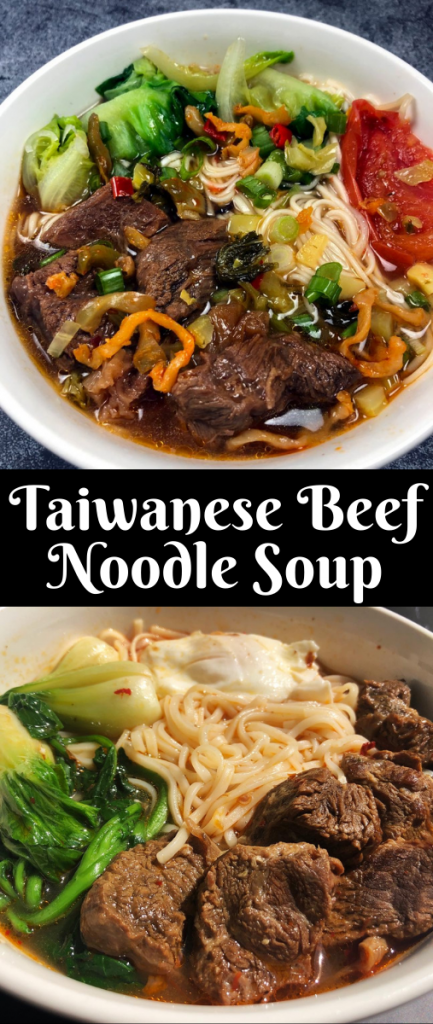
Pin for later!
More Delicious Taiwanese Recipes to try!
- Love pork chops? Then you gotta try this Taiwanese Pork Chop! Tender pork loin chops marinated with soy sauce, garlic, rice wine, and lightly coated with sweet potato starch! Pan fried to golden perfection!
- If you're looking for a tasty chicken recipe, check out my Taiwanese Three Cup Chicken! It featured chicken simmered in a rich blend of soy, sesame oil, rice wine, garlic, ginger and fresh basil!
- Have you ever had Taiwanese Spring Rolls? They're like the Taiwanese version of a burrito! It's got many delicious tasty ingredients such as meat and veggies and usually also grounded peanuts wrapped in a thin soft crepe.
- Don't forget your veggies! If you want to try more different vegetables, check out Taiwan Bok Choy!
Tanjuanita says
Willing to know thank you for sharing
Cathy Yee says
This sounds delicious and easy. Why do prefer stove top method over pressure cooker method?
TinaTsai says
I feel like the broth is more flavorful from simmering for a couple hours compared to instant pot personally - but a lot of people say it's not that different, so it's up to you!
Hogi says
Generally great recipe, just one question: How much soy sauce is supposed to be in there after all? You first say something about 3/4 cup, then 5 Tbsp and lastly 1/4 cup. Would be nice if you could clear that up. Thanks!
TinaTsai says
Hey! Super nice catch! It's supposed to be 3/4 cup total, but initially we put in 1/4 cup, and then later you put in the remaining 1/2 soy sauce ( so 3/4 - 1/4 = 1/2 cup) - I did make typos/mistakes all over the place! (I was trying to increase the size of the original recipe...) So thanks for letting me know, I think I fixed it all!
Hogi says
@TinaTsai,
Excellent, thank you so much! For me the amount of soy sauce highly depends on which brand you use. Some brands are very high on salt content, some low. The 3/4 cup works great for soy sauce with max 10gr of salt on 100ml, I'd use less if the soy sauce is more salty.
Another recommendation, the recipe also works using a pressure pot/cooker. Advantage is that you can cut the cooking time from 2,5h to about 35mins - and the beef is amazingly tender and falling apart.
TinaTsai says
I do totally agree with what you said about the soy sauce - I've noticed that too... maybe I should add a note about htat! And yes, I've used pressure cooker before too.... the only thing is I still prefer cooking it stove top for some reason. I will include instant pot recipe in the future! Thank you!!
Duncan Edwards says
This is a well-prepared and healthy meal, We loved it